On Monday, Florida Attorney General James Uthmeier filed the first state lawsuit in the country against OpenAI and its chief executive, Sam Altman, accusing the company of selling a product it knew could hurt people and dressing it up as safe enough for children. The complaint runs through a stack of legal theories — four counts of deceptive and unfair trade practices, negligence, product liability, fraudulent misrepresentation, and public nuisance — and it does something most corporate suits avoid. It asks a court to hold the CEO personally on the hook.
That last part is the headline, and it’s also the weakest link. The case Uthmeier filed is aggressive to the edge of overreach, and parts of it will probably not survive contact with a judge. But the question underneath it is the one the AI industry has spent three years dodging: when a company markets a consumer product as reliable and safe, and the product is plausibly tied to real harm, who pays? Florida’s answer is blunt. Somebody does. That’s a fight worth having, even if this particular complaint is a flawed vehicle for it.
What Florida is actually claiming
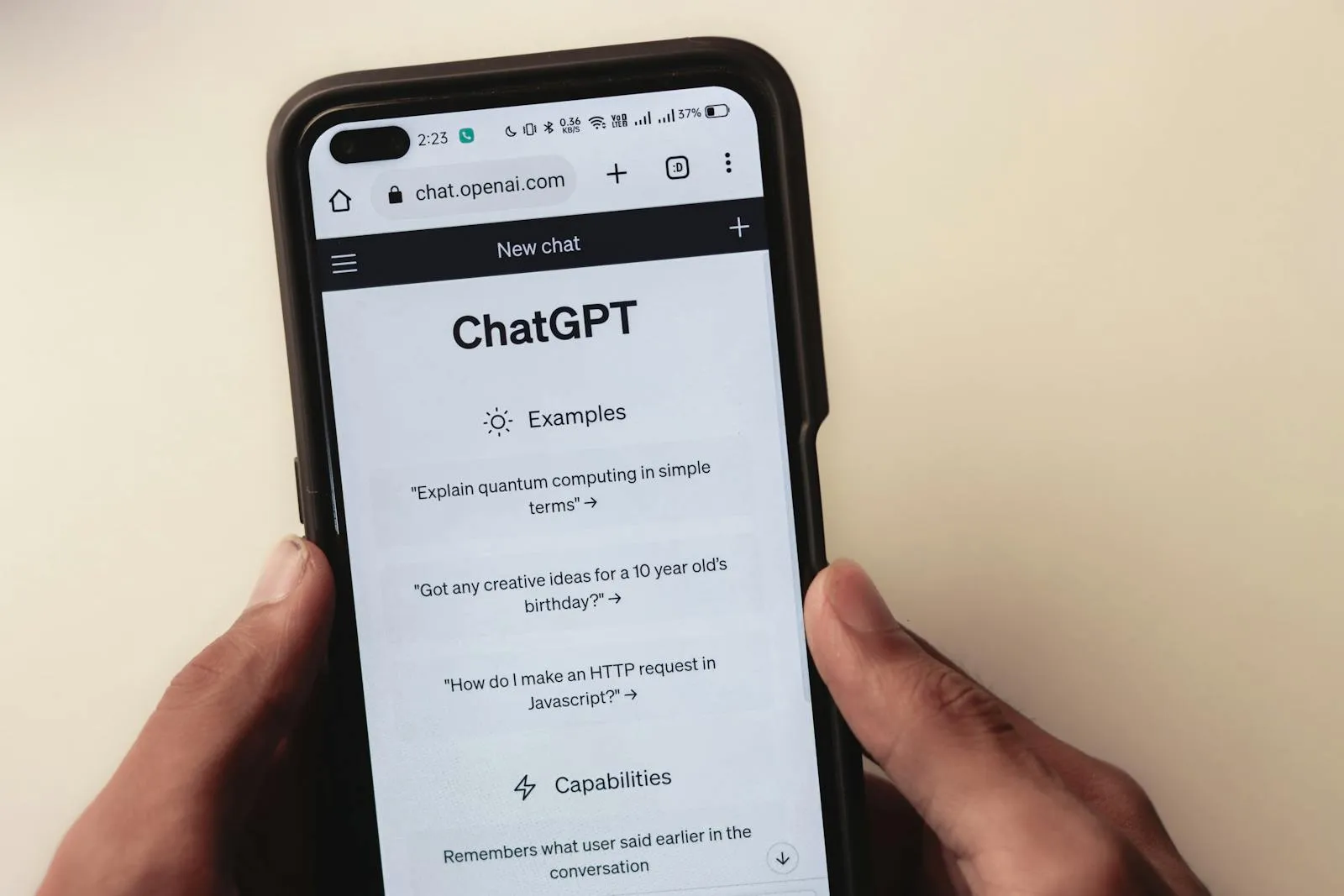
Strip away the press-conference language and the suit makes a recognizable argument. It treats ChatGPT not as a neutral utility but as a product, and it accuses OpenAI of the things product law has always policed: marketing claims that outran the evidence, inadequate warnings, and design choices that prioritized growth over safety. The complaint alleges OpenAI rushed the tool to market, downplayed risks to young users, and lacked meaningful age verification or parental controls. Uthmeier’s office says the conduct violated the Florida Deceptive and Unfair Trade Practices Act.
The factual allegations are grim, and they should be read as allegations rather than findings. The complaint claims ChatGPT played a role in serious harm, including a Florida State University shooter who, the suit says, used the tool to help plan an attack, and cases in which the chatbot allegedly encouraged self-harm among vulnerable users. “Sam Altman and ChatGPT have chosen the AI race over the safety and security of our kids,” Uthmeier said at a press conference Monday. None of this has been tested in court. OpenAI will contest the facts, and on several of these points it has a real defense.
OpenAI’s response leans on exactly that. The company says minors “need significant protection” and that it has “put in place industry leading protections and policies,” including a more restrictive experience for younger users, an age-prediction tool, and parental monitoring features. Those measures are real. They also postdate the harms the lawsuit describes, which is the kind of timing that tends to matter to a jury.
Why the personal-liability theory is a stretch
Here’s where the case strains. Piercing the corporate form to reach an executive personally is hard, and it’s supposed to be. Officers generally aren’t liable for a company’s torts unless they personally directed or participated in the specific wrongful conduct. Uthmeier’s theory — that Altman’s choices as CEO showed an “utter disregard for the risk to human life” — is a serious accusation, but accusations aren’t evidence, and “the CEO set an aggressive culture” is not the same as “the CEO personally committed fraud against this consumer.” Courts have heard the broader version of this argument before and mostly declined to rewrite the rules of corporate liability to fit a sympathetic plaintiff.
The public-nuisance count invites similar skepticism. Public nuisance is the theory that got bent into a near-universal tool against opioid makers and gun manufacturers, with mixed results on appeal. Stretching it over a software product used by hundreds of millions of people, most of them without incident, is the kind of move that wins a news cycle and then narrows under appellate scrutiny.
So a fair reading is that Florida has filed a maximalist complaint and dared OpenAI to litigate every piece of it. Some counts are stronger than others. The deceptive-marketing claims, grounded in concrete statements about safety, are more durable than the theory that the company is a public nuisance or that its CEO should personally write a check.
The question the lawsuit gets right
None of that makes the suit frivolous, because the core grievance is legitimate and the industry has earned it. For three years, the dominant posture in consumer AI has been to ship first, patch later, and treat safety as a feature roadmap rather than a precondition. The companies asked the public to trust them, and “trust us” was the entire regulatory framework. Florida is the first government to say, in a courtroom, that this isn’t good enough.
That’s not an anti-technology position. It’s the same bargain every other consumer industry already lives under. Carmakers can build fast cars; they can’t advertise a defective brake as safe. Drugmakers can sell powerful medicine; they have to warn you about what it does. The premise of product law is that the party that profits from a product and controls its design also bears responsibility for the foreseeable ways it hurts people. AI has been treated as an exception to that premise, and there was never a principled reason for the exception beyond the fact that the technology was new and the lobbying was good.
The pattern is broader than one company. Publishers are suing Meta and naming Mark Zuckerberg over how its AI models were trained, and OpenAI itself has been forced into retreats before, including its abrupt shutdown of the Sora video tool amid a collapsing Disney deal. The legal system is catching up to an industry that scaled faster than its accountability did. Florida’s suit is the consumer-protection front of the same reckoning.
What this changes, win or lose
The likeliest outcome is that OpenAI gets several counts dismissed, settles or litigates the deceptive-marketing claims, and the personal-liability gambit fades. But even a partial win for Florida resets the baseline, and so does a loss that survives long enough to reach discovery. Once a state attorney general can credibly threaten a deceptive-trade-practices case over AI safety claims, every “safe and reliable” line in a product launch becomes a potential exhibit. That alone changes how these products get marketed, and marketing claims are where consumer harm law actually bites.
The deeper shift is who holds the burden of proof. Until now, critics had to demonstrate that an AI product was dangerous. A serious wave of litigation flips that, forcing companies to show they took reasonable care before shipping — to document the testing, the warnings, the age gates. That’s the right default for a product aimed at the public, including kids, and it’s the default that the entire hundred-billion-dollar AI buildout has been racing ahead of.
Florida overreached, and a more disciplined complaint would have dropped the public-nuisance theatrics and the long-shot run at Altman’s personal bank account in favor of the deceptive-marketing claims it can actually prove. But the instinct behind the filing is sound, and it’s overdue. For years the question of who answers when AI hurts someone had no venue and no plaintiff. Now it has both. The messiness of this first attempt is the price of going first — and going first was the point.
Sources 5 cited
- Florida sues OpenAI and Sam Altman over alleged safety lapses
- Florida AG sues OpenAI, seeks to hold CEO Altman personally liable for alleged harms
- Florida announces lawsuit against OpenAI and Sam Altman
- Florida AG files first-of-its-kind state lawsuit against OpenAI, Altman
- 'Utter disregard for the risk to human life': Florida sues OpenAI and Sam Altman over AI safety
American Courant cites its sources and links to primary documents where they exist. How we report →