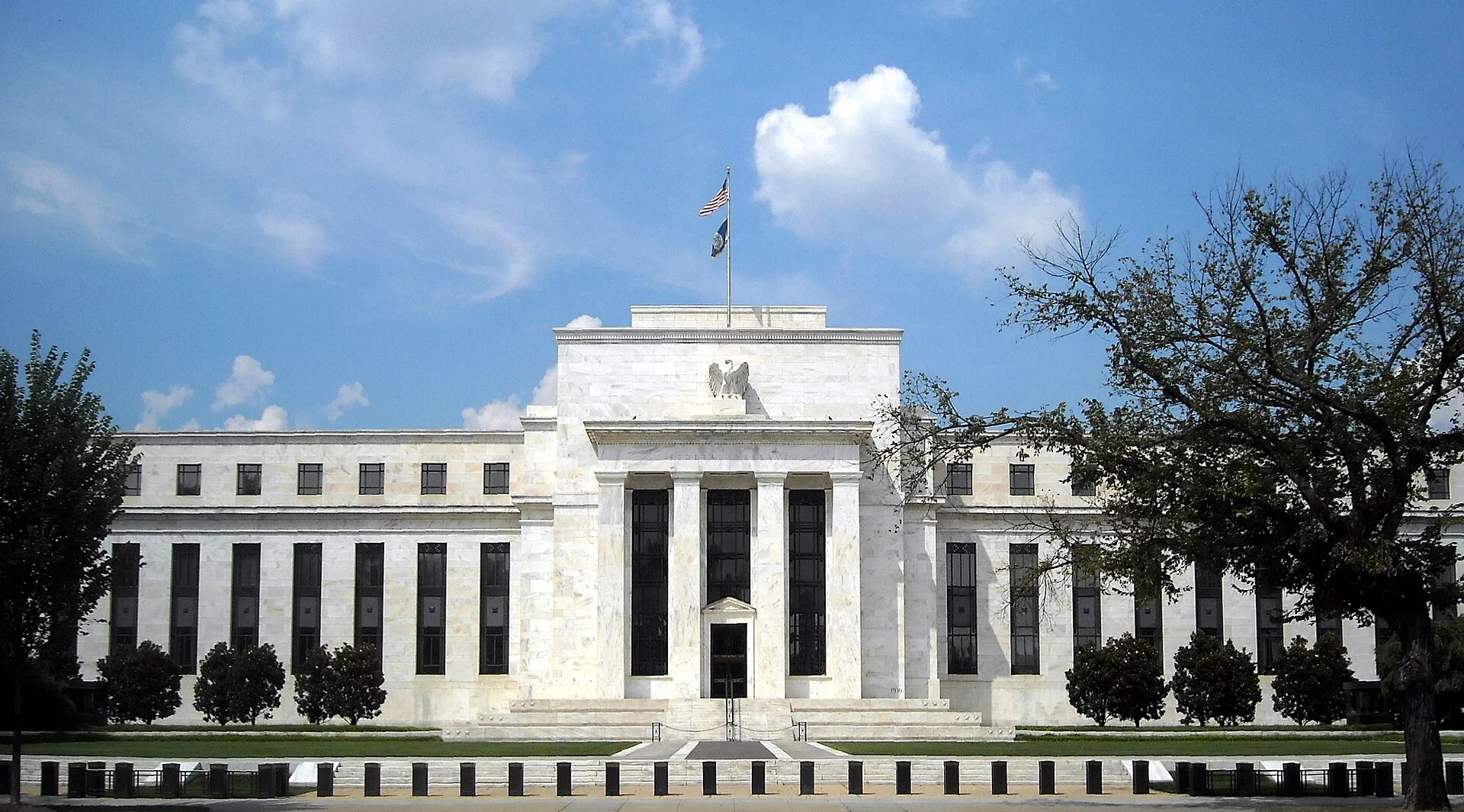
For two years, the message to anyone carrying a credit-card balance, shopping for a mortgage, or sitting on cash waiting for a better moment to buy has been a version of the same reassurance: hold on, relief is coming. Just wait for the rate cuts. On Wednesday, June 17, the Federal Reserve quietly retired that promise.
The headline from Kevin Warsh’s first meeting as Fed chair was that the central bank did nothing — it left its benchmark rate parked at 3.50 to 3.75 percent on a unanimous 12-0 vote. The real news was in the projections that came with it. The Fed’s quarterly “dot plot” of where officials expect rates to go erased the rate cut it had pencilled in for this year. Not deferred it. Erased it. In its place, nine of the eighteen officials now expect a rate hike before the end of 2026 — and six of them pencil in two. The committee’s inflation forecast, meanwhile, jumped to 3.6 percent from the 2.7 percent it had projected in March. The era of waiting for relief is over. The sooner households accept that, the better their decisions will be.
What the Fed actually did, and what it didn’t
It is easy to read a “hold” as a non-event, a pause button. This one was the opposite. A pause implies you are about to resume in the same direction, and the direction everyone had assumed was down. The June projections snapped that assumption. The median official now sees the funds rate ending the year at 3.8 percent, up from 3.4 percent in March, and the statement itself was stripped of the language that used to signal a bias toward easing.
This is the meeting the optimists were told to watch. When Warsh took the chair, the open question was whether he would keep the Fed insulated from a president demanding cuts, and the advice was to watch the dot plot rather than the hold. The dot plot has now spoken, and it did not say what borrowers wanted to hear. The Fed scrapped the cut and put a hike on the table, against a backdrop of inflation still running near a three-year high and an energy shock from the Middle East still working through prices. Whatever else you think of that call, it is a clear answer to a question millions of household budgets have been holding open.
What it means for your money
Strip out the macroeconomics and this lands in four ordinary places.
Mortgages first. The average 30-year fixed sat around 6.5 percent in mid-June, and a lot of would-be buyers and refinancers have been treating that number as a temporary ceiling — something to wait out until the cuts pulled it back toward 5. That math just broke. Rates may still drift, but they are no longer drifting toward a Fed that is about to ease. If you have been postponing a move on the theory that a refinance window is months away, the Fed just told you to stop building plans around a window it is not opening.
Credit cards are the sharpest edge. Card APRs are variable and anchored to the Fed’s benchmark, which means the most expensive debt most families carry is not getting cheaper on any visible horizon. A balance you have been “managing” while waiting for rates to fall is a balance that will keep compounding at full price. The instruction there is blunt: attack it now, because nothing about this decision is going to discount it for you.
Car loans sit in the same trap as credit cards, with a twist. New- and used-vehicle financing rates have stayed punishing, and unlike a mortgage, an auto loan is rarely worth refinancing later for a small move — you live with the rate you signed. Buyers who have been holding out for cheaper money to make a payment work were, in effect, waiting on the same cut that just disappeared. The sticker is the sticker; the financing is not about to rescue the budget.
Savers get the one piece of good news, and should use it. Yields on short-term certificates of deposit and money-market funds are holding up rather than sliding, and a higher-for-longer Fed keeps them there. The flip side of frozen relief for borrowers is durable income for savers — but only for those who lock it in rather than leaving cash in a checking account earning nothing. A CD that guarantees today’s yield for a year or two is a bet that rates won’t fall fast, and the Fed just made that bet look smarter.
The case for not overreacting
A fair reader should push back here, because the Fed’s projections are forecasts, not commitments. A dot plot is a snapshot of opinion on a single Wednesday, and it has been wrong before in both directions. If the labor market weakens — officials already see unemployment drifting up to 4.3 percent — the cuts that vanished this month could reappear quickly. And mortgage rates track the 10-year Treasury yield more closely than they track the Fed’s overnight rate, so a hold at the short end does not mechanically set the number on your loan estimate.
All true, and worth keeping in view. But none of it argues for sitting still and hoping. It argues for the opposite. When the path is genuinely uncertain and the central bank has just removed the relief it was dangling, the prudent move is to act on the rates in front of you rather than the ones you wish were coming. Lock the savings yield. Pay down the variable-rate debt. Run the housing math on today’s 6.5 percent, not on a hypothetical 5. Planning around a forecast you cannot control is how people end up waiting through the exact window they meant to catch.
Why it matters now
This decision did not happen in a vacuum of comfortable household finances. It landed on families already stretched by elevated gas prices and a cost of living that has not loosened, the same pressure that has kept mortgage rates stuck since the Iran shock. The people most exposed to the vanished rate cut are precisely the ones who have been told longest to be patient: the buyer priced out at 6.5 percent, the family rolling a balance, the saver who kept money liquid expecting to redeploy it after the easing began.
For two years, patience was a defensible strategy because the people running the world’s most important interest rate kept signaling that patience would be rewarded. As of this week, they are signaling something else. The honest takeaway is not panic, and it is not that rates can never fall again. It is narrower and more useful than that: the cut you were counting on is gone, the timeline you were planning around no longer exists, and the smartest thing a household can do is stop waiting on the Fed and start acting on the numbers it can already see.
Sources 6 cited · 2 primary
- Federal Reserve issues FOMC statement (June 17, 2026)
- Federal Reserve and FOMC release economic projections from the June 16-17 FOMC meeting
- Fed interest rate decision June 2026: Fed holds rates steady, signals possible hike
- Fed holds interest rates steady: What that means for credit cards, savings, mortgages and car loans
- Federal Reserve holds interest rates steady and hints at rate hike later this year
- Mortgage Rates Dip Below 6.5% As Fed Holds
American Courant cites its sources and links to primary documents where they exist. How we report →