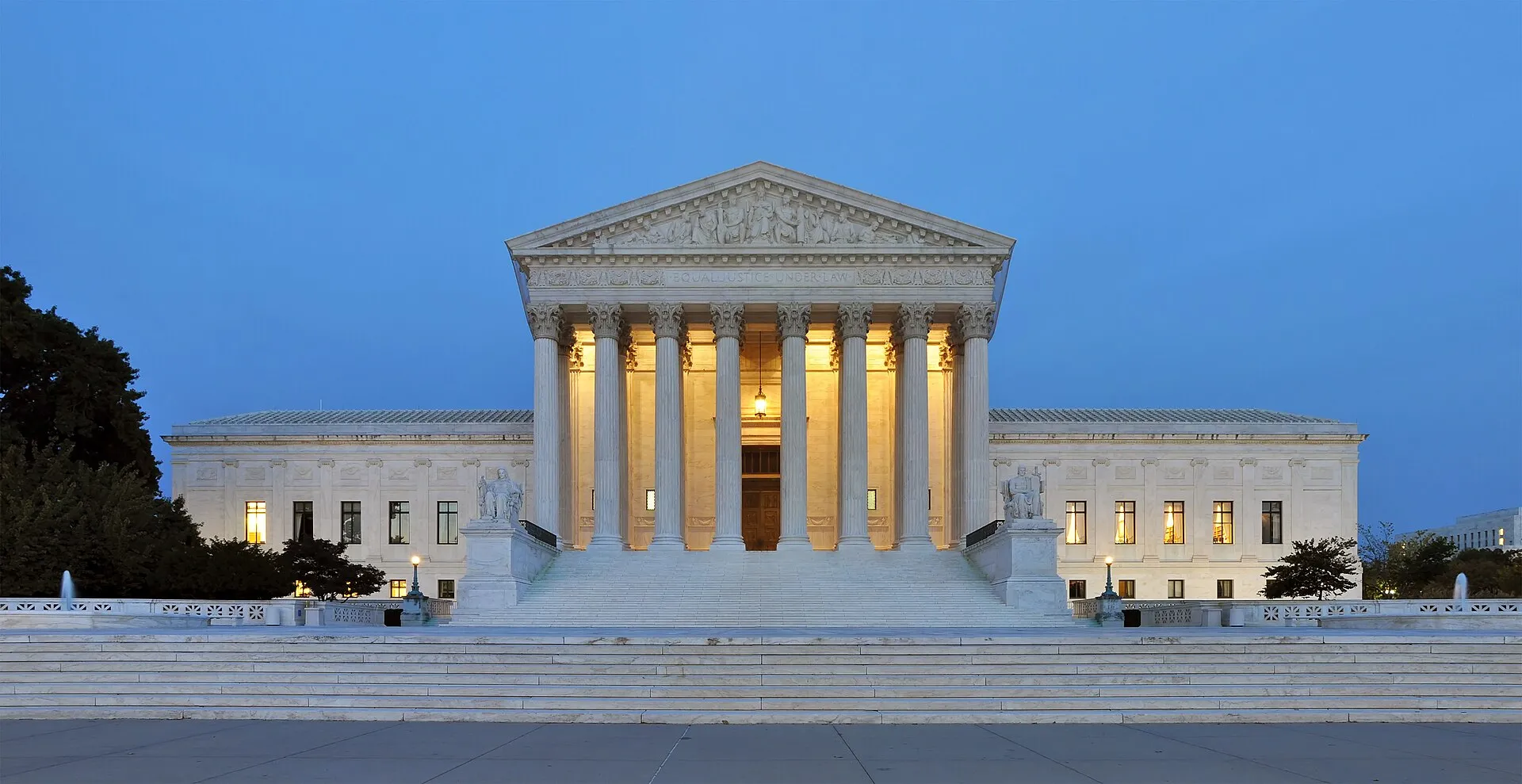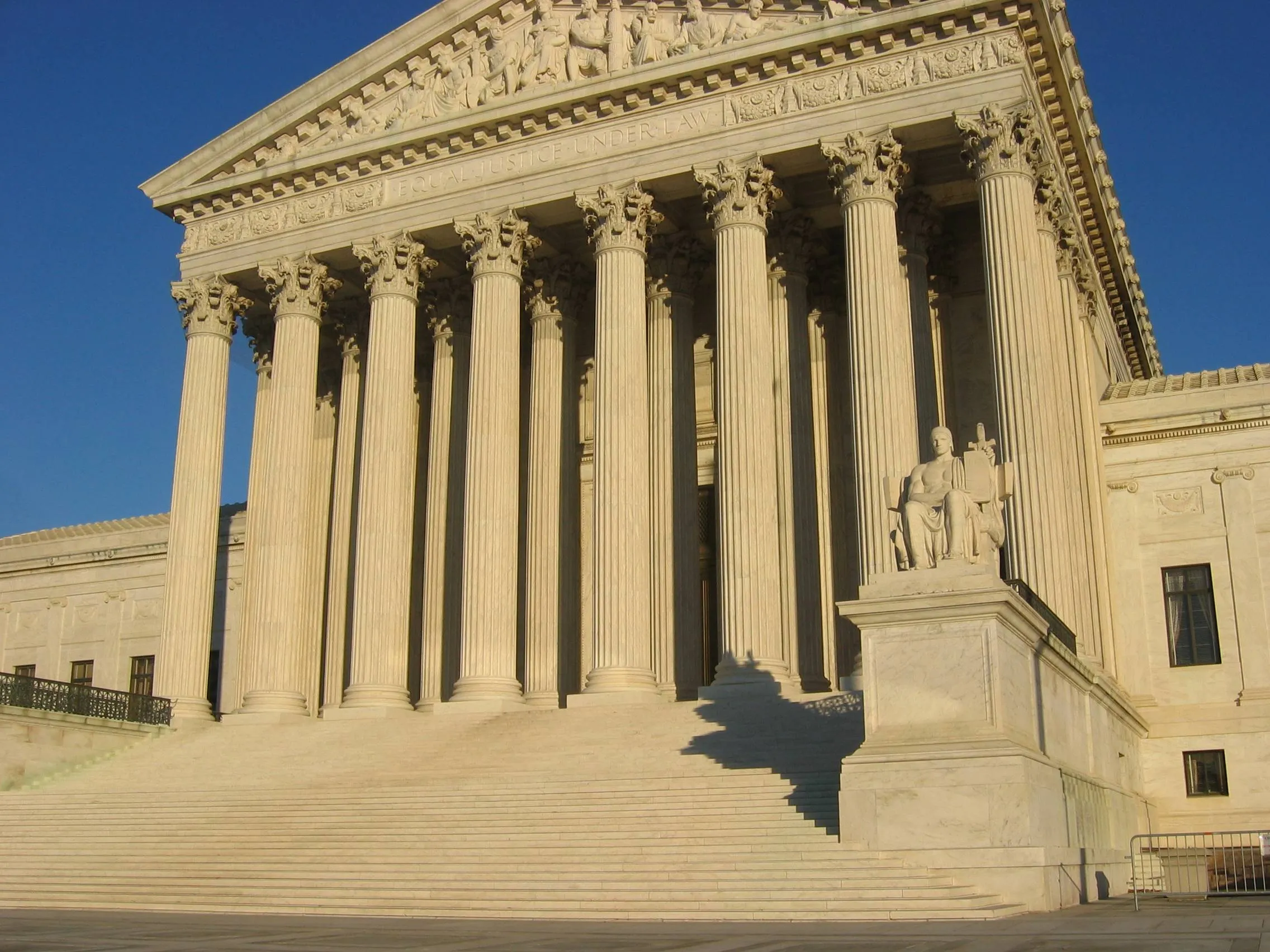
It is not every day that the National Rifle Association and the American Civil Liberties Union end up on the same side of a Supreme Court case. On Wednesday they did, and they won. In United States v. Hemani, decided June 18, all nine justices agreed that the federal government could not prosecute Ali Danial Hemani simply because he owned a handgun while using marijuana a few times a week.
That unusual coalition is the tell. When the country’s most prominent gun-rights group and its most prominent civil-liberties group line up behind the same defendant, and a conservative justice writes a unanimous opinion handing them victory, the problem is rarely the defendant. The problem is the law.
The ruling itself is narrow, and honest readers should say so. The Court did not strike down the statute. It did not legalize anything. What it did was expose a contradiction that Congress has spent years refusing to confront: a federal rule that treats tens of millions of otherwise law-abiding Americans as too dangerous to keep a gun in their own homes, while half the country sells the substance in question at a licensed storefront down the street. The justices cleaned up one prosecution. The mess underneath is Congress’s to fix, and it should stop pretending otherwise.
What the Court actually decided
The facts are modest, which is part of the point. Hemani, who was born in Texas and is a dual U.S.-Pakistani citizen living near Dallas, became the subject of a 2022 federal search of his family’s home. Agents did not charge him with the terrorism-related activity they were investigating. They did find a pistol and roughly 60 grams of marijuana, and Hemani told them he used it about every other day. That admission was enough to charge him under 18 U.S.C. § 922(g)(3), the law making it a felony for “an unlawful user of or addicted to any controlled substance” to possess a firearm.
Writing for the Court, Justice Neil Gorsuch held that this particular prosecution failed. The government, he wrote, had not “carried its conceded burden of showing its prosecution of Mr. Hemani complies with the Second Amendment.” The decision was explicitly “as applied,” lawyer’s language meaning the government cannot do this to this person on these facts. Section 922(g)(3) still stands on the books. A future case with a genuinely dangerous defendant could come out differently.
But Gorsuch went out of his way to name the underlying absurdity. Pressed to defend the statute, he wrote, the government was “awkwardly positioned to suggest that the millions of Americans who now regularly use marijuana are categorically and unusually dangerous.” That is the line that matters. The Court’s recent framework, rooted in the historical principle that the government may disarm those who pose a danger of violence and must do so through real process rather than blanket categories, simply does not fit a rule that sweeps in every weekend cannabis user as a presumptive threat.
The unanimity was real but not seamless. Justice Clarence Thomas joined the opinion in full and wrote separately; Justice Ketanji Brown Jackson, joined by Justice Sonia Sotomayor, concurred; Justice Samuel Alito, joined by Justice Elena Kagan, concurred only in the judgment. Nine justices agreeing on the result while splitting on the reasoning is itself a signal: the outcome was overdetermined, and the law was indefensible from several directions at once.
The contradiction Congress built
Step back and the incoherence is hard to miss. Marijuana remains a Schedule I controlled substance under federal law, the same tier as heroin. Yet a large majority of states now permit it in some form, and even the federal government has begun to budge: the DEA has moved to peel medical marijuana off Schedule I while recreational use stays formally prohibited. The result is a country where the same conduct is a routine consumer purchase in one place and a felony predicate in another.
Section 922(g)(3) sits on top of that confusion and makes it worse. It does not ask whether a person is violent, unstable, or actually impaired. It asks whether they are a “user.” A retiree in a legal state who takes a gummy for arthritis at night and keeps a shotgun for the coyotes is, on the statute’s plain terms, a felon for owning the gun. So is the veteran who uses cannabis instead of opioids. This is the provision under which Hunter Biden was convicted in 2024, a reminder that the law’s reach is bipartisan and indiscriminate, not a tool aimed at any one kind of person.
A statute that turns millions of ordinary people into paper felons, then relies on prosecutors to use discretion about whom to actually charge, is not a coherent public-safety policy. It is a trap. And it is exactly the kind of law that should be written by elected representatives who have to answer for it, not patched case by case by judges parsing 18th-century history.
The honest counterargument
There is a serious response to all of this, and it deserves to be met head-on rather than waved away.
The strongest version goes like this: the ruling is narrow on purpose, the statute survived, and the government retains every tool it needs to disarm people who are genuinely dangerous. The Court did not say drug users have an unconditional right to firearms; it said the government has to actually show its work. On this reading, Hemani is evidence that the system is functioning: the judiciary checking an overbroad prosecution while leaving the rule intact for harder cases. A 9-0 decision is not a crisis. It is a guardrail doing its job.
That is fair, and it is why this is an argument about Congress rather than a victory lap about the Court. The guardrail worked here. But guardrails are not a substitute for a road. Leaving § 922(g)(3) formally in force while the justices carve out who it cannot reach guarantees years of litigation, inconsistent outcomes in different circuits, and ordinary people who have no way to know in advance whether their own situation is the safe kind or the felony kind. That is the same problem the Court has flagged when it has insisted the government justify itself before stripping people of liberty in other contexts. Winning the as-applied case does not tell the next gun owner what the law actually permits.
Why this matters now
The practical stakes are not abstract. Roughly half of American adults live where marijuana is legal in some form, and a large and growing share use it. Under the statute as written, every one of them who also owns a firearm is exposed, not because they did anything dangerous but because two federal policies, drug prohibition and gun regulation, were never reconciled with each other or with the states.
Congress could fix this in an afternoon. It could rewrite § 922(g)(3) to focus on actual impairment or actual dangerousness rather than mere use, the same way the law already distinguishes the drunk driver from the person who keeps wine in the cabinet. It has chosen instead to let the contradiction sit, knowing the courts would absorb the blame for whatever happened next.
Wednesday’s decision should make that posture untenable. When Gorsuch and Jackson, the NRA and the ACLU, all arrive at the same place, the message is not that the Supreme Court is unusually clever. It is that the law was unusually broken. The justices did their part. The next move belongs to the people who wrote the statute and have spent years hoping no one would ask them to defend it.
Sources 6 cited · 2 primary
- United States v. Hemani, slip opinion (No. 24-1234)
- United States v. Hemani — full opinion text
- Court sides with challenger to law banning drug users from possessing guns
- Supreme Court sides with Texas marijuana user who says it's not a crime to have a gun
- Supreme Court sides with marijuana user stripped of gun rights
- Second Amendment Roundup: Gun Ban for Pot Users Unconstitutional
American Courant cites its sources and links to primary documents where they exist. How we report →