In June of 2009, the attorney-general of Tasmania, Lara Giddings, was midway through a state budget hearing in Hobart when she briefly turned the proceedings into a wildlife report. Tasmania is the world’s largest legal supplier of opium poppy for the pharmaceutical industry — roughly half of the global legal supply, grown under license, harvested for codeine and morphine. Tasmania also has wallabies. “We have a problem with wallabies entering poppy fields, getting as high as a kite and going around in circles,” Giddings told the hearing. “Then they crash.” Crop-circle reports across the island, she said, weren’t aliens. They were marsupials. A senior manager at one of Tasmania’s two licensed poppy companies confirmed it to the press the next day, noting that sheep ate the post-harvest stems too and tended to “walk around in circles.”
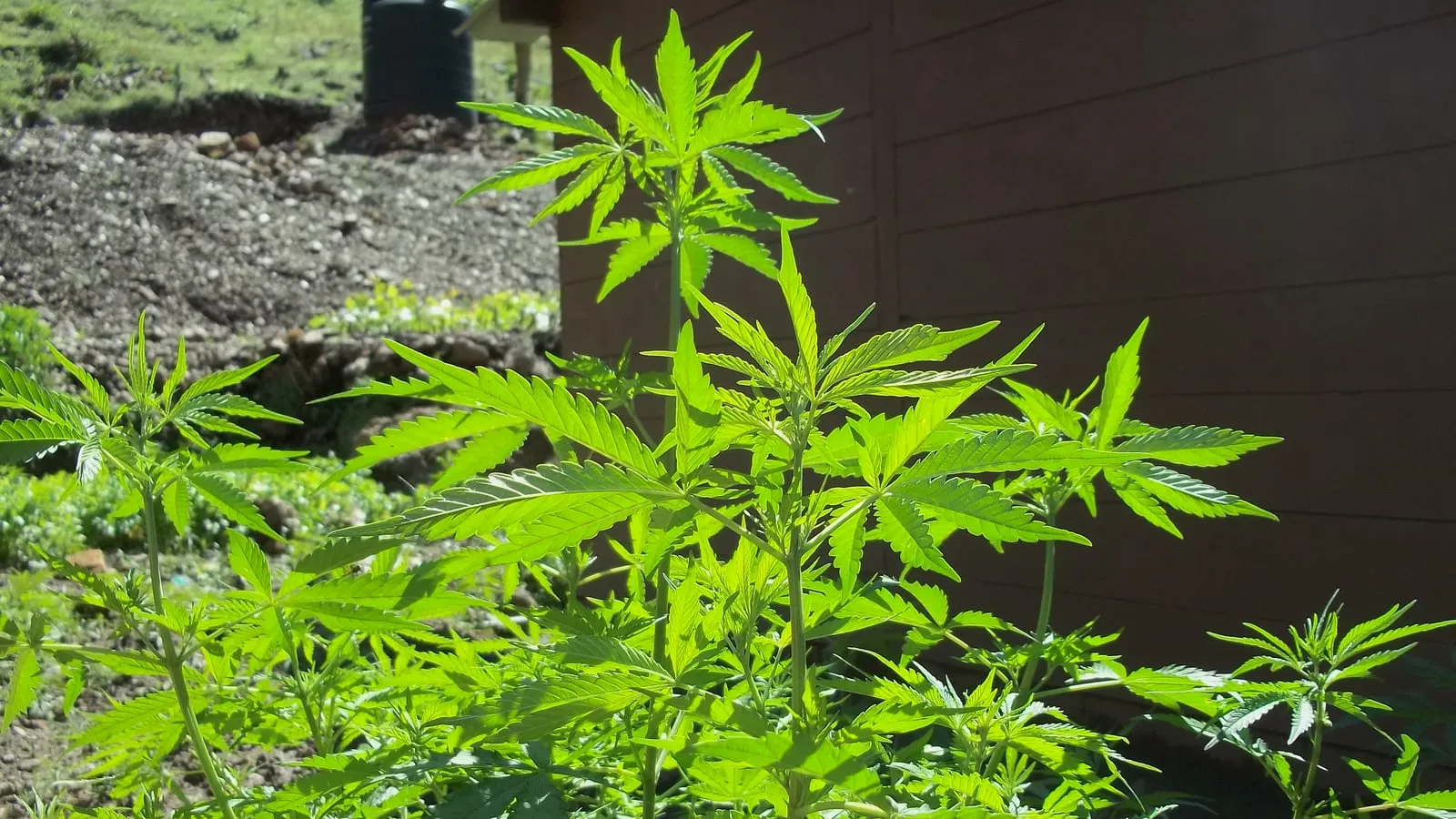
The wallabies were doing what wallabies do when something palatable grows in their habitat. They were not making a policy argument. But sixteen years and ten thousand miles later, the United States federal government is — or rather, isn’t — making the policy argument the wallabies more or less stumbled into. On April 23, 2026, the Department of Justice and the Drug Enforcement Administration issued a final order moving two narrow categories of marijuana from Schedule I to Schedule III of the Controlled Substances Act: FDA-approved products containing marijuana, and marijuana grown and sold under a qualifying state-issued medical license. Recreational marijuana — even when sold legally and taxed in two dozen states — remains in Schedule I. Same federal classification as heroin. One tier above fentanyl, the drug responsible for the largest single category of American overdose death.
A broader hearing on whether to move all marijuana to Schedule III is scheduled to open at the DEA hearing facility in Arlington on June 29, 2026 and must conclude by July 15. The current state of federal law, in the interim, is a textbook unstable equilibrium. A bag of Doritos remains legal in all fifty states. A pot brownie remains a federal felony in twenty-six. The same plant, regulated differently depending on whether it carries a state medical license, sits in two different schedules of the same federal drug schedule on the same Tuesday morning.
The half-measure is the giveaway
A genuine determination that cannabis is dangerous enough to belong with heroin would not contain a carve-out for the version dispensed at a clinic in Albuquerque. A genuine determination that cannabis is not dangerous enough to belong with heroin would not leave it there for the dispensary down the street. The DOJ’s April order is doing the only thing the federal classification has been doing for the last decade — performing the legal language of prohibition over a substance that the operational and commercial reality of the country has already moved on from. The federal government has signed off on the medical-research argument. The federal government has not yet signed off on the political argument that a tax-paying, license-holding, adult-only recreational dispensary in Colorado is doing something the federal government recognizes as commerce rather than felony manufacturing.
The states, in the meantime, have spent twelve years running the experiment. Twenty-four states plus the District of Columbia have legalized recreational cannabis for adults; another fifteen permit medical cannabis only. According to the Marijuana Policy Project, the legal adult-use cannabis industry has generated nearly $25 billion in cumulative state tax revenue since Colorado and Washington opened the first storefronts in 2014, including roughly $4.4 billion in 2024 alone. States are spending that revenue on schools, road repair, public-health programs, and — in California’s case — their general fund. None of this is theoretical. None of it has produced the public-health catastrophe the original drug-war architecture was built to prevent.
What the federal government does subsidize
While one branch of federal authority maintains a registry of substances ranked by danger, another branch of federal authority spends roughly $9.3 billion a year holding down the price of the inputs that produce the substances that actually kill Americans. Corn farms received $3.2 billion in 2024 — about 30 percent of all commodity subsidies — and corn is the source of high-fructose corn syrup. Soybeans, the second-largest subsidy beneficiary at $1.9 billion, are the source of the seed oil in nearly every fried snack on a U.S. grocery shelf. Dairy gets its own line item. Sugar gets its own program. The federal government does not happen to ignore the cost structure of the snack aisle. The federal government built that cost structure on purpose.
The mortality math is not subtle. The CDC’s National Center for Health Statistics reported 683,491 American deaths from heart disease in 2024 and 94,445 from diabetes, plus more than 55,000 from kidney disease driven heavily by the same metabolic conditions. The principal modifiable risk factors are ultraprocessed food, added sugar, and seed-oil-rich diets — three categories produced from three crops that receive the largest federal subsidies, with cumulative federal support running into the hundreds of billions across the last several decades. The number of Americans killed annually by cannabis use, by contrast, is so close to zero that the CDC does not maintain a dedicated category for it.
”But the kids”
The standard objection to this framing is that cannabis is uniquely dangerous to adolescents — that high-THC concentrates available in legal markets bear no resemblance to the joint your uncle smoked at Lollapalooza in 1993. The first half of that argument is correct. The second half is irrelevant to where the federal classification sits. Cannabis-product potency is a regulatory question about labeling, age-gating, advertising, and concentration limits — all questions that states already address in their licensing regimes and could be addressed nationally through normal FDA oversight after rescheduling. Schedule I is not a labeling regime. Schedule I is a near-prohibition framework that prevents the FDA from doing exactly the labeling, dosing, and adolescent-protection work everyone agrees should be done.
The federal government cannot simultaneously claim that cannabis is so dangerous it requires the heroin tier of regulation and refuse to use the tools that would actually make legal cannabis safer for the people most likely to be harmed by it. The two positions cancel out. The states figured this out and moved. The DEA’s April order conceded the medical half and reopened the question on the rest. The June hearing will decide whether the federal government can finish the sentence its own bureaucracy started.
The Bottom Line
Tasmania, sensibly, regulates its opium poppy growers under a licensing regime, accepts that some percentage of the harvest will be lost to local wildlife with poor impulse control, and stocks the rest of the planet’s pharmaceutical supply chain. The United States, less sensibly, maintains a federal drug schedule that ranks a plant 24 states sell at retail above the synthetic opioid that killed more than 75,000 Americans last year, and a tax-and-subsidy regime that holds down the price of the actual leading causes of American death. The wallabies in Hobart were not the embarrassing part of the 2009 story. The embarrassing part was that a state attorney-general was the one with the more coherent regulatory framework. Seventeen years later, the federal drug schedule has half-conceded that point. The other half is still in committee. The deer don’t have all year.
Sources 6 cited · 3 primary
- Justice Department Places FDA-Approved Marijuana Products and Products Containing Marijuana Subject to a Qualifying State-issued License in Schedule III
- Schedules of Controlled Substances: Rescheduling of Marijuana (Notice of Hearing)
- Mortality in the United States, 2024 (NCHS Data Brief)
- Federal Agricultural Farm Subsidies: How Much Farmers Get By Year
- States Collected Nearly $25 Billion from Legal Adult-Use Cannabis Sales
- Stoned wallabies make Tasmanian crop circles
American Courant cites its sources and links to primary documents where they exist. How we report →