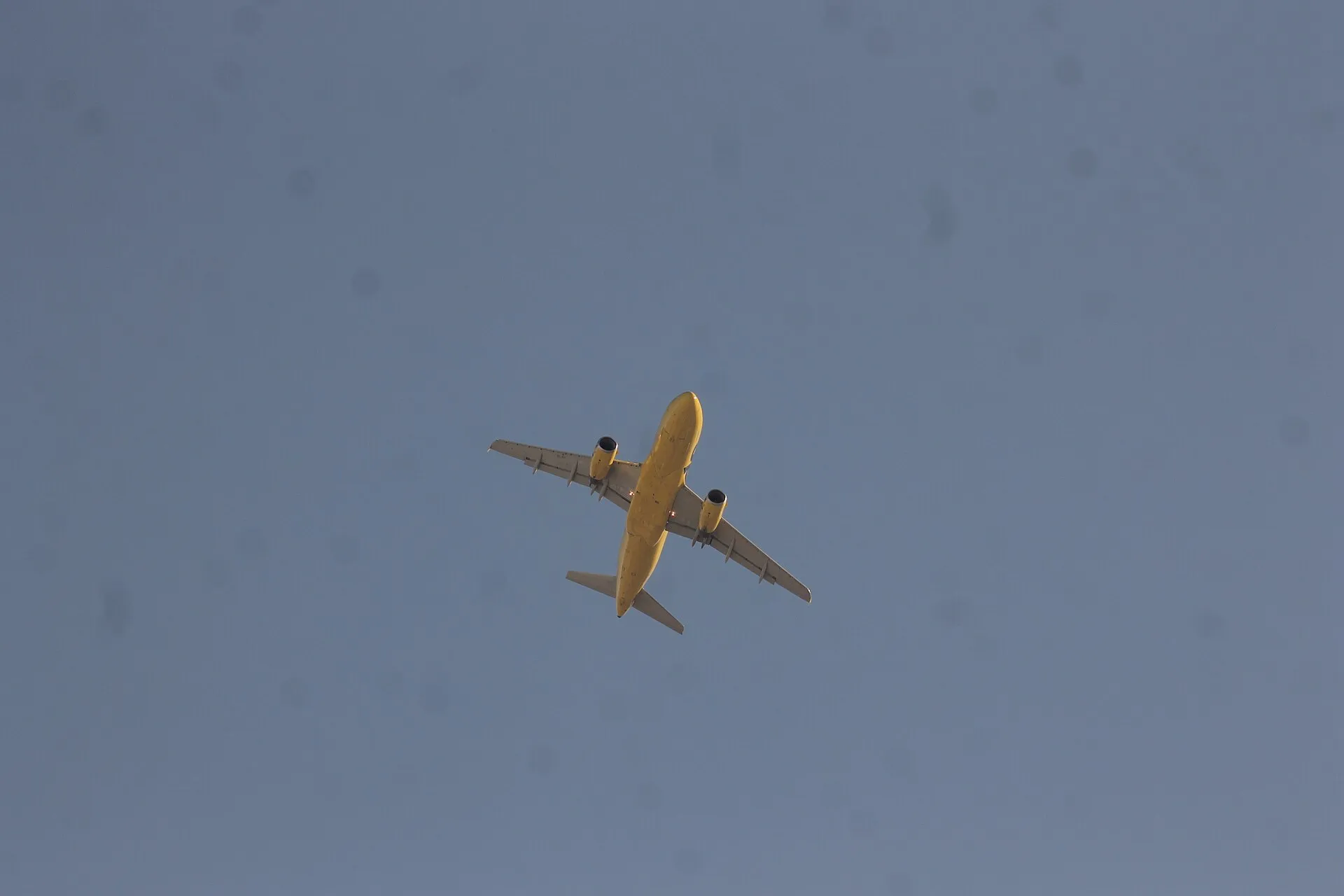
Two years ago, the federal government went to court to stop one airline from buying another, and it won. The argument was clean and, on its own terms, correct: Spirit Airlines was the discount carrier that forced bigger airlines to keep their fares honest, and letting JetBlue swallow it would strip that discipline out of the market and leave flyers paying more. A judge agreed. The merger died. The government took a victory lap.
Spirit died too. On May 2 it shut down entirely, the first failure of a major U.S. carrier in roughly a quarter-century. And this summer, with Spirit gone and its low fares gone with it, airfares are sitting at a four-year high. The Justice Department was right about the disease. It is worth asking, now that the bill has arrived, whether blocking the merger was ever the cure.
That is the uncomfortable lesson of the Spirit saga, and it reaches well past aviation. Stopping a merger is not the same thing as preserving competition. A regulator can kill a deal and still lose the competitor it was trying to protect. When the target of a blocked merger then collapses on its own, consumers can end up with the exact outcome the enforcement was supposed to prevent, only worse, because now there is no merged survivor either. Washington treated “no deal” as a win for flyers. The empty Spirit gates say otherwise.
The Case the Government Won
The legal fight was not frivolous, and this is not an argument that it was. In March 2023 the Justice Department, joined by six states and the District of Columbia, sued to block JetBlue’s roughly $3.8 billion acquisition of Spirit. After a 17-day trial, a federal judge in Boston blocked the deal in January 2024, writing that the takeover did “violence to the core principle of antitrust law.” JetBlue abandoned the merger weeks later.
The government’s theory rested on a real phenomenon, the one industry analysts call the “Spirit effect.” Every time Spirit advertised a rock-bottom fare on a route, the legacy carriers flying the same route had to respond, or watch their passengers defect to the cheap seats. Even travelers who never set foot on a Spirit plane benefited, because Spirit’s mere presence dragged down what everyone else could charge. Fold Spirit into JetBlue, the DOJ argued, and JetBlue would rip out the budget seats, convert the planes to its pricier model, and erase that downward pressure. Fares would rise.
There is nothing wrong with that analysis. The data since confirm the underlying mechanism. Airline fares rose 26.7% over the year through May, according to Consumer Price Index figures the Bureau of Labor Statistics released June 10, the steepest annual jump in years and one that arrived even as jet fuel costs eased. Marketplace reported that fares on routes Spirit used to fly could climb 15% to 20%, with historical patterns pointing to jumps near 23% when Spirit exits a market entirely. The corridors hit hardest run out of Florida, Las Vegas, the New York area, Detroit and Houston, exactly where Spirit flew heavily. Losing the ULCC price floor raises fares. The government called that, and it was right.
What Blocking a Merger Doesn’t Do
Here is what the courtroom victory could not deliver: a healthy, independent Spirit. And that was always the unspoken premise of the win. The whole point of stopping the deal was to keep Spirit alive and flying as the scrappy price disruptor. Block the merger, the logic went, and the competition it threatened survives.
It did not survive. Spirit had agreed to merge with Frontier before JetBlue’s higher bid pulled it away; once the JetBlue deal was blocked, no rescue materialized. Spirit filed for bankruptcy protection in November 2024, restructured, and then ran out of road, ceasing operations this May. By then it accounted for close to 2% of domestic flights, and when it went dark those seats vanished from the market within days.
So the country ended up in the one place neither side of the case wanted. There is no JetBlue-Spirit combination, the outcome the government fought. And there is no independent Spirit either, the competitor the government meant to protect. What remains is a more concentrated market with one fewer discounter in it, which is the precise harm the lawsuit was supposed to head off. The fares climbing this summer are not evidence that the enforcers misread the market. They are evidence that winning the case did not save the thing the case was about.
This is the part of merger enforcement that deserves harder thinking. A static snapshot of a market, the kind antitrust review leans on, asks what happens to prices if Company A absorbs Company B. It is far less comfortable asking what happens to Company B if the deal is blocked and no other buyer appears. A failing or fragile competitor is not a fixed feature of the landscape that a regulator can count on to keep disciplining prices forever. Sometimes the realistic choice is not “merger versus vibrant independent rival.” Sometimes it is “merger versus no rival at all.” Treating those as the same question is how you win in court and lose at the gate.
The Counterargument Deserves a Hearing
A fair reading has to concede the other side, because it is not weak. Spirit’s troubles were not invented by the Justice Department. The ultra-low-cost model was buckling under higher labor costs, engine-maintenance groundings that idled aircraft, and a post-pandemic shift in demand toward premium cabins that Spirit was built to ignore. It is entirely possible Spirit was doomed regardless of any merger, in which case the blocked deal merely denied JetBlue an acquisition Spirit’s own balance sheet could not survive anyway.
It is also true that the JetBlue-Spirit tie-up might itself have raised fares, which is what the DOJ argued in the first place. Approving every merger a struggling company proposes, on the theory that survival beats independence, would gut antitrust enforcement entirely and hand every acquirer a ready-made excuse. “Let us buy them or they’ll fail” is the oldest argument in the merger playbook, and regulators are right to treat it with suspicion.
Both points land. The honest conclusion is not that the government should have rubber-stamped the deal, and certainly not that antitrust enforcement is the enemy of consumers. It is narrower. When the target of a blocked merger is visibly fragile, the analysis cannot stop at the post-merger price chart. It has to weigh the live possibility that “no deal” means “no competitor,” and to be honest with the public about that risk instead of declaring the market saved. The flaw was not the skepticism. It was the certainty.
Why It Matters Now
This is not a closed case study. The economics that broke Spirit are still grinding on the rest of the budget sector, and the International Air Transport Association has warned that more carriers could fail. Each failure removes another source of the price discipline that kept flying cheap for two decades, and each one will land on the same families now staring at fares up more than a quarter from last year, on top of fuel costs that spiked and only partly receded and a Federal Reserve holding rates higher for longer.
The next budget airline that wobbles will eventually look for a buyer, and antitrust enforcers will face the same choice they faced with Spirit. They can score the case the way they scored this one, as a binary between a price-raising merger and a competitive market that will supposedly endure on its own. Or they can absorb what Spirit taught: that a competitor you refuse to let be acquired is not a competitor you have guaranteed will exist. Flyers are paying the four-year-high fares either way. The least the process owes them is an enforcement standard that counts the cost of being right about the harm and wrong about the remedy.
Sources 6 cited · 2 primary
- Consumer Price Index Summary — 2026 M05 Results
- Justice Department Statements on District Court Decision to Block JetBlue's Acquisition of Spirit Airlines
- Judge blocks JetBlue-Spirit merger in win for Biden's Justice Department
- U.S. judge blocks JetBlue's acquisition of Spirit, saying deal would hurt consumers
- Airfares on former Spirit Airlines routes could rise as much as 15% to 20%
- Airlines had the perfect conditions for jacking up fares. Then Spirit collapsed
American Courant cites its sources and links to primary documents where they exist. How we report →