Italy abruptly canceled a planned U.S. visit by its foreign minister on Friday after President Donald Trump claimed that Prime Minister Giorgia Meloni had “begged” him for a photograph — a public insult that ruptured what had been one of Washington’s warmest relationships in Europe.
The episode escalated quickly. In an interview with the Italian broadcaster La7, Trump said Meloni had pleaded with him for a photo at the Group of Seven summit in France and that he obliged because he felt sorry for her. Meloni responded with a video calling the account “completely fabricated” and declaring, “Neither I nor Italy ever beg.” Within hours, Foreign Minister Antonio Tajani scrapped a U.S. trip he had been due to make this weekend, calling the president’s remarks “serious and offensive” and saying they “offend all of Italy.”
The flare-up is more than a personality clash. Meloni has spent three years positioning herself as Trump’s main interlocutor in Europe, the leader most able to talk to a U.S. administration that has unsettled the continent’s capitals. That a single televised jab could blow up so fast is a measure of how strained the underlying relationship has already become.
What Trump Said, and How Italy Responded
According to CBS News and CNN, Tajani had been scheduled to travel to the United States this weekend for an Italy-U.S. business forum and a meeting with Secretary of State Marco Rubio. After Trump’s comments aired, the Italian government pulled him from the trip, and the business forum was canceled later Friday.
Meloni’s video response went beyond the photo claim to question Trump’s conduct toward allies more broadly. “I don’t know why the president of the United States behaves this way with his own allies,” she said, adding that she was sorry he did not “show the same determination with the enemies of the West, with the enemies of the United States, whose leaders he instead shows himself to be much more accommodating towards.” Her closing line was pointed: Italy, she said, does not beg.
The White House and State Department did not immediately comment on the cancellation, according to CNN. Trump’s account remains on the record through his own televised interview; Italy’s rebuttal came directly from the prime minister and her foreign minister. Both governments’ positions are, in other words, stated plainly by the principals themselves — which is part of why the dispute has been so hard to defuse.
The Diplomatic Stakes
For most of Trump’s second term, Meloni has played a specific and valuable role: the European leader he respects, and the one her counterparts in Paris, Berlin and Brussels have quietly leaned on to relay messages and soften friction. She attended his inauguration-era events, cultivated a personal rapport, and styled herself as a bridge between a skeptical Europe and an unpredictable White House.
That bridge is now visibly cracked. A public falling-out between Trump and the one major EU leader who had kept lines open complicates a long list of files where the United States and Europe are already at odds — defense spending, the war in Ukraine, trade. If even Meloni is willing to cancel a ministerial visit over a personal slight, it signals to other capitals that the cost of deference to Washington may be rising faster than its benefits.
It also lands at an awkward moment for transatlantic unity. The G7 in France was meant to project common purpose among the major Western democracies; instead it has produced a bilateral rupture days later, a reminder of how thin the consensus running through the alliance has worn.
There is a domestic dimension for Meloni, too. At home, her credibility has rested partly on the argument that her ideological closeness to Trump gave Italy outsized influence in Washington — that she could secure better terms on trade and security than a more adversarial leader. Being publicly characterized as someone who “begged” for a photo undercuts exactly that image, and her forceful response was as much a message to Italian voters as to the White House. Opposition figures in Rome have long argued her courtship of Trump bought Italy little; a televised insult, followed by a canceled ministerial trip, hands them an easy talking point.
The Deeper Strains
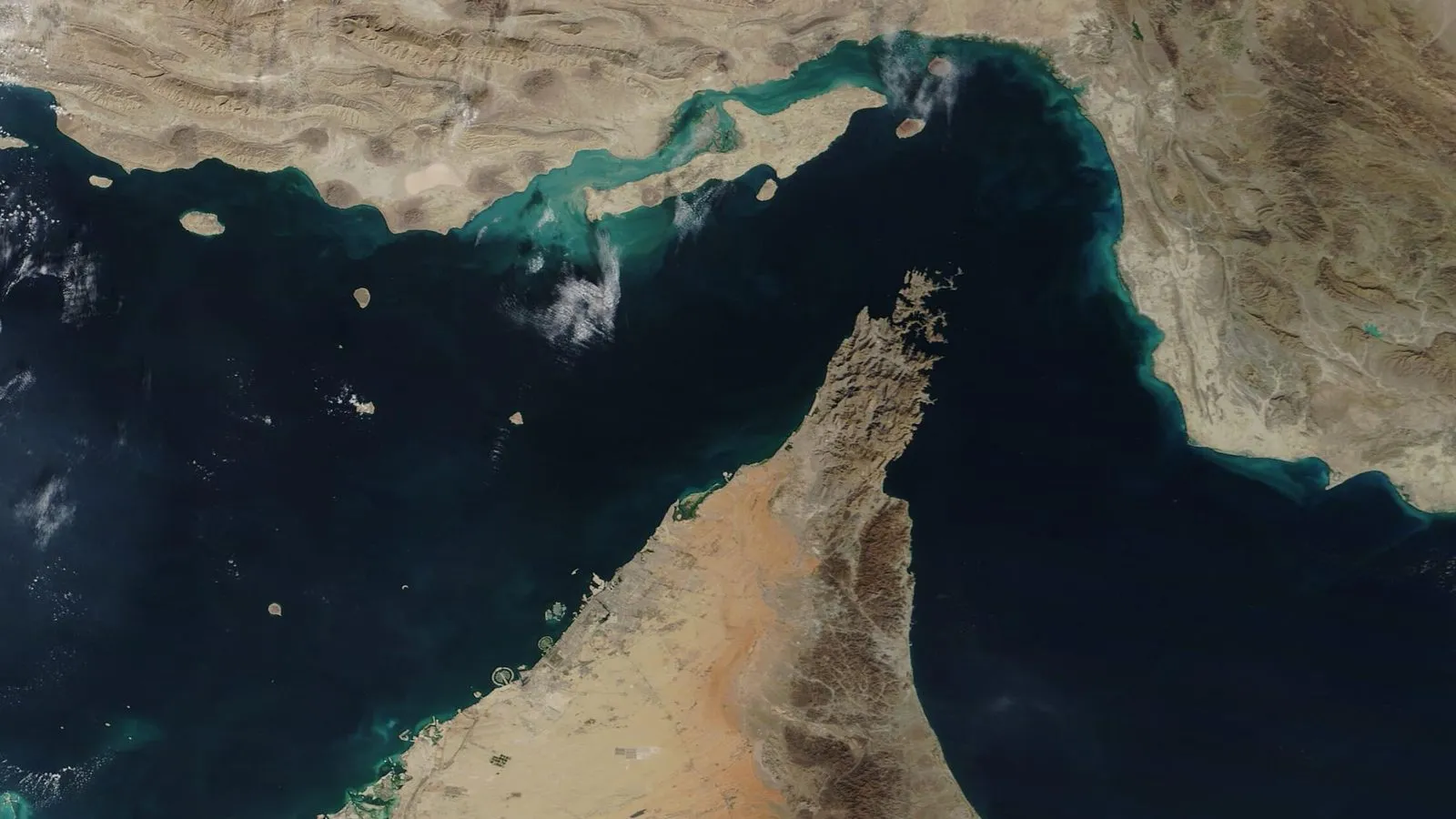
The photo dispute is the spark, not the cause. Relations between Rome and Washington have frayed across several fronts this year. Meloni has called the U.S. war against Iran illegal, breaking sharply with an administration that prosecuted the conflict and then negotiated the deal to end it and reopen the Strait of Hormuz. Italy has been a firm backer of Ukraine even as Trump has pressed Kyiv toward concessions, a divide on display during his Ukraine push at the recent G7 summit. And Trump’s tariffs on European goods — a recurring source of conflict tied to the same G7 trade and tech disputes with France and the EU — have strained ties further, alongside strong U.S. backing of Israel in Gaza, which much of Meloni’s electorate opposes.
Each of those disagreements predates the photo flap. What the spat did was strip away the personal goodwill that had papered over them, leaving the policy gaps exposed.
The U.S. Angle
Italy is a founding NATO member, the eurozone’s third-largest economy, and host to major U.S. military installations, including the naval air station at Sigonella that supports American operations across the Mediterranean and North Africa. Washington has real, concrete interests in keeping Rome close, and Meloni’s right-leaning government had been, on paper, the most natural partner the administration had in Europe.
A canceled foreign-minister visit and a scrubbed meeting with Rubio are not, by themselves, a crisis. But they are the kind of small, visible breakdown that diplomats watch carefully, because they reveal how much trust has drained out of a relationship that both sides had recently described as a model.
What Comes Next
The immediate question is whether the two governments move to contain the damage or let it harden. A statement of regret from Washington, or a quiet rescheduling of Tajani’s trip, would signal both sides want to move on. Continued silence would suggest the rupture runs deeper than a single interview.
Either way, the blowup is a reminder that the Trump-Meloni partnership, long held up as proof that the U.S. and a major European power could still align, rests on a personal rapport that can fracture over a single sentence on live television. For an alliance already pulling in different directions on Iran, Ukraine and trade, that is a fragile foundation to be standing on.
Sources 5 cited · 1 primary
- Italy nixes envoy's U.S. visit as leader Meloni 'stunned' by Trump comments: 'Neither I nor Italy beg'
- Italian foreign minister cancels trip to US over Trump's comments about Meloni
- Italy's Meloni pushes back on Trump's 'fabricated' claim as top diplomat cancels U.S. trip
- Meloni slams Trump's claim she 'begged' for a photo with him as Italy's top diplomat cancels U.S. trip
- Italy's top diplomat nixes US trip after Meloni says Trump fabricated story
American Courant cites its sources and links to primary documents where they exist. How we report →