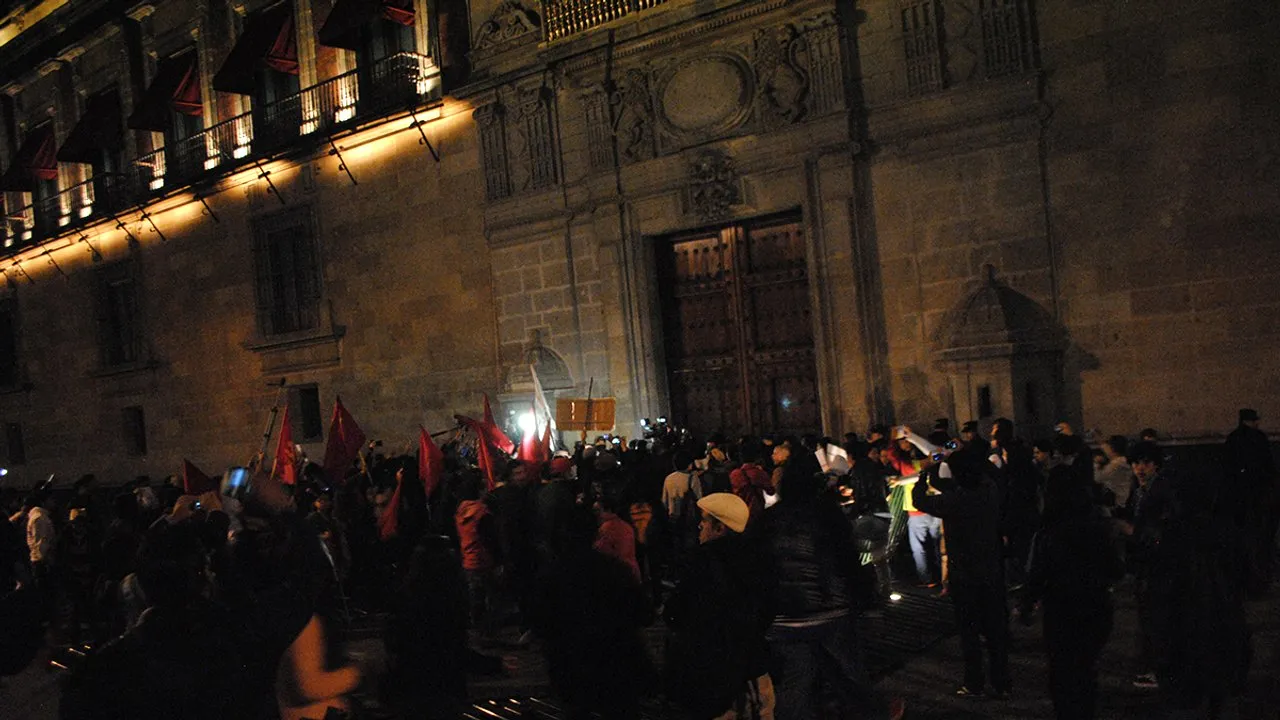
With the World Cup a week away, the trouble in the city that will host its opening match isn’t on the pitch. It’s in the streets around the presidential palace.
A national strike by Mexico’s dissident teachers’ union, the CNTE, has blockaded avenues across Mexico City for nearly a week, toppled statues installed to promote the tournament, and escalated into the storming of a federal ministry. The union is now threatening to disrupt the June 11 World Cup inauguration at the capital’s main stadium — and President Claudia Sheinbaum, refusing to order a crackdown so close to a global spotlight, is betting that negotiation can clear the streets before the world arrives.
The collision puts Mexico’s first-year president in a vise. The 2026 World Cup, co-hosted by Mexico, the United States, and Canada, opens in her capital, and the images beamed worldwide on June 11 will be the first impression hundreds of millions of viewers — and a wave of American travelers — form of the host nation. A teachers’ encampment blocks from the National Palace, and a union vowing to interrupt the ceremony, is not the backdrop any government wants for that moment.
Why the Teachers Are Striking
The strike is rooted in a grievance nearly two decades old. At its center is a 2007 overhaul of the ISSSTE law, the statute governing pensions and benefits for Mexican state workers, which moved teachers and other public employees from a solidarity-based pension system into individually managed private accounts. Critics on the Mexican left have long compared that model to the privatized pension scheme imposed in Chile under Augusto Pinochet, arguing it shifted retirement risk onto workers and left many facing inadequate payouts.
The CNTE — the more radical, regionally powerful wing of Mexico’s teaching corps, distinct from the larger official union — wants that 2007 reform repealed. The union says Sheinbaum, who took office in late 2024 as the standard-bearer of the governing Morena movement, promised during her rise to address the law, and it is pressing her to deliver. Alongside the pension demand, the teachers are calling for a 100% salary increase and the elimination of USICAMM, the body that oversees teacher hiring and promotion, which many educators view as a punitive evaluation regime.
Those demands are sweeping, and the government has signaled it cannot meet them in full — particularly the doubling of salaries — without blowing a hole in the federal budget. That gap is why the talks have dragged on without resolution even as the calendar tightens toward kickoff.
The Collision With the World Cup
What began as a labor dispute has become a public-order problem. Striking teachers blockaded Paseo de la Reforma, the grand avenue that runs through the heart of the capital, and blocked highways connecting Mexico City to neighboring cities. They established a large encampment a few blocks from the National Palace, in or near the Zócalo, the central square that is itself a focal point of the World Cup festivities.
The protests have at points turned destructive. Demonstrators toppled statues of footballers that had been installed around the city to promote the tournament — a pointed gesture aimed directly at the event the government most wants to protect. The mobilization escalated sharply when protesters broke into the headquarters of the Public Education Secretariat, damaging the building and, by multiple accounts, injuring at least two police officers.
The disruption arrives as the capital is already straining to be ready. Mexico City has been racing through last-minute construction and stadium preparations ahead of hosting the opener, and the combination of roadwork and rolling blockades has snarled movement through parts of the city. The union has been explicit that the World Cup is leverage: with the eyes of the world about to turn toward Mexico City, a strike that can interrupt the inauguration carries far more weight than one staged in an ordinary month.
This is not the only off-field cloud hanging over the tournament’s launch. FIFA is simultaneously fending off a backlash over record ticket prices and a subpoena from two U.S. attorneys general, a sign of how a 16-city, three-nation event inevitably absorbs the politics and grievances of each place it touches.
Sheinbaum’s Bind
Sheinbaum’s response has been to refuse the one option that would most quickly clear the streets — force — while insisting the door to talks stays open.
The reference she keeps reaching for is historical and deliberate. “They want us to fall into repression before the World Cup,” she said at her June 3 morning press conference, “we won’t fall, otherwise we are Díaz Ordaz.” The name carries enormous weight in Mexico: Gustavo Díaz Ordaz was the president whose government carried out the 1968 Tlatelolco massacre, when security forces killed student protesters in Mexico City days before that year’s Olympic Games. For a leader from the Mexican left, invoking Díaz Ordaz is a vow not to repeat the country’s most notorious act of pre-event repression — and a warning to her own security forces.
At the same time, Sheinbaum has declined to meet the CNTE’s leaders directly. Doing so “is not pertinent at this moment,” she said on June 4, because “it won’t change anything,” adding that her interior and education secretaries have her full confidence to negotiate. She has also accused unnamed provocateurs of driving the destruction, suggesting some actors are “playing into the hands” of Mexico’s far right by escalating the unrest.
The negotiations themselves are being handled by a trio of senior officials — Interior Secretary Rosa Icela Rodríguez, Education Secretary Mario Delgado, and the head of the ISSSTE pension agency — but they have produced no agreement. The union, meanwhile, has demanded a face-to-face meeting with the president herself, the one thing she has so far refused. That standoff is the crux: Sheinbaum is trying to lower the temperature without conceding the principle that she, personally, can be pressured into bargaining by the threat of disrupting a global event.
What Comes Next
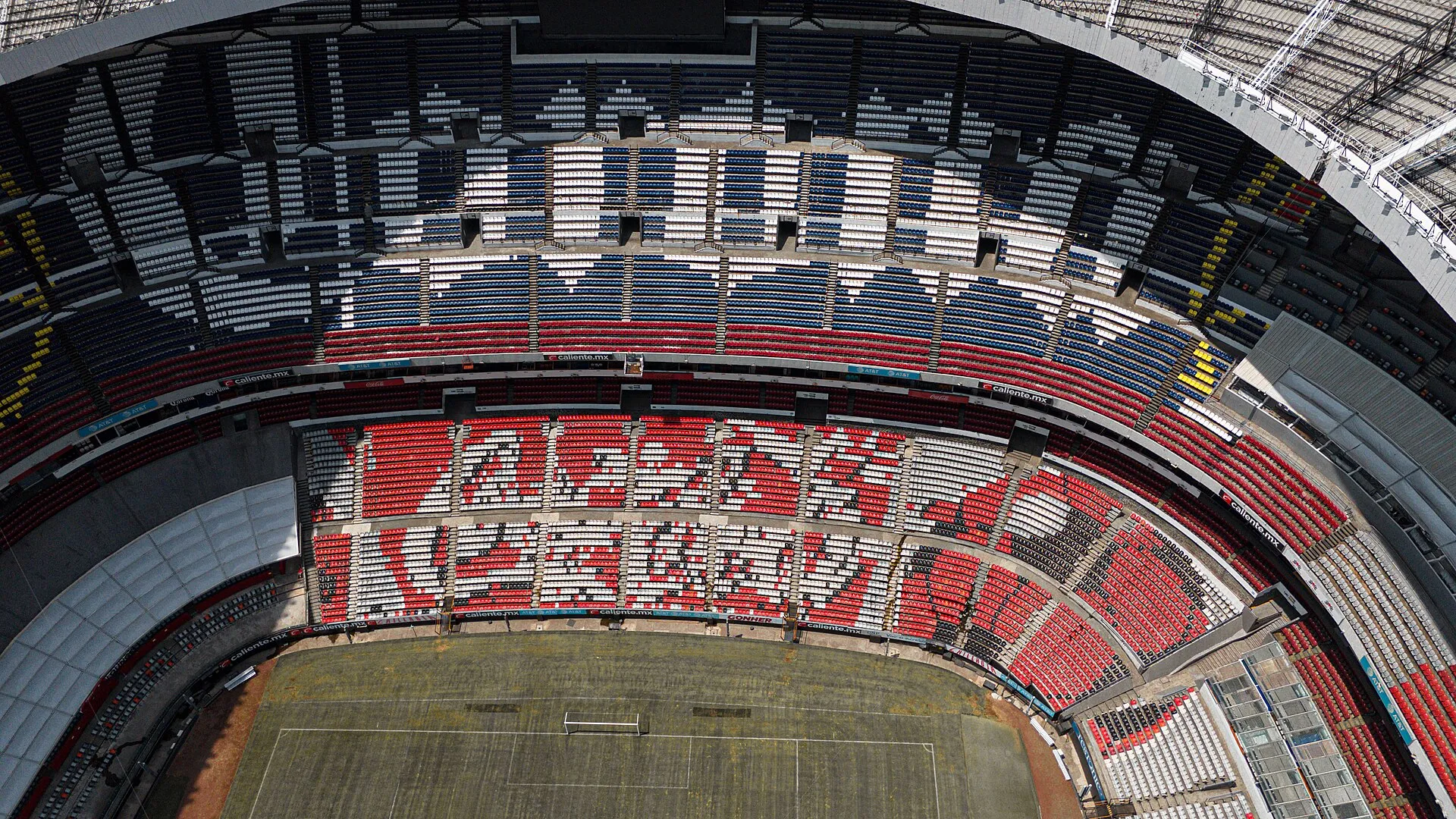
The clock is the dominant fact now. The World Cup opens June 11, when Mexico plays South Africa at Estadio Azteca — renamed Estadio Ciudad de México for the tournament under FIFA’s naming rules — in a ceremony the government wants to be flawless. That leaves only days for negotiators to reach a deal, or at least an understanding, that pulls the blockades back from the capital’s core.
Several outcomes are possible. The government could offer a partial concession on pensions or pay sufficient to get the union to suspend its most disruptive tactics through the tournament. The talks could stall and the encampments could remain, forcing authorities to manage protests around the stadium and ceremony without the heavy hand Sheinbaum has ruled out. Or the standoff could harden, with the union calculating that the World Cup gives it a once-in-years moment of maximum leverage and pressing its advantage.
The tournament has already absorbed plenty of politics beyond the pitch — including a fight in Washington over which national teams, among them Iran, will be allowed to play on U.S. soil. For American fans planning to travel south for the opener, and for the millions who will watch the inauguration on television, the practical question is whether Mexico City’s streets are calm on June 11. For Sheinbaum, the stakes are larger: how she handles a labor revolt in the glare of the World Cup will shape both the first images the world sees of her Mexico and the precedent she sets for every union that watched her blink — or hold firm.
The 2026 World Cup opens June 11 at Estadio Ciudad de México in Mexico City.
Sources 7 cited · 1 primary
- Versión estenográfica. Conferencia de prensa de la presidenta Claudia Sheinbaum Pardo del 03 de junio de 2026
- Protests and last-minute construction work disrupt Mexico City ahead of World Cup
- Striking teachers in Mexico City threaten World Cup week before kick off
- Mexico City teacher strike threatens to disrupt 2026 World Cup kick-off
- No vamos a caer en represión a la CNTE antes del Mundial, afirma Sheinbaum: 'No somos Díaz Ordaz'
- Descarta Sheinbaum reunirse con la CNTE y reprimir: 'no somos Díaz Ordaz'
- Protesting teachers in Mexico topple player statues days before World Cup
American Courant cites its sources and links to primary documents where they exist. How we report →