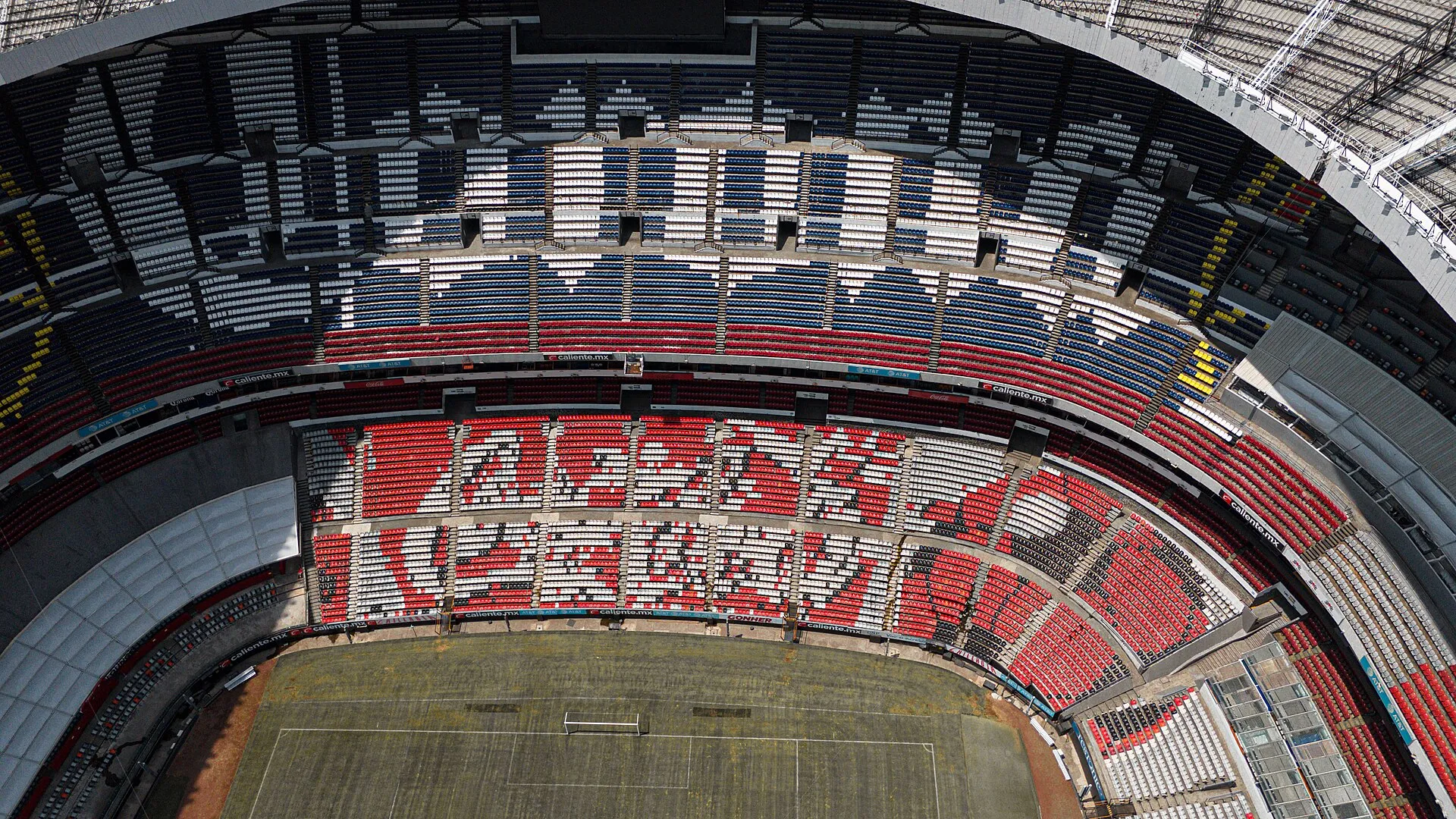
The largest World Cup in the tournament’s history begins Thursday, and it begins where the World Cup has begun twice before. Mexico meets South Africa at Estadio Azteca in Mexico City to open the 2026 tournament — the first hosted by three countries and the first to field 48 teams instead of 32.
For the next 39 days, the United States, Mexico and Canada will share a single sporting event spread across 16 host cities and 104 matches, more games than any World Cup has ever staged. It is the first time the men’s tournament has been played on U.S. soil since 1994, and the scale is the story: a competition that has outgrown a single nation and now needs a continent to hold it.
The opener carries its own piece of history. When the first whistle blows at the Azteca, the stadium becomes the only venue ever to host three World Cup opening matches, having staged the tournament’s early rounds in 1970 — when Pelé’s Brazil began a run to the title — and again in 1986, the World Cup of Diego Maradona’s “Hand of God.” A renovation completed earlier this year, reported by Euronews at roughly 3.6 billion pesos, or about 160 million euros, brought the venue’s capacity back to around 87,500, keeping it the largest stadium in Latin America.
Why It Matters
A World Cup is the closest thing the planet has to a shared cultural event, and this one lands in American living rooms at a moment when the country is already paying attention. Telemundo announced all-day opening coverage across its broadcast network, Peacock and digital platforms for June 11, betting that a tournament on home soil — with matches in New York, Los Angeles, Dallas, Atlanta, Seattle and beyond — will pull in audiences far past the usual soccer following.
The reach is not only sporting. FIFA has projected an enormous economic windfall from the three-nation tournament, with Euronews reporting estimates of a roughly $30.5 billion boost for the host nations and as much as $40.9 billion in additional global output. Those figures come with heavy skepticism: economists who study mega-events have long warned that the headline projections rarely survive contact with reality, and Euronews noted that the eventual numbers may look far more modest. Mexico, by one estimate cited in that coverage, stands to gain around $3 billion, somewhere between 0.2% and 0.5% of its GDP — real money, but a fraction of the promise.
The 48-team format also changes the texture of the event. Sixteen more teams means more nations with a stake, more first-time qualifiers and more cities hosting fans who traveled to see them. It is a deliberate expansion of the tournament’s footprint, and the opening match — Mexico, one of the host nations, against South Africa — is the first test of whether the bigger model delivers the spectacle FIFA has promised.
The American piece of the puzzle is the largest. Eleven of the 16 host cities are in the United States, which will stage the bulk of the knockout rounds and the final, and the tournament returns to the country for the first time since 1994 — a World Cup widely credited with seeding the modern professional game in the U.S. and the founding of Major League Soccer two years later. Three decades on, the sport’s American audience is far larger and the domestic league far deeper, and a home tournament is the kind of event that tends to accelerate that growth rather than merely reflect it.
The Cultural Stakes
The opening ceremony, staged before kickoff at the Azteca, leans on star power that crosses borders. Al Jazeera reported that Shakira and Burna Boy are set to perform the tournament’s official song, pairing one of Latin America’s most recognizable artists with one of Africa’s biggest stars — a deliberate nod to the two confederations meeting on the field. Mexican President Claudia Sheinbaum is expected at the official fan fest tied to the opener, a reminder that for the host nation this is a moment of national pride as much as a soccer match.
That pride has not come without friction. Mexico City spent the run-up to the opener managing a labor standoff: a teachers’ union pension protest that blockaded parts of the capital and, as we reported, threatened the fan fest and the opening-day logistics around the Azteca. The collision of a global showcase with domestic grievance is its own kind of World Cup tradition — host cities routinely find that the world’s attention turns the spotlight on local disputes that might otherwise stay local.
For American fans, the cost of being there has been its own running storyline. The pricing of tickets for matches in the New York and New Jersey area drew enough scrutiny to pull FIFA into a subpoena fight over how seats were sold, a sign of how much demand — and how much money — a home World Cup concentrates. The tournament arrives as both a celebration and a stress test of how the sport handles its own commercial gravity.
Why Fans Are Paying Attention
Soccer’s American audience has grown steadily, and a home World Cup is the kind of event that converts casual interest into appointment viewing. The U.S. men’s team plays as a host, guaranteed a place in the field, with a generation of players who came up in a more competitive domestic league than their predecessors. The schedule puts marquee matches within driving distance of tens of millions of people, and the fan-fest model — free public viewing sites in host cities — is built to spread the tournament beyond ticket-holders.
There is also the simple draw of the format’s drama. With 48 teams, the group stage is wider, the path to the knockout rounds is longer, and the number of nations still alive deep into June is larger than in any previous edition. For broadcasters and sponsors, that means more inventory; for fans, it means more reasons to keep watching after their own team’s fate is decided. The opener at the Azteca is the front door to all of it — a stadium that has watched the sport’s biggest names walk onto its grass, opening its third World Cup for a tournament that has never been this big.
What Changes Now
The opener flips the country into tournament mode. For the next several weeks, host cities will manage the logistics of a moving global event — stadium operations, transit surges, and the security planning that comes with hundreds of thousands of international visitors crossing three borders. The travel piece has already proven contentious: questions over visas and entry rules left some fans uncertain whether they would make it to matches at all, a friction we examined in our look at how visa and travel restrictions threatened to shut some supporters out of the tournament.
For broadcasters and sponsors, the calculus changes immediately. A 48-team field stretched across 104 matches is a vastly larger inventory of advertising and viewing windows than any prior World Cup, and the early group stage — with games staggered across U.S., Mexican and Canadian time zones — is built to keep screens on through the workday. The fan-fest model, free public viewing sites anchored in host cities, is the on-the-ground complement: a way to fold non-ticket-holders into the event and to turn a soccer tournament into a month-long civic gathering.
What Comes Next
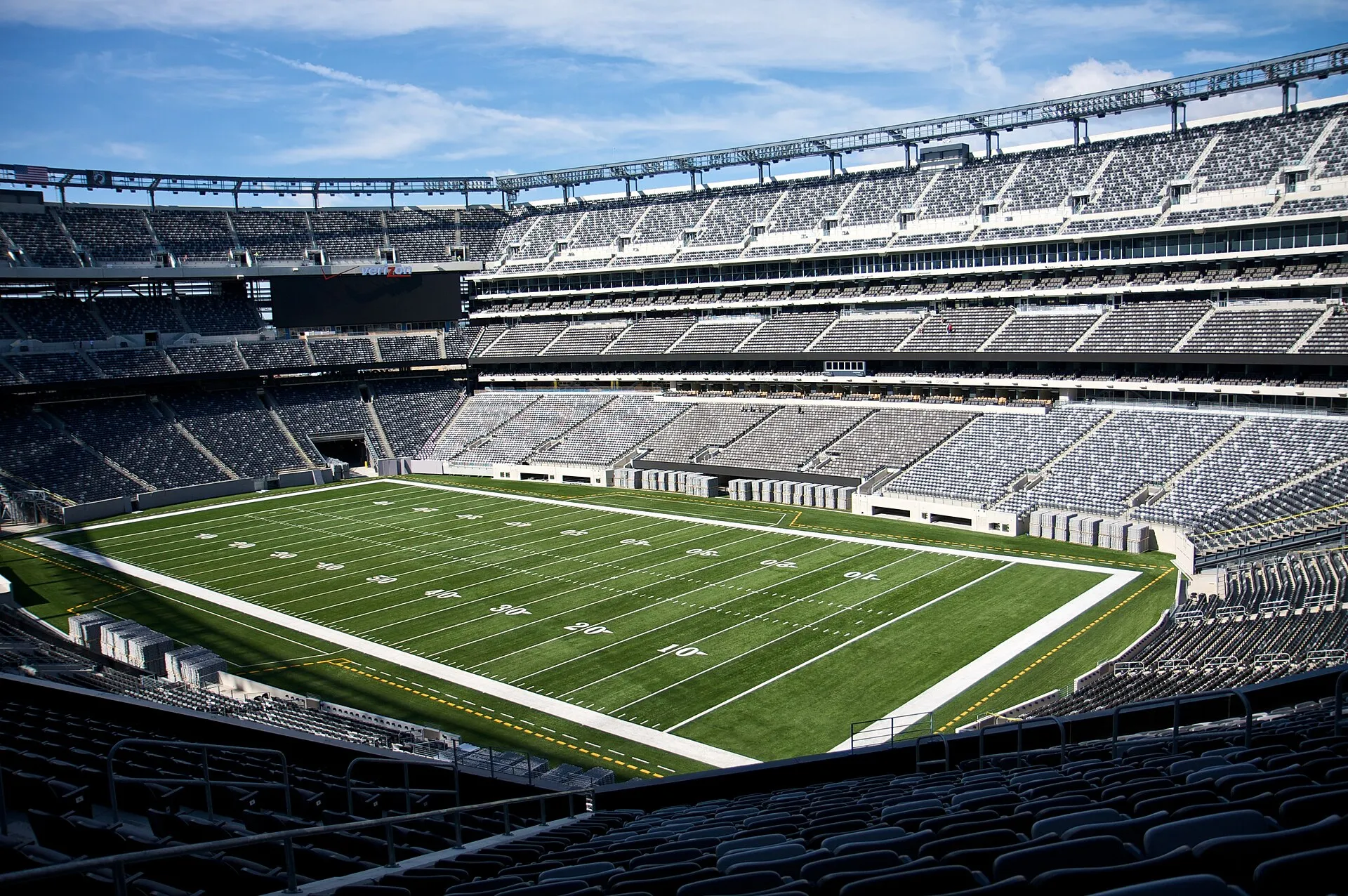
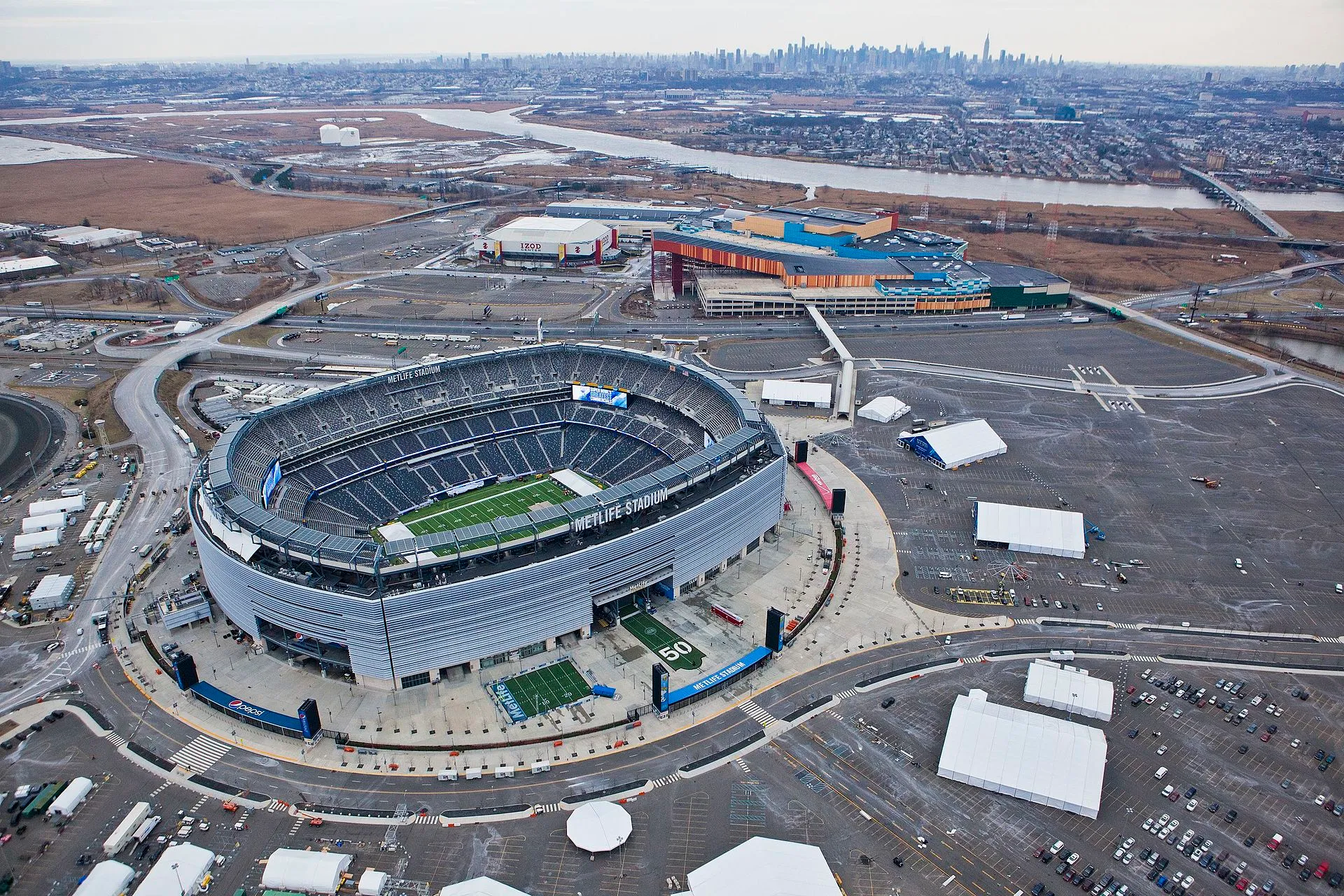
Group-stage play runs through late June before the field narrows into the expanded knockout bracket, with the final scheduled at MetLife Stadium in New Jersey on July 19. Over the next several weeks the tournament will move through all three host countries, and the early questions — whether the 48-team format works as a spectacle, whether the economic projections hold up, whether the host cities can absorb the crowds without the strain showing — will start to get answers.
For one afternoon, though, the focus is narrow: a single match, in a stadium that has done this twice before, kicking off the most sprawling World Cup ever attempted. The sport’s center of gravity has shifted to North America for a month, and it starts at the Azteca, exactly where it has started before. American Courant tracks the tournament’s cultural and business threads on our sports coverage page as the World Cup unfolds.
Sources 6 cited · 1 primary
- Estadio Azteca, Mexico City to host opening match of FIFA World Cup 2026
- World Cup opening ceremony: Who's performing, when it starts, how to watch
- Mexico City counts down to 2026 World Cup opener at historic Azteca Stadium
- The 2026 World Cup: Billions promised but will the economic boom arrive?
- Telemundo Kicks Off FIFA World Cup 2026 With All-Day Opening Day Coverage on June 11
- 2026 FIFA World Cup
American Courant cites its sources and links to primary documents where they exist. How we report →