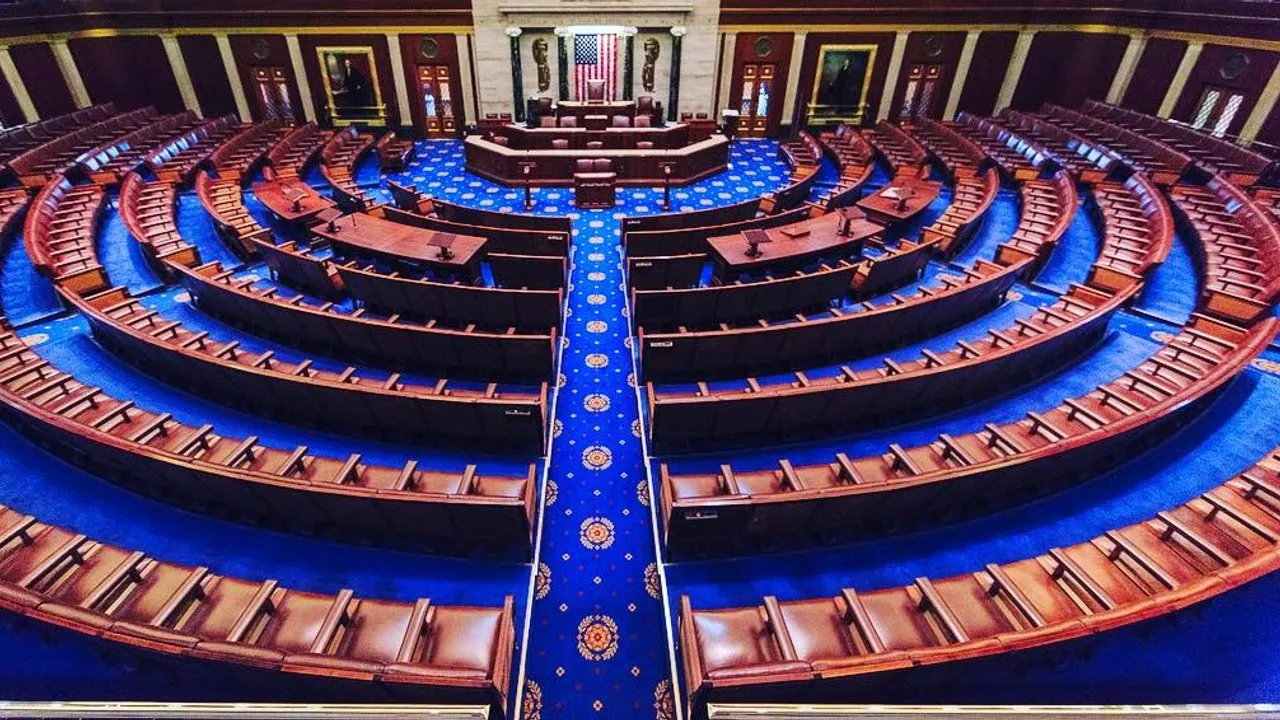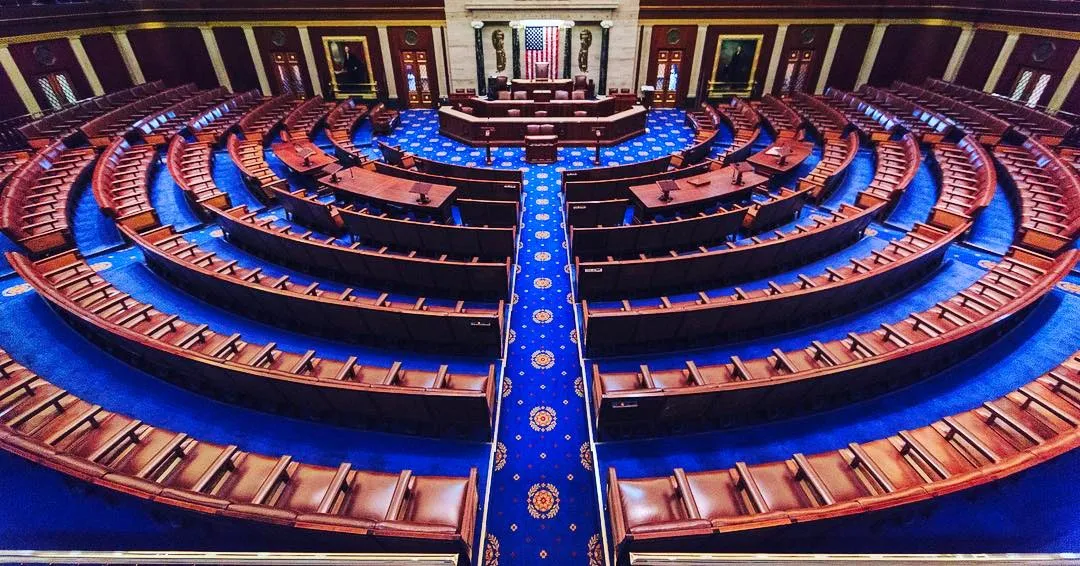
The House of Representatives voted 215–208 on Wednesday to direct President Trump to end U.S. military operations against Iran — the first time either chamber of Congress has passed such a measure since the war began on February 28. Four Republicans broke with their party to provide the margin, exposing fractures within the GOP that previous votes in the Senate had only hinted at.
The resolution, offered by Rep. Gregory Meeks of New York, the ranking Democrat on the House Foreign Affairs Committee, invoked the War Powers Resolution of 1973 and ordered the administration to cease hostilities within 30 days unless Congress formally authorizes the war. The White House said immediately that the measure “will not reach” the president’s desk, and Senate Republican leaders are expected to block or table the resolution before it can reach a floor vote. But the vote is nonetheless the first concrete sign that House Republicans — long the president’s most reliable wall against oversight challenges — are not uniformly behind the Iran campaign.
How the Vote Broke Down
The 215–208 result followed party lines with one exception: four Republicans voted yes. All 211 Democrats present voted for the resolution.
The four Republicans were Rep. Thomas Massie of Kentucky, who co-sponsored the measure; Rep. Brian Fitzpatrick of Pennsylvania; Rep. Tom Barrett of Michigan; and Rep. Warren Davidson of Ohio. Their defection was enough to push the resolution over the threshold in a chamber where Republicans hold a narrow majority.
It was the fourth time the House had voted on an Iran war-related measure since the conflict began, but the first in which any version of a constraint on the president passed. The Senate had voted six times on similar or identical resolutions and failed each time; the most recent Senate vote, on May 1, fell 47–50, with Sen. Susan Collins of Maine as the lone Republican vote in favor.
The White House moved quickly to neutralize the result. A statement issued within minutes of the vote said the resolution “will not reach the president for his signature” — a reference to the Senate’s expected role as a firewall. Trump separately attacked the four Republicans on his Truth Social platform Thursday morning, calling them “disloyal” and vowing political consequences.
What the Four Republicans Said
The vote gave the four dissenting Republicans a moment to explain publicly what motivated them — and their explanations mapped to distinctly different concerns.
Massie, who has been the most visible Republican critic of the war, framed his position in economic and constituent terms. “People are tired of this,” he told reporters ahead of the vote. “They’re tired of $5-a-gallon gas and $6-a-gallon diesel, and fertilizer we can’t afford to put on our fields in Kentucky.” Massie has argued since March that the conflict has driven up energy and agricultural input costs for rural Americans, and that the administration has not made a compelling case that the strategic gains justify the price.
Fitzpatrick, a former FBI agent who represents a suburban Philadelphia district and has a track record of bipartisan votes, made a more procedural argument. “We have to follow the law,” he said in a floor statement, invoking the 1973 statute directly. Fitzpatrick has previously expressed support for the military objectives of Operation Epic Fury but argued that the question of legal authorization is separate from the question of whether the war was strategically justified.
Barrett and Davidson gave briefer public statements. Both cited the expired 60-day War Powers deadline as the legal basis for their votes, and both stopped short of calling the administration’s conduct of the war wrong as a policy matter.
The Administration’s Response
The White House position remains unchanged: the War Powers Resolution is unconstitutional, the ceasefire that the president ordered on April 8 effectively ended hostilities, and the 60-day clock is therefore moot. That position was articulated by Vice President JD Vance, House Speaker Mike Johnson, and Defense Secretary Pete Hegseth at Senate hearings in April and early May.
The administration has also argued in letters to Congress that seeking formal authorization under the statute would itself be unconstitutional — the president’s position being that his authority as commander in chief is sufficient and does not require legislative confirmation.
Constitutional scholars have consistently rejected that argument. The War Powers Resolution has never been successfully used to halt a military operation, and no court has ruled definitively on whether presidents must comply. But the statute’s 60-day clock — which expired May 1 with no authorization from Congress — creates ongoing legal exposure that the administration’s current defense is designed to manage.
Why This Vote Is Different
The six Senate votes on similar measures have all failed, and the Senate’s Republican caucus remains more unified behind the president than the House’s. Senate Majority Leader John Thune has not scheduled a vote on the House-passed resolution and is unlikely to do so. The measure’s formal legislative path ends there.
What has changed is the chamber. The House has historically been more deferential to presidents in war powers disputes — its Democratic majority passed a resolution on Libya in 2011 but failed to pass binding constraints, and the Republican majority during the Obama years never forced a formal vote on similar ground. Wednesday’s 215–208 result is the first time the House has affirmatively passed a measure directing an end to active U.S. hostilities with any country in decades.
The significance is partly institutional and partly political. Institutionally, the vote creates a legislative record that the House has formally invoked the War Powers Resolution — a fact that matters if the question of the war’s legality is ever litigated. Politically, it signals that four House Republicans from diverse regions and backgrounds are willing to put their names on a vote the White House has called an act of disloyalty, which raises the question of how many more might follow if the war continues or its costs rise.
The Iran War at 96 Days
The vote came on the 96th day of the conflict, with the ceasefire Trump declared in April growing increasingly fragile. Iran fired ballistic missiles at Kuwait and Bahrain on Wednesday, a drone struck Kuwait’s main airport and killed one person, and the United States conducted strikes on Qeshm Island in the Strait of Hormuz. Iran has also suspended negotiations over the broader deal Trump announced as “largely negotiated” — a deal whose terms Iran’s government disputed at the time and which has not been formally signed.
The proposed framework for a final Iran agreement — which would include limits on uranium enrichment and the reopening of the Strait of Hormuz — remains unsigned. Senate Republicans who support the war have argued that a deal that allows Iran’s government to survive and regain economic strength from sanctions relief would undermine the objectives of Operation Epic Fury. House Democrats, and now four Republicans, have argued that the objectives themselves were never authorized.
What Comes Next
The House-passed resolution goes to the Senate. With Republican leadership in control of the Senate floor schedule, it is unlikely to receive a vote. If tabled or never scheduled, the resolution dies in this congressional session.
Even if the Senate were to pass an identical measure, the president has indicated he would veto it. Overriding a veto would require two-thirds majorities in both chambers — a threshold that Wednesday’s 215–208 margin in the House falls far short of.
The more consequential near-term pressure on the war’s future lies in the unresolved diplomatic track: whether Iran resumes ceasefire negotiations, whether the Strait of Hormuz remains partially or fully closed to commercial shipping, and whether the costs of the conflict — which the Pentagon has put at approximately $25 billion — continue to translate into prices at gas stations and grocery stores that Middle American Republican constituents notice.
Those costs are what Massie said his constituents are talking about. Whether enough of his colleagues agree — and whether that agreement eventually shows up in future votes — is the question the 215–208 result raised without answering.
Sources 5 cited · 3 primary
- House passes resolution directing Trump to end US hostilities with Iran
- House passes war powers resolution on Iran for first time with four Republicans
- House passes Iran war powers measure in 215-208 vote, first passage in either chamber
- Iran War Passes Legal Deadline. Trump Says the Clock Has Stopped.
- Trump says an Iran deal is 'largely negotiated.' Tehran pushes back.
American Courant cites its sources and links to primary documents where they exist. How we report →