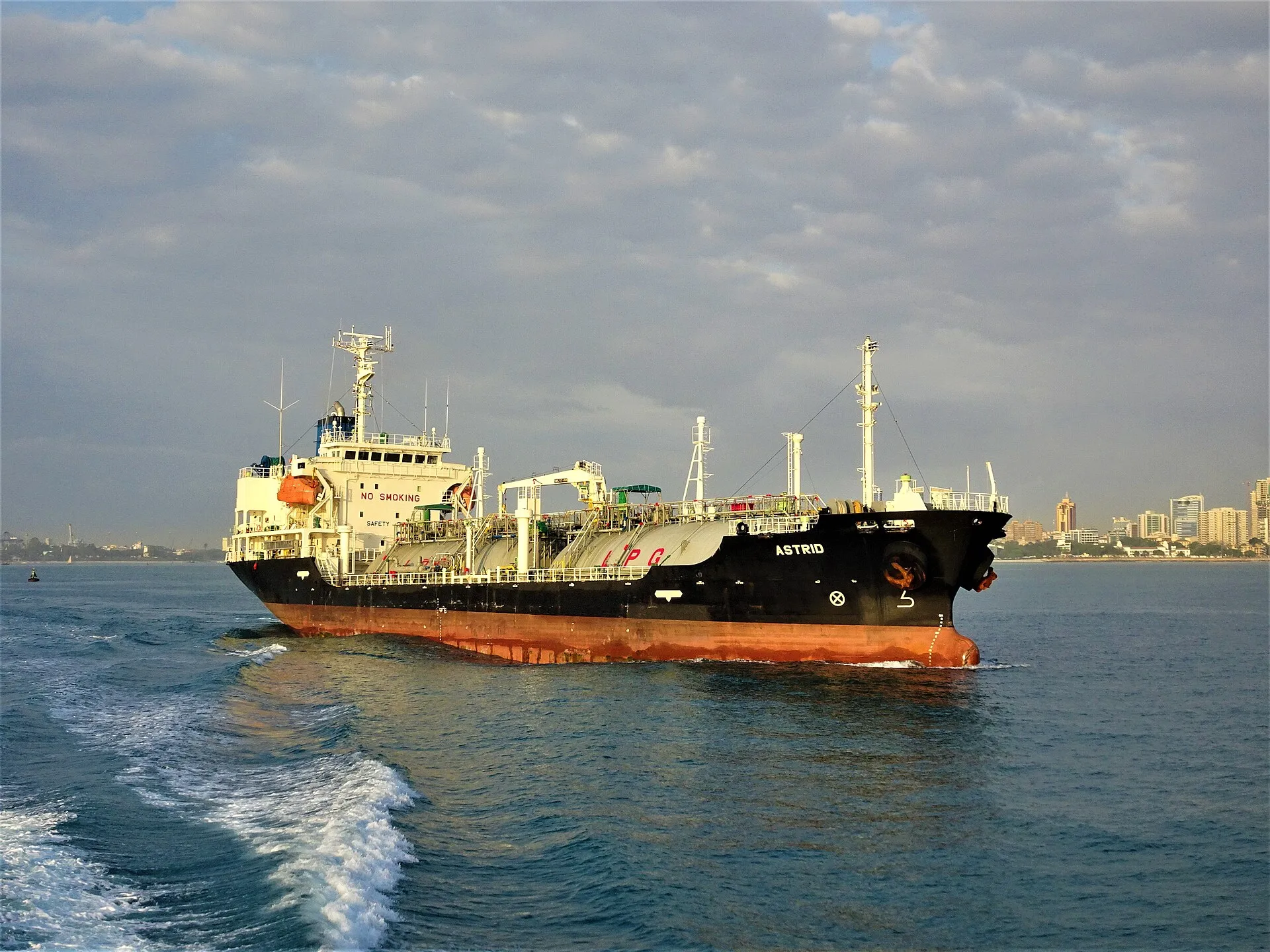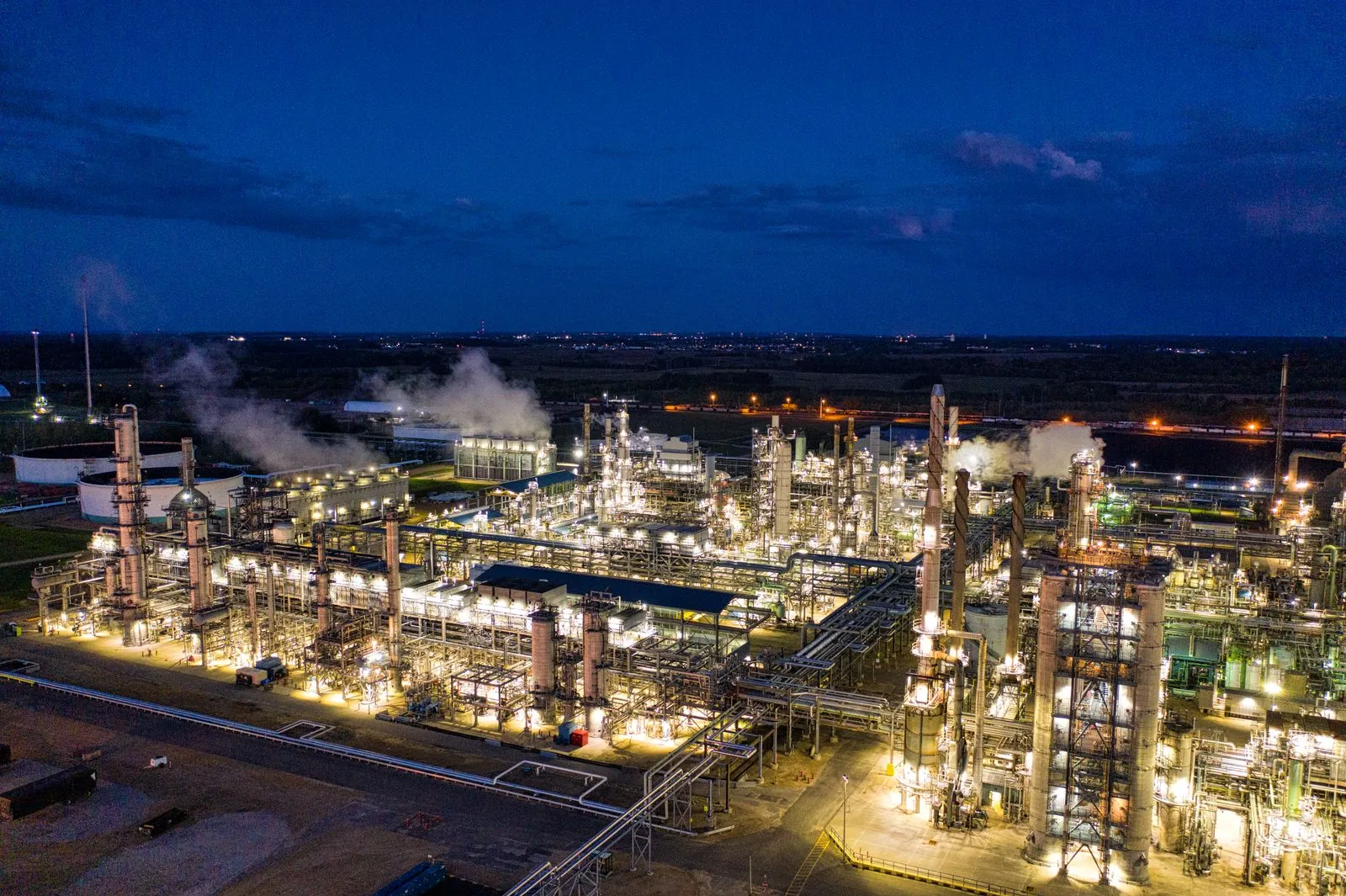
Hours before Vladimir Putin opened the St. Petersburg International Economic Forum on Wednesday — the annual gathering Russia likes to bill as its answer to Davos — Ukrainian drones reached the city and set an oil terminal on fire. The drones had flown more than 1,000 kilometers to get there. President Volodymyr Zelensky said the long-range strikes hit “key targets” and produced “positive results.” Russia’s Defense Ministry said it shot down 354 Ukrainian drones overnight, and Kremlin spokesman Dmitry Peskov warned that Moscow’s response would be “systemic in nature.”
It would be easy to file this under symbolism: Ukraine embarrassing Putin at his own showcase, smoke drifting over the forum where he wanted to project stability to foreign investors. The symbolism is real. But reading the strike as theater misses the more important point. The target wasn’t Putin’s pride. It was his cash flow. And on that front, this attack is part of the most coherent strategy Ukraine has right now — arguably the only one that’s working.
The front line is frozen. The energy war isn’t.
Start with the strategic context, because it explains why St. Petersburg matters more than another contested village. The ground war has settled into grinding stalemate, and the diplomacy meant to end it has gone nowhere. The ceasefire that collapsed when a prisoner swap fell apart left both sides back to trading fire, and the strike on St. Petersburg came a day after Russia’s overnight barrage killed 14 people across Ukraine. Neither army can deliver a decisive blow on the battlefield. Ukraine can’t push Russia out, and Russia can’t break Ukraine’s will or its lines.
So Ukraine has spent 2026 opening a second front where it actually holds an advantage: Russia’s oil economy. By Ukrainian and independent counts, its forces have carried out more than 20 strikes on Russian oil infrastructure this year, a deliberate shift from fighting over territory to dismantling the machinery that pays for the war. This is not a series of one-off raids. It’s a campaign with a thesis — that Russia’s war is funded by oil and refined-product exports, and that drones can do what sanctions alone never quite managed.
The numbers give the thesis teeth. Analysts estimate Russia lost on the order of $2.3 billion in oil revenue in March alone from long-range strikes. Repeated hits on the Ust-Luga and Primorsk terminals, which together handle roughly two-fifths of Russia’s seaborne crude, knocked export volumes down sharply for stretches of the spring. A strike on the Tuapse refinery did damage extensive enough that some assessments say the plant may need to be largely rebuilt. And because the specialized components these facilities rely on — distillation units, loading equipment — fall under Western technology sanctions, Russia can’t simply buy replacements. Repairs that once took weeks now stretch six to eighteen months. Every successful strike compounds.
Why an export terminal, not a parade
This is where the choice of St. Petersburg becomes legible. Ukraine didn’t send drones 1,000 kilometers to hit a barracks or a billboard. It hit a fuel-export and storage complex on the Gulf of Finland, the kind of node that turns Russian crude into hard currency. Doing it as the economic forum opened wasn’t a stunt layered on top of the strike — it was the message made unavoidable. Putin built a stage to tell investors that Russia’s economy is humming along despite the war. Ukraine answered by burning, on schedule, the exact thing that economy runs on.
That’s a sharper form of pressure than blowing up a parade would be, and it’s worth being precise about why. Symbolic strikes generate headlines and fade. Strikes on revenue infrastructure change the arithmetic of how long Russia can sustain the war without painful tradeoffs at home. The first kind of attack wounds an ego. The second kind drains a treasury. Ukraine, low on the manpower and Western munitions it would need to win the symbolic war of territory, has correctly concentrated on the war it can win — the one measured in barrels per day.
The honest counterargument
The strongest case against celebrating any of this is that the damage may matter less than it looks, and intellectual honesty requires sitting with it. For most of the past year, Russia’s oil revenue held up despite the strikes, because global prices rose enough to offset the lost volume. The Carnegie Endowment laid this out plainly: Ukraine was knocking out barrels, but a tighter world market — pushed in part by the disruption around the Strait of Hormuz that drove crude toward $100 — meant Moscow earned nearly as much selling less. A campaign that destroys supply during a price spike can look devastating on a damage map and barely register on a balance sheet.
There’s also the escalation problem. Peskov’s promise of a “systemic” response is not nothing, and Russia has answered Ukrainian deep strikes with mass barrages against civilian infrastructure before. An attrition contest over energy assets is one Russia, the larger economy with the larger arsenal, may believe it can outlast. None of that is reason to pretend the strikes are decisive when they aren’t yet.
But the price cushion is starting to thin, and that’s the development worth watching. By spring, Russia was reportedly cutting crude production by 300,000 to 400,000 barrels a day — not a choice you make when your export machine is healthy, but one you make when you’ve run out of places to send the oil or refine it. When a producer starts curtailing output, the high-price escape hatch is closing. The strikes that looked cosmetic while prices climbed get more expensive for Moscow as the market loosens.
What it adds up to
Ukraine is not going to bomb oil terminals until Putin sues for peace; this campaign is leverage, not a war-winning weapon, and treating it as a guaranteed knockout would repeat the mistake of every overpromised theory of victory in this war. The realistic case is narrower and more durable: with the front static and talks dead, the energy war is the one arena where Ukraine can impose rising, cumulative costs that Russia can’t easily reverse, and that it can use to shape whatever negotiation eventually comes.
St. Petersburg, then, was the strategy stated out loud. The fire at the terminal will be put out and the forum went on. But the choice of target, the distance the drones traveled, and the timing all said the same thing: Ukraine has found the seam where it can still hurt Russia, and it intends to keep pressing on it. Putin can stage a forum to argue his war economy is fine. The smoke over his showcase city was the more credible witness.
Sources 6 cited · 1 primary
- Ukrainian drones strike a St. Petersburg oil terminal ahead of Putin visit
- Ukrainian drones strike St. Petersburg, hours before 'Putin's Davos' opens
- Ukraine strikes St. Petersburg Oil Terminal as Putin's Economic Forum opens
- What's Having More Impact on Russian Oil Export Revenues: Ukrainian Strikes or Rising Prices?
- Russian oil exports slump as Ukraine hammers ports and refineries
- Ukraine has carried out over 20 strikes on Russian oil infrastructure in 2026
American Courant cites its sources and links to primary documents where they exist. How we report →