The Institute for the Study of War’s assessment of the three-day Russia-Ukraine ceasefire, released Monday and updated Tuesday, makes a finding that deserves more attention than the headline numbers about violations. It is not that Russia broke the ceasefire. It is that Russia used it.
ISW found, drawing on satellite data and Ukrainian military reports, that Russian forces used the 72-hour pause to conduct “rotations, reinforcements, redeployments, and logistics throughout the theater, likely to support imminent future offensive operations.” A Ukrainian brigade operating in the Lyman direction reported specifically that Russian forces used the quiet to bring up reserves and accumulate personnel. More striking: Russian Molniya fixed-wing drone strikes actually rose during the ceasefire compared to the period immediately before it. ISW analysts concluded that Russian forces had likely stockpiled the drones in advance specifically to deploy them during the lull — knowing that the diplomatic pressure on Ukraine to hold its response would be at its peak.
This is not a ceasefire violation in the conventional sense. Russia fired drones during the ceasefire, yes. But the more significant observation is that Russian military logistics and positioning visibly improved over 72 hours specifically because the ceasefire existed. The truce was a gift to the party with better operational security and less democratic accountability for how it spent the pause.
That party was not Ukraine.
The Known Failure Mode
There is a long literature on what makes ceasefires hold and what makes them fail, and the short version is this: ceasefires without monitoring, enforcement mechanisms, and defined consequences for violations do not stop fighting. They redistribute it. Fighting visible enough to be captured by satellite fire-detection systems decreases; activity that is harder to observe — logistics movement, reserve repositioning, drone stockpiling — often increases.
This is not a Russia-specific pathology. It is an inherent feature of unmonitored truces. The side with the greater willingness to exploit ambiguity — and the greater operational freedom to do so quietly — uses the pause to improve its position. The side under international observation pressure to honor the letter of the agreement, even imperfectly, ends the ceasefire in a worse relative position than it started.
The three-day ceasefire that expired Monday was designed with none of the infrastructure that would have constrained this behavior. There were no third-party monitors on the ground. There was no agreed definition of what constituted a prohibited act — Russia and Ukraine each defined it differently, then accused the other of more than 150 reported violations, which neither side could independently adjudicate. There was no consequence specified for non-compliance, no commission empowered to investigate claims, no neutral body to which either government was accountable.
Under those conditions, what happened is exactly what should have been expected. Fighting decreased but did not stop. Russia improved its battlefield position. The ceasefire expired. Both sides blamed each other.
Why Democracies Lose This Game
The asymmetry goes deeper than just logistics. Democracies are constitutionally bad at exploiting ceasefire windows. There are political costs to visible violations that authoritarian governments do not face. Ukraine could not simply launch an offensive during a ceasefire that its president had publicly endorsed — the domestic and international political cost would be enormous. Russia faces no equivalent constraint. Putin’s domestic audience does not demand adherence to diplomatic commitments made under American pressure, and Putin’s government does not depend on the approval of foreign governments that might object.
This is not an argument that Ukraine should not have agreed to the ceasefire. It may have been the right call regardless. The prisoner exchange — even though it did not ultimately happen — was worth attempting. The goodwill generated with the Trump administration by agreeing quickly has diplomatic value. But the structural reality is that a 72-hour unmonitored ceasefire will almost always advantage the side with less democratic accountability, and the United States should stop announcing them as achievements before that advantage accrues.
The problem is not that Trump brokered the ceasefire. It is that his administration treats the announcement of a ceasefire as the diplomatic outcome, rather than the beginning of the work that makes a ceasefire real. The hard part — the monitoring mission, the enforcement framework, the dispute resolution body, the defined consequences — was never built. It was never seriously proposed.
The Iran Mirror
The same failure mode is playing out simultaneously in the Iran negotiations, at a different scale and with different stakes.
Trump’s rejection of Iran’s counter-proposal set off a round of public declarations that the ceasefire is on “life support.” Meanwhile, the Strait of Hormuz has been closed for ten consecutive weeks, and Aramco’s warning that markets may not recover until 2027 crystallized the economic cost of that closure in terms that American households understand: fuel prices that won’t normalize before the 2026 midterm elections.
Iran, like Russia, has no particular incentive to allow a ceasefire to become a genuine strategic constraint if no enforcement mechanism exists. A ceasefire that holds while Iran retains its nuclear enrichment capacity, its influence in the region, and its claim to Hormuz sovereignty looks, from Tehran’s perspective, like a pause that it can exit at a time of its choosing. The lack of verification — no inspectors, no monitoring framework for the strait, no defined compliance conditions — means there is nothing that converts a diplomatic pause into an actual change in strategic posture.
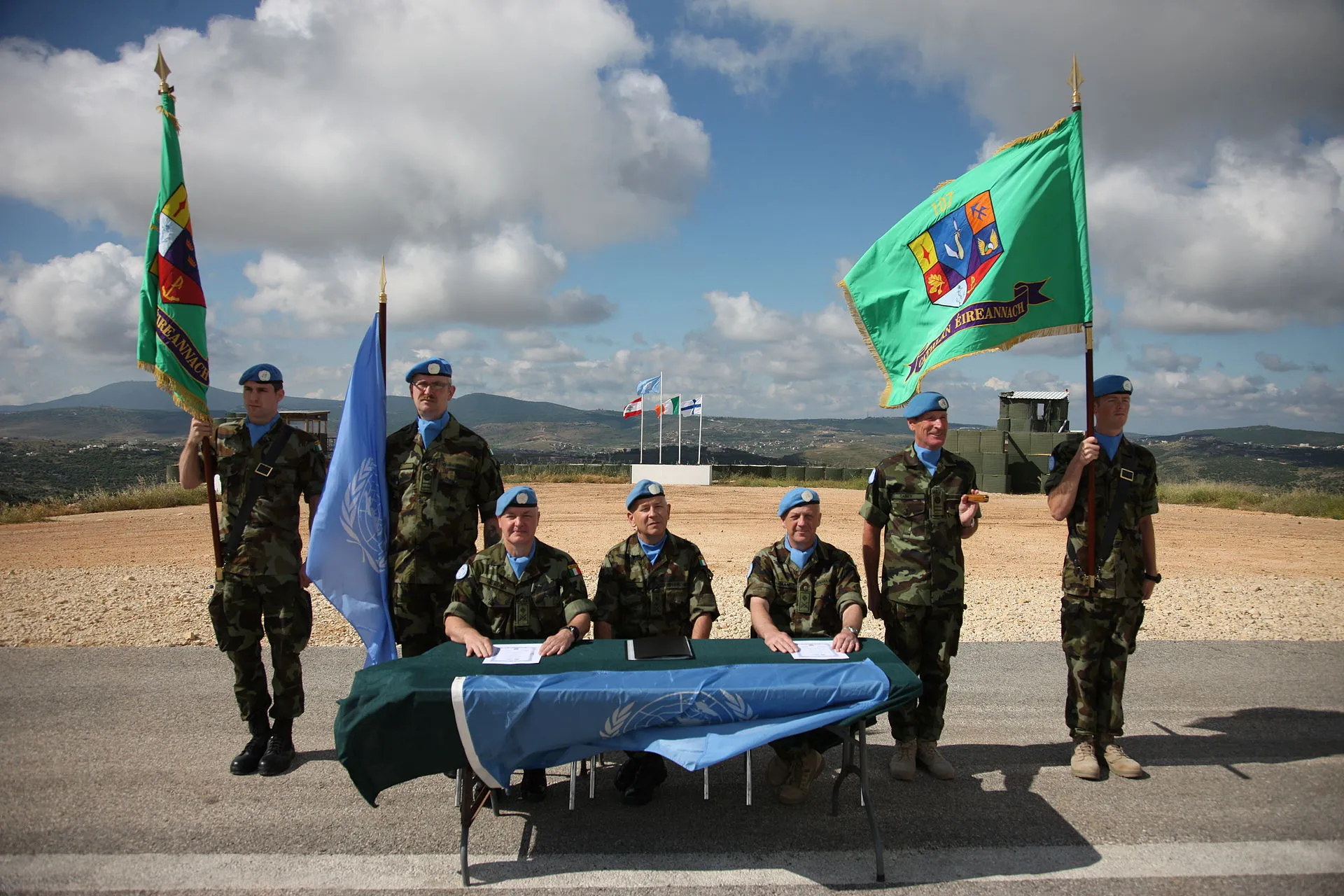
What would a functioning ceasefire look like? It would look like Korea, where an armistice has held for more than 70 years under a joint monitoring commission with real authority to investigate incidents and a defined military demarcation line that both sides understand the cost of crossing. It would look like Lebanon after 2006, where UNIFIL — however imperfect — created a physical presence that changed the cost-benefit calculation of violations. It would not look like Minsk, where the absence of enforcement produced years of a ceasefire that neither side observed while both prepared for the next round of fighting.
The Question Worth Asking
The Trump administration has announced ceasefires in two separate wars in 2026. Neither has produced a genuine halt to hostilities. In one case, the adversary used the pause to improve its battlefield position. In the other, the adversary used the pause to negotiate for terms that would entrench its strategic advantages rather than surrender them.
This is not evidence that ceasefires are bad. It is evidence that unmonitored ceasefires announced as diplomatic achievements are bad — worse, potentially, than no ceasefire at all, because they consume political capital that could have been spent building the enforcement infrastructure that would make a ceasefire matter.
The question is not whether Trump can get Russia or Iran to agree to a ceasefire. He has demonstrated he can. The question is whether the United States is willing to do the slower, harder, less televised work of building the framework that would make the ceasefire mean something once the cameras have moved on. ISW’s data on what Russia did with 72 hours of reduced satellite visibility is a direct answer to that question.
The answer is: no, not yet. And until that changes, announcing a ceasefire will remain, at best, a press release. At worst, it will be a gift.
Sources 5 cited · 2 primary
- Moscow's Victory Day ceasefire reduced combat but became Russia's stockpile window, ISW finds
- ISW: Russia's 'Victory Day ceasefire' reduced combat but didn't stop it
- Russia exploits ceasefire with Ukraine for strengthening frontline positions — ISW
- Russia and Ukraine trade blame for continued fighting that killed at least 2 as U.S.-brokered ceasefire nears its end
- Trump says ceasefire with Iran on 'massive life support' after he rejects Tehran's proposal
American Courant cites its sources and links to primary documents where they exist. How we report →