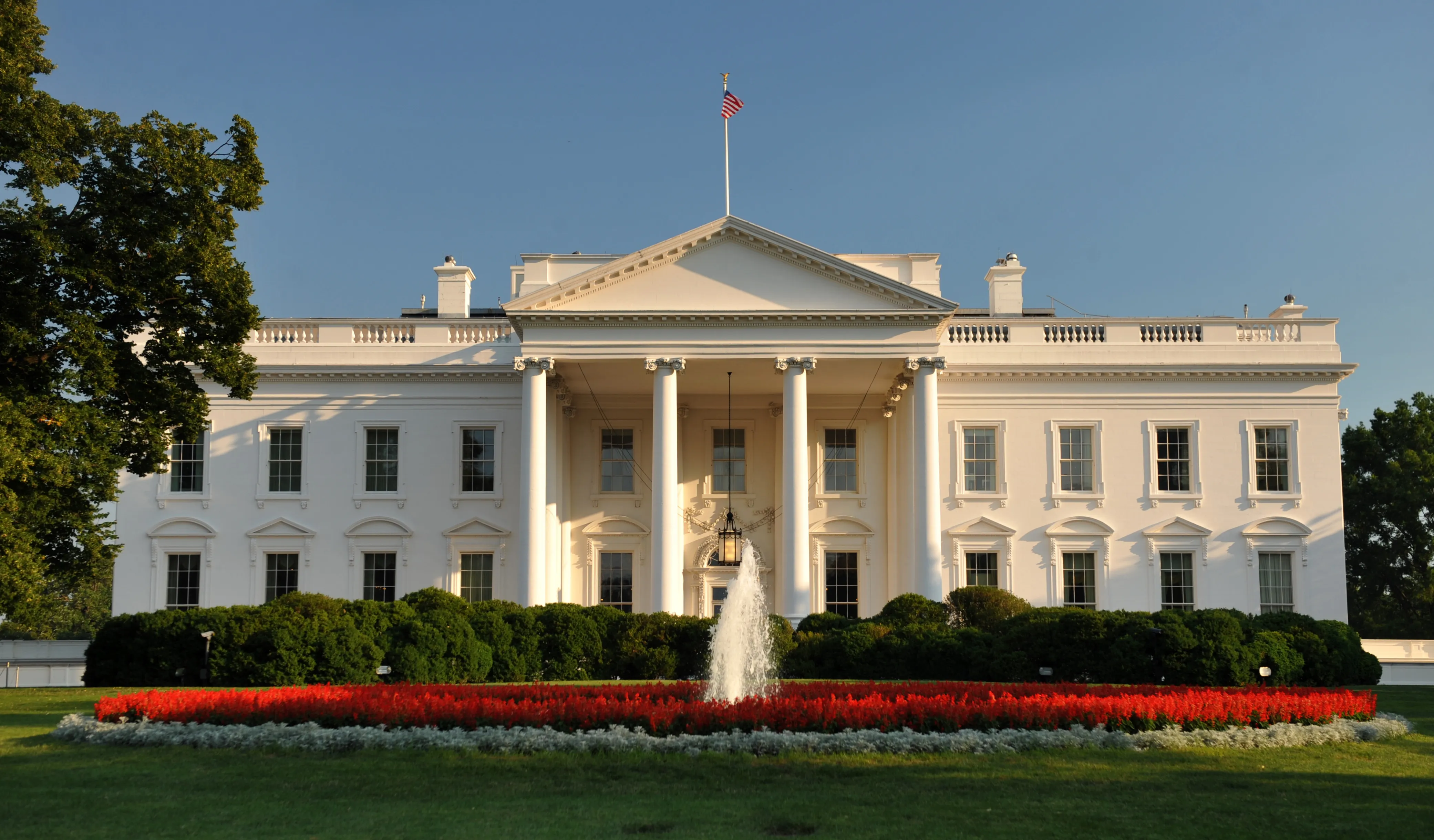
A 21-year-old man named Nasire Best walked up to the Secret Service checkpoint at 17th Street and Pennsylvania Avenue NW on Saturday evening, pulled a revolver out of a messenger bag, and started firing. Officers returned fire. He died at the hospital. A bystander was hit in the leg. President Donald Trump was inside the residence and unhurt.
This is the third time in 30 days that shots have been fired in the immediate vicinity of the president. The pattern is not a coincidence, and it is past time to stop pretending it is.
The harder truth is that Saturday’s shooting was, in the most literal sense, on the federal docket. Best had been arrested by the Secret Service at the same complex 10 months ago. He had been charged. He had been released. He missed an Aug. 7, 2025, status hearing. A judge issued a no-bond, D.C.-only bench warrant. He then spent the better part of a year walking around free in Maryland until he came back with a gun. None of that is speculation. All of it is in court filings reported by CBS News and CNN.
We are not arguing that any system would have predicted the shot fired Saturday. We are arguing something simpler and more damaging: a system that did predict it, in writing, then lost the file.
The pattern, named
Best is the third man to fire a gun near this president since April 25. Cole Allen breached the White House Correspondents’ Association Dinner perimeter that night and was charged in federal court with attempting to assassinate the president. Eleven days later, on May 4, Michael Marx walked along the path of Vice President JD Vance’s motorcade near the Washington Monument and opened fire on a uniformed Secret Service officer. A child was wounded. Marx had a 2011 federal drug-trafficking conviction that made firearm possession itself a crime, according to the U.S. Attorney’s Office for D.C..
Three shootings. Three different shooters. Three different states of residence. Three different documented histories with law enforcement before the shooting happened. The Senate’s $72 billion immigration package quietly contained $1 billion for Secret Service security at Trump’s planned White House ballroom, a sign Congress understands the threat environment well enough to fund hardening. What is missing is not money. It is follow-through on the cases the system already has open.
The word politicians and cable anchors keep reaching for is “isolated.” It is not the right word. “Isolated” describes events without a common structure. These events share one. Each shooter was previously known to the federal authorities responsible for protecting the people they later attacked. Each one was, by the time he opened fire, supposed to be subject to some form of state restriction, whether a stay-away order, a bench warrant, or a felon-in-possession prohibition, that did not happen.
Calling that “isolated” avoids the harder question, which is whose job it was to make any of those prior restrictions stick.
What the file says about Nasire Best
The factual record on Best, drawn from court documents reported by CBS News and CNN, is brief and damning.
In June 2025, he blocked a White House entry lane and told Secret Service agents he was Jesus Christ and wanted to be arrested. He was committed to the Psychiatric Institute of Washington for mental evaluation. In July 2025, he came back. He was arrested and charged with unlawfully entering a federally controlled property. A judge ordered him to stay away from the White House complex. He was released pending an Aug. 7 status hearing.
He didn’t show up. The court issued the bench warrant. The Secret Service had previously flagged him for, in the language of an affidavit filed in D.C. Superior Court, “walking around the White House complex inquiring how to gain access at various entry posts.”
Nothing about that record is ambiguous. The agency assigned to protect the president had documented Best as a credible repeat threat. A judge had ordered him to stay away. A second judge had a warrant out for his arrest. He was 21, living in Dundalk, Maryland, less than an hour up I-95.
The Secret Service did its job at the checkpoint. The two officers there are the reason this is a story about gunfire and not about a presidential funeral. That is not the failure under discussion. The failure is everything between July 2025 and Saturday.
The “isolated incident” framing is doing political work
The version of this story being told in real time goes roughly: a troubled young man with mental illness was responsible for his own actions, this is a personal tragedy, the Secret Service responded with professionalism, the public should move on. Every clause is true. The sentence as a whole is incomplete.
It is incomplete because it lets every institution downstream of the shooter off the hook. The mental health system that committed Best in June 2025 and discharged him into a position where he could repeat the same behavior weeks later. The D.C. court system that issued a bench warrant that was, in practical terms, never served. The interstate gap between a Maryland address and a D.C.-only warrant. The post-shooting reporting that quotes “five senior law enforcement officials” describing his mental health concerns, because those were known concerns, to those exact officials, before the shooting.
The reasonable counterargument is that no one could have predicted Best would buy or borrow a revolver, drive to Pennsylvania Avenue, and start firing on a Saturday in May 2026. That is correct. It is also not the standard we should be holding the federal system to. We don’t ask the FAA to predict the specific Tuesday a particular pilot will make a particular error. We ask it to catch the warnings it already received. The bench warrant was the warning. The prior arrests were the warning. The flagged behavior of “walking around the White House complex inquiring how to gain access” was the warning. There is no version of this where the federal government can credibly say it didn’t know.
What “do something” actually means here
After Butler in 2024. After Mar-a-Lago in 2024. After the WHCA dinner in April. After the National Mall in May. After Saturday. The phrase “we have to do something” has been a fixture of every press conference for two years. It has produced essentially nothing.
What “doing something” looks like in Best’s specific case is narrower than the political conversation usually allows. It does not require new gun laws, or a new federal agency, or a debate over the Second Amendment. It requires three things that already exist in statute and procedure.
First, when a federal court issues a bench warrant against a defendant whose underlying charges involve repeated unauthorized access to a federally protected property, that warrant should not be D.C.-only. The U.S. Marshals Service has authority to pursue federal warrants across state lines. The mechanism exists. It was not used here. The question of whether the federal protective-services budget itself is stable, as we noted in the 72-day DHS shutdown that drained Secret Service emergency pay, is related: underfunded systems lose files.
Second, when a person with two prior Secret Service arrests and a documented psychiatric history fails to appear at a federal status hearing, there should be a single named federal officer responsible for serving the warrant within a defined window. The political class talks about red flags as if the problem is identifying them. In Best’s case, the red flags were so red they were in a federal docket. The problem was follow-through.
Third, the mental health commitment process needs a workable handoff with criminal courts when the same defendant cycles between them. Best was treated and released in June 2025. He was rearrested in July 2025. There is no public record that anyone at either institution called the other. This isn’t a request for a national mental health database. It’s a request that two federal agencies in the same city talk to each other about a defendant whose entire criminal history consists of trying to breach the residence of the president.
None of this is a policy fantasy. All of it is in the existing toolkit. The reason it didn’t happen here is the same reason it usually doesn’t: no single person owned the case, the warrant aged, the file aged, and a young man with documented delusions got from Dundalk to Pennsylvania Avenue without anyone stopping him.
What changes now
The president is safe. The bystander hit in the leg is recovering. The Secret Service is conducting an internal review. The cable networks will move on by Wednesday.
The thing we should refuse to move on from is the framing. There are now three shooters in 30 days. The next time someone in authority calls the next incident “isolated,” the right response is to ask, on the record, what that word means after the third shooting in a month. There is a structure here. Pretending there isn’t is the easiest way to make sure the fourth shooting happens too.
The Secret Service officers on the perimeter did exactly what they were trained to do on Saturday. Every institution downstream of those officers, the courts, the Marshals, the mental health commitment system, the prosecutors who declined to flag Best’s case as a federal priority after he missed his August hearing, owes the public an explanation of what it did with the warnings it already had. “He acted alone” is not an explanation. It is a way of changing the subject.
The warnings were on file. The follow-through wasn’t. That is the story.
Sources 6 cited · 2 primary
- Suspect dead after opening fire near White House security checkpoint, Secret Service says
- Man killed in shooting outside White House had previous Secret Service arrest, mental health concerns
- Alleged gunman outside White House had previous run-ins with Secret Service, court documents show
- Texas Man Charged in Shooting at Secret Service Agent Near the Washington Monument on the National Mall
- Suspect in White House Correspondents' Dinner Shooting Charged with Attempt to Assassinate the President
- White House shooting is latest incident in a string of political violence
American Courant cites its sources and links to primary documents where they exist. How we report →