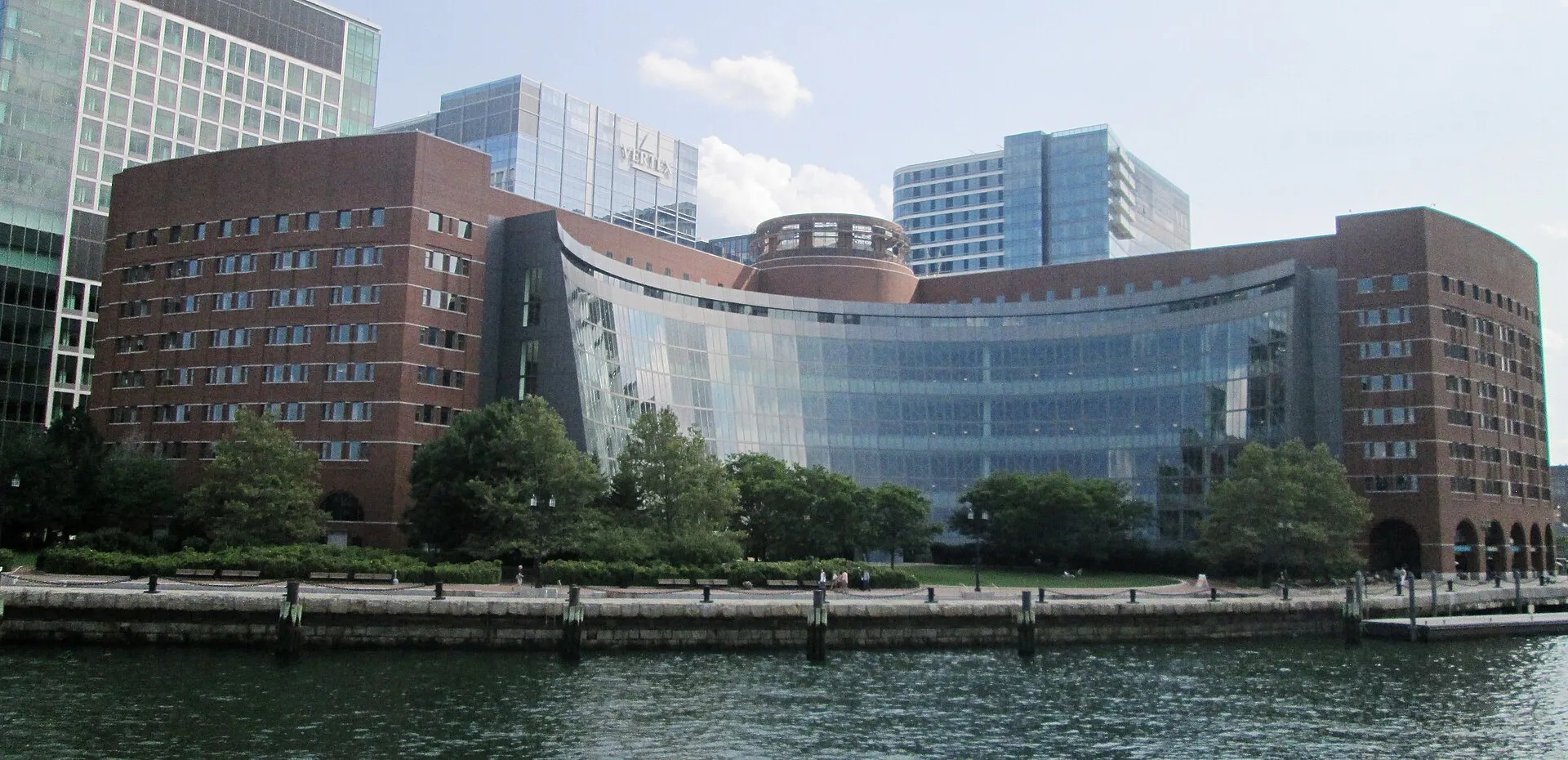
A federal judge in Boston struck down the Trump administration’s $100,000 fee for new H-1B visa petitions on Monday, and on the narrow legal question he raised, he has a point. Set that point aside for a moment, though, because the ruling sidesteps the question that actually matters: should this country be making it easy or hard to hand its highest-paying, highest-skill jobs to foreign workers brought in at a discount? On that question, the proclamation had the better of the argument.
U.S. District Judge Leo Sorokin ruled in a suit brought by 20 states led by California and Massachusetts that the charge was, in effect, a tax. “Here, the substance and application of the $100,000 payment reveal that it is a tax, regardless of what the payment is called,” he wrote, finding the president lacked authorization from Congress to impose it and that it ran afoul of the Administrative Procedure Act and the Constitution. As a matter of which branch gets to levy a charge that large, that is a fair reading. The Constitution does put the taxing power with Congress, and an administration that wants a fee this big should be made to win a vote for it.
But a ruling about who may impose the fee is not a ruling about whether the fee was a good idea. The charge was not voided because it was wrong on the merits. It was voided because the president reached for the wrong instrument. Strip away the legal mechanics and the policy underneath is one the country should keep — and one Congress should now write into law.
The program stopped doing what it was sold as
H-1B was sold to the public as a narrow tool: a way to import genuinely scarce talent that American workers could not supply. In large stretches of the program, it has become something else — a channel for cheaper labor in fields Americans can do and want to do. The administration said as much in Proclamation 10973, arguing the program had been “deliberately exploited to replace, rather than supplement, American workers with lower-paid, lower-skilled labor.”
That is not a fringe complaint. Critics of the program across the political spectrum have spent years documenting how parts of it are gamed: large outsourcing firms flood the annual lottery with applications to win an outsized share of slots, wages get pushed down in specific tech and IT corridors, and there are well-known cases in which American employees were required to train the very visa holders hired to take their jobs before being laid off. When the people who built a system are made to train their own replacements, the burden of proof shifts. It is no longer enough to say the program might be filling real shortages. The program has to show that it is — and across much of its use, it cannot.
The country is not short of Americans to do these jobs
The honest case for an open spigot of skilled immigration rests on a single assumption: that these jobs would otherwise go unfilled. For the engineering, software, and analyst roles that dominate the H-1B pool, that assumption is thin. These are not jobs nobody wants. They are among the best-paying careers in the economy — the on-ramp to the middle and upper-middle class — and they are exactly the seats the next generation of American students is training to fill.
Every one of those seats handed to an imported worker at a lower price is a seat an American graduate did not get, and a signal to the cohort behind them that the field they studied for is already being bid down before they arrive. A nation that wants its own children to build careers in technology and medicine and finance should not be subsidizing a pipeline that underprices them out of the running. We are not a country so barren of engineers that we must rent them from abroad. We are a country that has been talked into treating its own workforce as the option of last resort. That has it exactly backwards.
A $100,000 price is a filter, not a wall
The objection to the fee is that it priced the program out of reach. That is the point — and it is a feature, not a flaw, if you believe the default should be hiring an American. The fee bans nothing. It forces an employer to put real money behind the claim that no American can do the job. If a worker is genuinely irreplaceable, $100,000 is trivial against a multi-year senior salary. If the company will not pay it, the market has just told the truth: an American could have done the work, for a wage the employer would rather not pay.
The strongest counterargument is the rural hospital that staffs anesthesiology through the program, or the university keeping a postdoc, and that concern is real. But the answer is a narrow carve-out for documented shortage fields and a serious national effort to build the domestic pipeline that should have been built years ago — not an open door justified by the hardest case. The burden belongs on the employer to prove it must import labor, not on the American worker to prove he deserves to keep his own job.
The court handed Congress the assignment
Here is where the ruling, rightly read, helps rather than hurts. Sorokin did not say the country may never put a steep price on this kind of hiring. He said that power belongs to Congress. Fine. Then Congress should use it. The right response to “you needed a law” is to pass the law — not to shrug and reopen the spigot.
This is the same lesson the courts keep delivering on the parallel fight over tariffs imposed without a congressional vote: big economic moves need the legitimacy that only a statute provides. And it is the flip side of the warning against remaking immigration through agency memos — if the executive cannot quietly rewrite the rules, then Congress has to write them out loud. A real bill could set the fee, raise the wage floors critics have demanded for a decade, shut down the lottery-gaming, and protect genuine shortage fields, all with a vote that would actually stick. The goal is sound. What it has lacked is a legislature willing to own it.
What comes next
The legal fight is not over. A federal judge in Washington earlier upheld a nearly identical order, and that split makes the issue a strong candidate for an appeals court and, plausibly, the Supreme Court. The White House has said it expects the ruling to be reversed; spokeswoman Taylor Rogers said the administration is confident the order will not survive appeal.
That appeal will grind on for months, but the underlying question is not really a close one. The jobs at the center of this program are worth protecting, and the workers who should hold them are already here. A ruling about procedure does not change that. It just hands the responsibility to Congress — and the only open question now is whether the legislative branch has the nerve to pick it up and keep these jobs in American hands.
Sources 6 cited · 2 primary
- Proclamation 10973: Restriction on Entry of Certain Nonimmigrant Workers
- Restriction on Entry of Certain Nonimmigrant Workers
- Federal judge strikes down Trump's $100,000 fee on new H-1B visas
- Judge strikes down Trump's $100,000 H-1B visa fee, says it's an unlawful tax
- Federal judge voids Trump's $100,000 fee requirement for H-1B visas
- Judge voids Trump's $100,000 fee for new H-1B visas
American Courant cites its sources and links to primary documents where they exist. How we report →