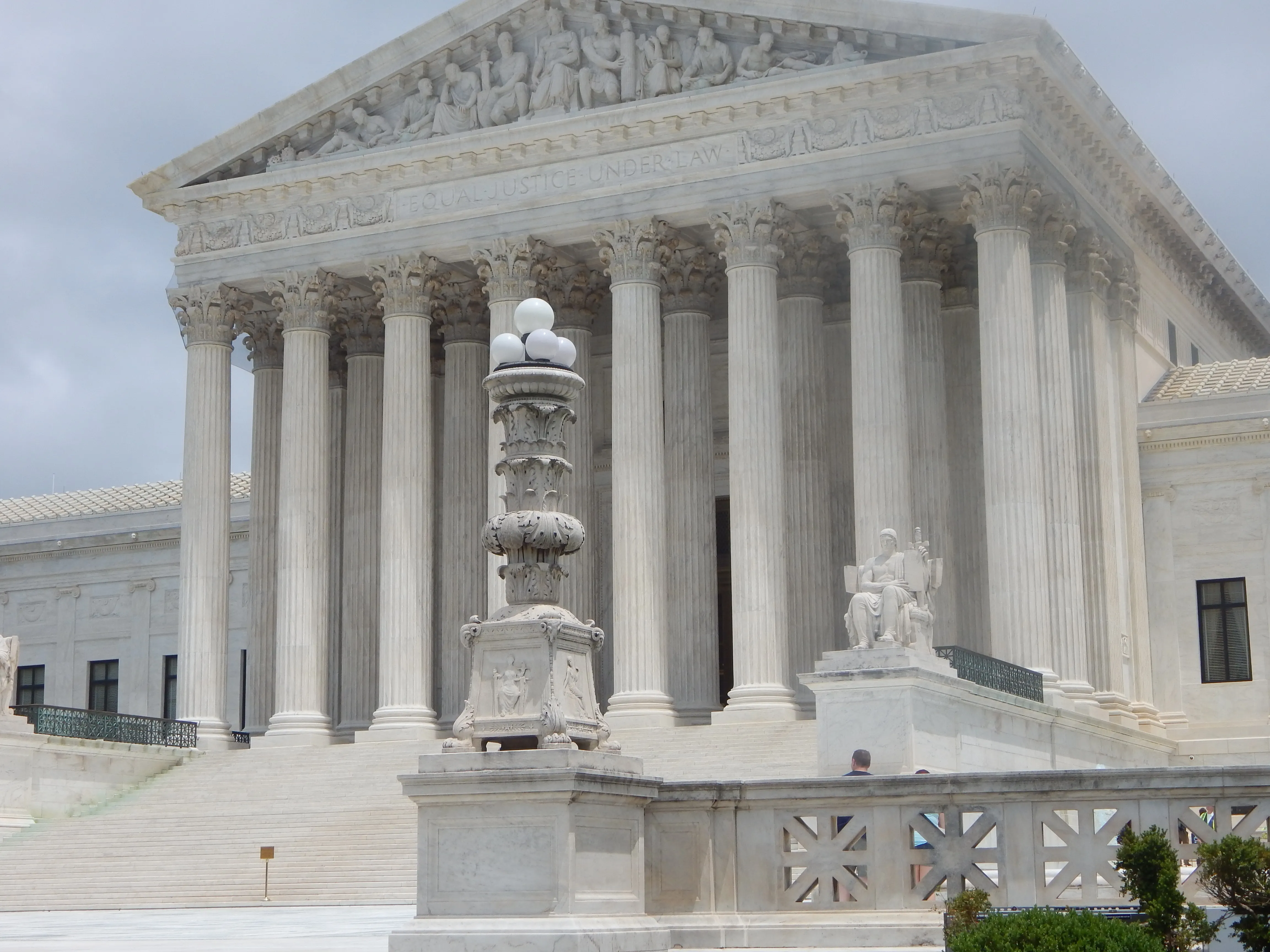
Virginia’s Supreme Court struck down a Democratic redistricting initiative on Friday in a 4-3 ruling that nullified a ballot amendment voters had approved just three weeks earlier, dealing a significant blow to the party’s strategy for clawing back House seats in the 2026 midterm elections. The court found that Virginia’s General Assembly had not followed the state constitution’s procedural requirements for placing the amendment on the ballot, rendering the April 21 vote meaningless regardless of its outcome.
The ruling keeps Virginia’s existing congressional map — drawn by a nonpartisan commission and giving Democrats a 6-5 edge in the state’s 11-seat delegation — in place for the November elections. Democrats had hoped the amendment would allow the Democratic-controlled legislature to redraw those lines in ways that analysts estimated could produce as many as four additional Democratic seats. Under the proposed replacement map, the partisan split could have shifted to something approaching 10-1 in Democrats’ favor.
Within hours of the decision, Virginia Democrats asked the court to stay its ruling while they prepare an appeal to the United States Supreme Court.
What the Court Found
The procedural issue at the heart of the ruling turns on how Virginia’s constitution governs constitutional amendments. Under state law, the General Assembly must pass proposed amendment language twice — in separate sessions — with a general election occurring between those two votes. The purpose of the “intervening election” requirement is to allow voters to express their views on the amendment’s supporters and opponents before the legislature ratifies a final text.
The Democratic-controlled legislature passed the redistricting amendment text for the first time on October 31, 2025, in a special session. Republicans challenging the amendment argued that this sequence was fatally defective because the 2025 general election had, in a meaningful sense, already begun by that date.
The Supreme Court of Virginia’s four-justice majority agreed, and the legal logic hinges on early voting. Virginia expanded its early voting window to 45 days in 2020, meaning that ballots for the November 2025 general election became available starting September 19, 2025 — six weeks before the legislature cast its first vote on the redistricting language on October 31. Under the majority’s reasoning, because voting in the 2025 election had already commenced when the General Assembly acted, there was no genuine “intervening” election between the first and second legislative approvals. The constitutional requirement went unmet.
The three dissenting justices disputed that reasoning, but the majority prevailed along lines that Republican lawyers had argued from the outset: the special session in which Democrats held the first vote was originally convened for unrelated purposes, and the sequence they engineered did not satisfy what Virginia’s constitution requires.
What Was at Stake
Virginia has been a focal point of Democratic redistricting strategy for the 2026 cycle precisely because of its unusual combination of a Democratic legislative majority, a closely divided congressional delegation, and a state constitution that — until Friday’s ruling — appeared to offer a credible path to a partisan remap.
The state’s 11 congressional seats are currently divided 6-5 in Democrats’ favor under the nonpartisan map that has been in place since a bipartisan redistricting commission drew it several years ago. That map was designed to be legally durable and politically neutral, and under it Democrats have held a narrow edge. The amendment Democrats placed on the ballot in April would have transferred redistricting authority from the commission back to the legislature — giving the Democratic majority direct control over how new lines were drawn.
Analysts projected the resulting maps could eliminate several competitive Republican-held districts and create new Democratic-leaning seats, potentially shifting the delegation’s balance dramatically. In a chamber where Republicans currently defend a majority counted in single digits, flipping four Virginia seats alone would have erased a significant portion of that margin. The prospect made Virginia among the highest-stakes redistricting fights in the country heading into 2026.
With Friday’s ruling, that avenue is closed — at least for this election cycle. Virginia will run its House elections on the existing nonpartisan map.
The Republicans’ Procedural Argument and the Court’s Response
The challenge to the amendment centered on a technical but constitutionally significant objection: Republicans argued that Democratic leaders in the General Assembly had called a special session nominally for other purposes, then used it to pass the redistricting amendment in a way that rushed past the “intervening election” requirement the state constitution imposes.
Virginia’s constitution requires exactly this kind of procedural guardrail to prevent a legislative majority from quickly pushing through constitutional changes without giving the public a meaningful opportunity to weigh in at the ballot box between legislative approvals. The argument was that Democrats had exploited the timing of a conveniently scheduled special session to compress the amendment process in ways that circumvented that safeguard.
The 4-3 majority accepted this framing. Because early voting for the November 2025 election had been available since September 19, 2025, the majority concluded that the November general election was effectively underway when the legislature voted on October 31. No valid intervening election had occurred. The amendment, and therefore the April 21 referendum result in which voters narrowly approved it, had no legal effect.
Virginia Democrats countered that the ruling disenfranchises the voters who cast ballots on April 21 in good faith based on a process the legislature and elections officials had treated as valid at every step. That argument did not carry enough of the court.
Where Democrats Go From Here
Within hours of the ruling, Democratic legislative leaders asked the Supreme Court of Virginia to stay its own order while they sought review from the United States Supreme Court. A stay would have preserved the amendment’s effect — keeping the new map alive — while federal courts examined the challenge. The Supreme Court of Virginia’s response to that request had not been publicly reported as of Friday evening.
An appeal to the federal courts faces structural headwinds. The United States Supreme Court has historically deferred to state courts on questions of state constitutional procedure, and the basis for federal jurisdiction over a ruling about Virginia’s internal amendment process is not straightforward. The appeal may also arrive too late to matter for the 2026 election cycle: filing deadlines, primary schedules, and candidate paperwork requirements are already pressing.
Virginia Democrats who filed to run in districts that would have existed only under the new map now face uncertainty about which seat, if any, they are running for — a practical consequence of the ruling that will unfold in the coming days.
The Redistricting Battlefield in 2026
Virginia’s ruling arrives at a moment when the redistricting landscape across the country has shifted decisively in Republicans’ favor, with consequences that could shape the House majority for the remainder of the decade.
The U.S. Supreme Court’s April ruling in Louisiana v. Callais sharply limited the Voting Rights Act’s redistricting provisions, holding that plaintiffs must now demonstrate intentional racial discrimination — not simply a racially disparate effect — to challenge a congressional map. That ruling narrowed the legal basis on which minority-coalition districts could be mandated by courts, a tool Democrats and civil rights groups had used to preserve representation in several Southern states.
In the weeks since, Republican-controlled legislatures in multiple states have moved quickly to redraw maps under the looser legal standard the VRA ruling affords. Indiana’s Republican legislature pushed through new congressional lines this spring that altered primaries in multiple districts, and Tennessee drew national attention after a court struck down a Shelby County district that advocates argued was dismantled to dilute Black voting power in Memphis.
Taken together, Friday’s Virginia ruling and the broader wave of Republican-controlled redistricting mean that Democrats head into November with fewer favorable maps than they held two years ago — and with one of their most promising opportunities to reverse that trend now foreclosed by a procedural court ruling they will likely contest all the way to Washington.
What Happens Next
Virginia’s June primary elections proceed under the existing nonpartisan map. Candidates who had filed to run under the proposed new district lines face legal uncertainty about their status — an administrative tangle that state elections officials will need to resolve in the coming days.
If the Supreme Court of Virginia agrees to stay its ruling pending appeal, the situation becomes more complicated. A stay would temporarily preserve the new map, creating a period of genuine uncertainty about which congressional lines govern the 2026 elections in Virginia. If no stay issues and the federal appeal moves forward, any decision from the U.S. Supreme Court is almost certain to arrive after Virginia’s primary elections have already taken place under the old map.
For Democratic strategists, the arithmetic of regaining the House majority just became harder. Virginia was supposed to be one of the answers.
Sources 6 cited · 2 primary
- Supreme Court of Virginia strikes down redistricting amendment, keeps current maps in place
- Democrats ask SCOVA to halt order nullifying redistricting vote
- Court rejects Virginia redistricting in a blow to Democrats' counter to Trump, GOP
- Southern Republicans redistrict after Supreme Court rules, Dems lose big in Virginia
- Virginia Supreme Court blocks Democratic congressional map, boosting GOP midterm hopes
- Virginia Supreme Court blocks referendum that would have helped Democrats win up to four more US House seats
American Courant cites its sources and links to primary documents where they exist. How we report →