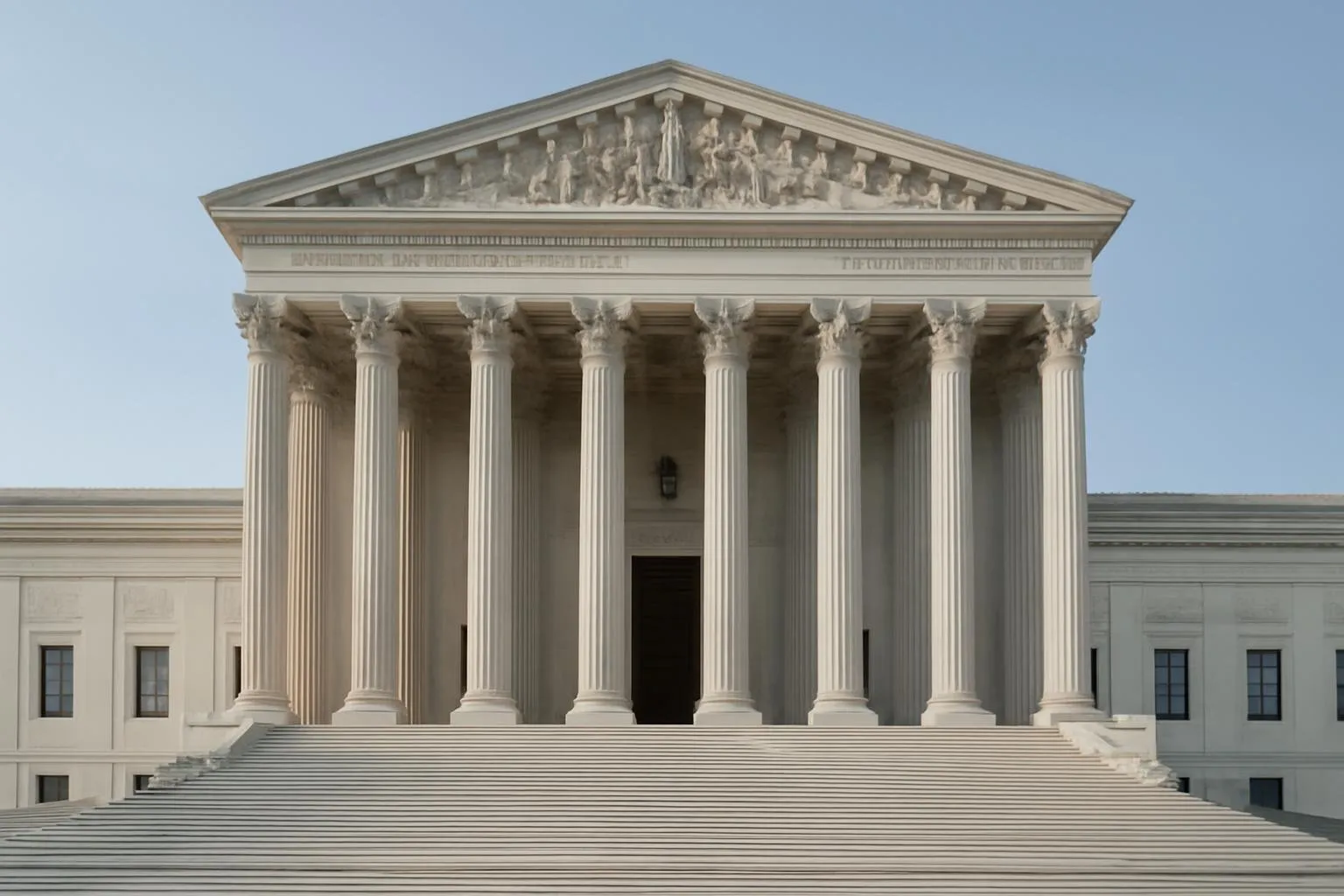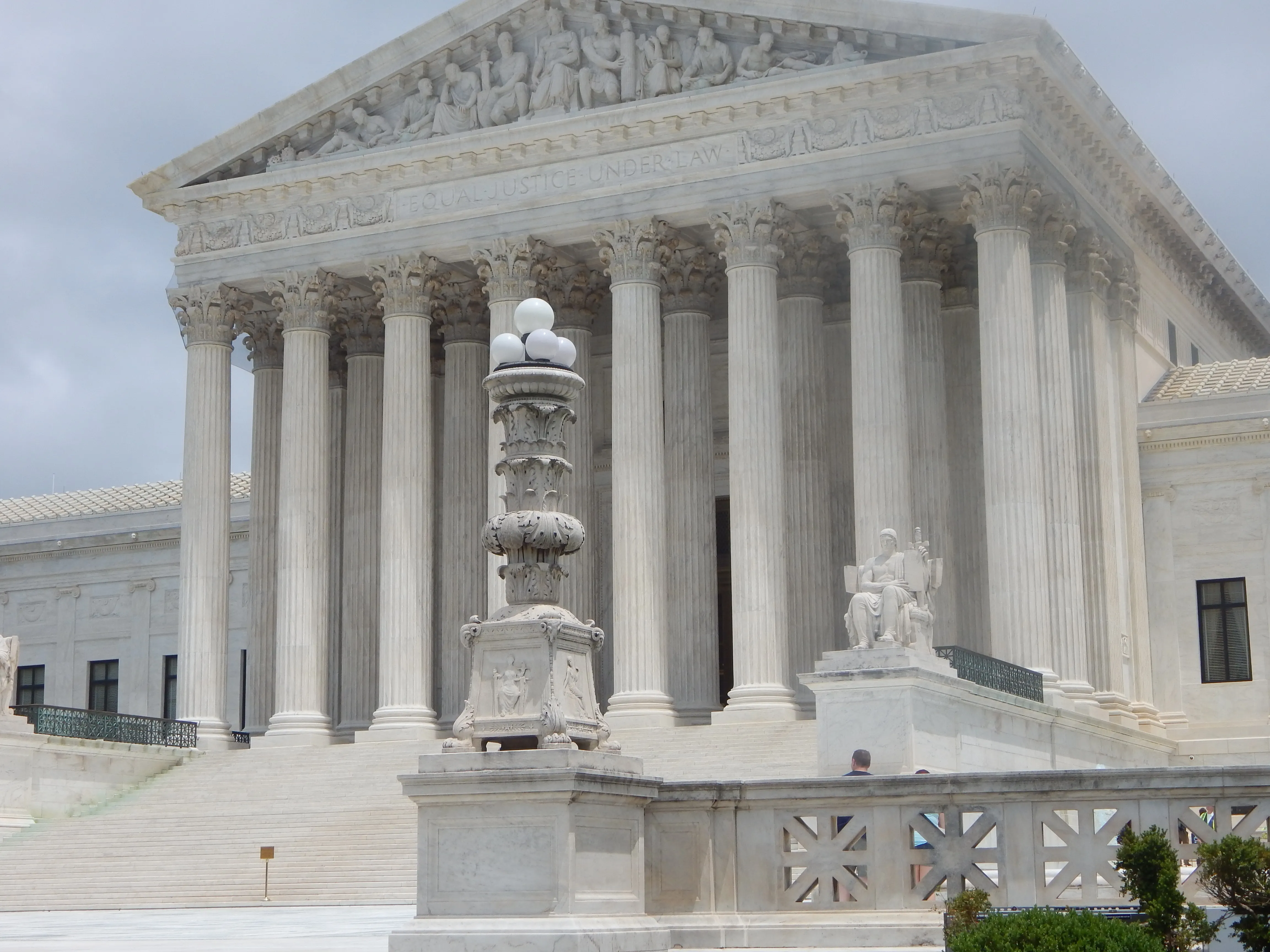
The Supreme Court’s conservative majority fundamentally rewrote the rules for challenging racial discrimination in congressional maps Wednesday, handing down a 6-3 ruling that civil rights groups and the court’s three liberal justices say has gutted one of the nation’s most consequential election laws.
The decision in Louisiana v. Callais (No. 24-109) scraps four decades of precedent under Section 2 of the Voting Rights Act, replacing a results-based standard with a new requirement: to prevail in a redistricting case, challengers must show circumstances that give rise to “a strong inference that intentional discrimination occurred.”
What the case was about
Louisiana’s congressional maps have been at the center of a prolonged legal fight. After federal courts found the state’s post-2020 census map unlawfully diluted Black voting power, Louisiana passed a remedial map in January 2024 — Senate Bill 8 — creating a second majority-Black congressional district. A group of white voters then sued, arguing the race-conscious remedial map was itself an unconstitutional racial gerrymander under the 14th and 15th Amendments.
Lower courts agreed with the white voters. The Supreme Court, in Wednesday’s ruling written by Justice Samuel Alito and joined by Chief Justice John Roberts and Justices Clarence Thomas, Neil Gorsuch, Brett Kavanaugh, and Amy Coney Barrett, upheld that conclusion and went further, reinterpreting Section 2 of the Voting Rights Act itself.
The new standard
The crux of the decision is Alito’s reinterpretation of Section 2’s scope. For nearly 40 years, courts evaluated redistricting challenges under the framework set in Thornburg v. Gingles (1986), which focused on whether a map produced the effect of diluting minority voting strength, not on whether lawmakers intended to discriminate.
Under Wednesday’s ruling, Section 2 “imposes liability only when the circumstances give rise to a strong inference that intentional discrimination occurred,” Alito wrote. The majority denied it was reinstating a pure intent test — the kind Congress explicitly rejected when it amended the VRA in 1982 — but civil rights groups and the dissent argue the practical effect is the same.
Justice Thomas, joined by Justice Gorsuch, went further in a separate concurrence. Thomas argued that Section 2 was never meant to regulate redistricting at all, a position he has long held that the majority declined to adopt.
‘All but a dead letter’
Justice Elena Kagan, writing in dissent for herself and Justices Sonia Sotomayor and Ketanji Brown Jackson, was unsparing. She accused the majority of “eviscerating” the law, writing that it had achieved the same practical result as striking down Section 2 while leaving the statute formally intact.
Under the new standard, Kagan wrote, Section 2 is “all but a dead letter” in redistricting cases.
The dissent argued the majority’s new intent requirement conflicts directly with the text and legislative history of the VRA. Congress amended the statute in 1982 specifically to remove an intent requirement after the Court had read one into the law. To Kagan, Wednesday’s ruling is a direct repudiation of that legislative response.
What it means going forward
The immediate effect is that Louisiana’s SB 8 map is struck down. Louisiana must now redraw its districts under the Court’s revised standard, though whether that affects the 2026 elections remains to be determined.
The longer-term consequences may take years to fully unfold. Voting rights analysts say the ruling opens the door to a new wave of aggressive redistricting by state legislatures in states with significant minority populations, since the old results-based framework made it easier to challenge maps that packed or cracked minority communities regardless of lawmakers’ stated intentions. Under the new standard, proving discriminatory intent is far harder. The decision lands alongside a separate gerrymandering ruling out of Texas earlier this term, which also reshaped the legal terrain for partisan map-drawing.
Civil rights advocates estimate the shift could put as many as a quarter of Congressional Black Caucus seats and roughly a tenth of Congressional Hispanic Caucus seats at legal risk in the next redistricting cycle, most likely beginning after the 2030 census.
The ruling arrives as Louisiana’s earlier redistricting fight, the one that produced the remedial map now struck down, had already worked its way through courts for nearly four years.
Sources 6 cited · 1 primary
- Louisiana v. Callais (No. 24-109) — opinion of the Court
- In major Voting Rights Act case, Supreme Court strikes down redistricting map challenged as racially discriminatory
- Louisiana v. Callais — case file
- Louisiana v. Callais — case page
- Supreme Court weakens Voting Rights Act, making it easier to draw gerrymandered political maps
- Louisiana v. Callais — case page
American Courant cites its sources and links to primary documents where they exist. How we report →