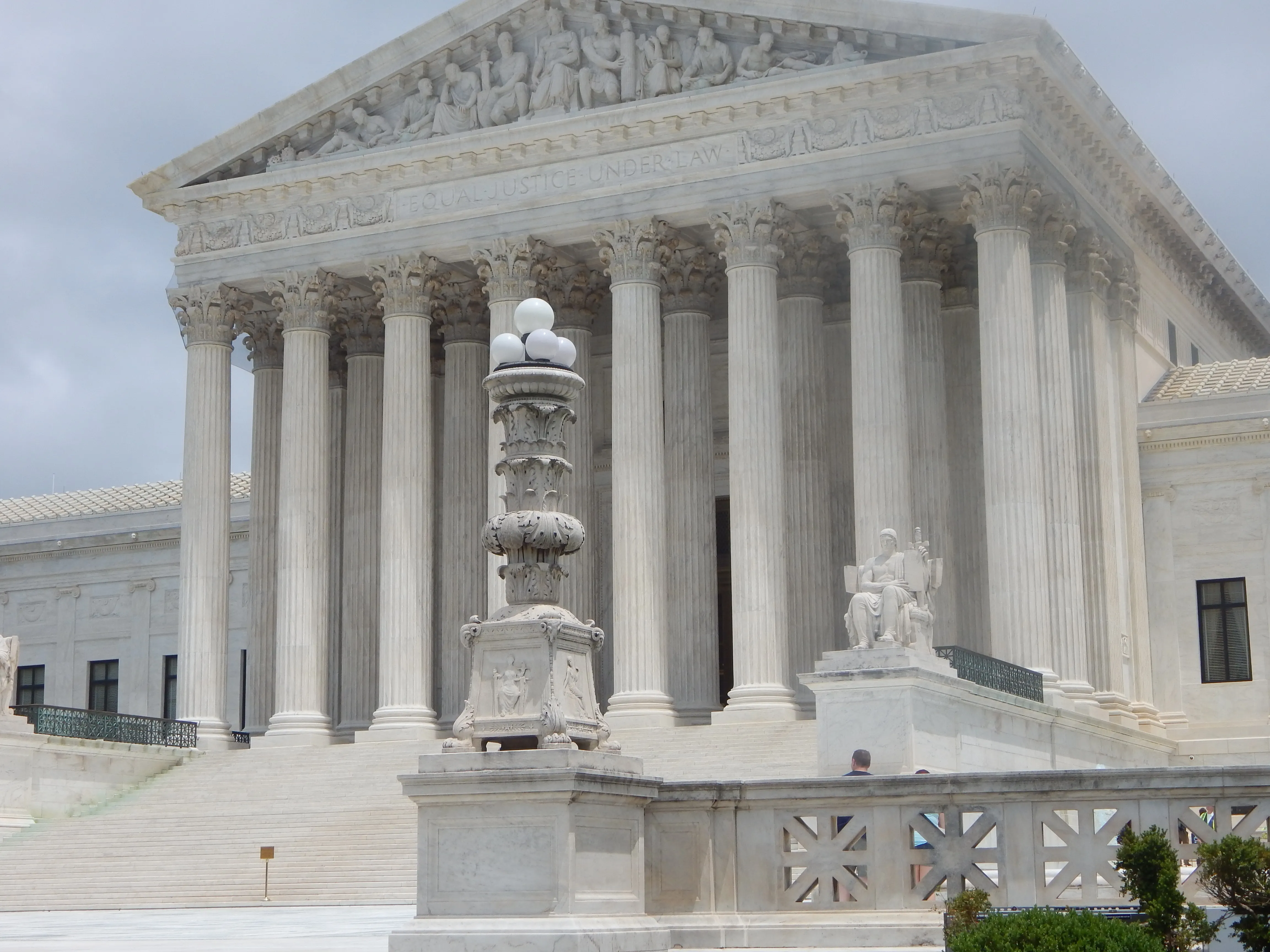
Governor Bill Lee of Tennessee signed a new congressional map into law Thursday, carving up the state’s only majority-Black district and making Tennessee the first state in the country to act under a Supreme Court ruling issued just nine days earlier that fundamentally weakened federal voting-rights protections for minority communities.
The legislation passed the Tennessee House 64 to 25 and the Senate 25 to 5, largely along party lines, before Lee’s signature gave it immediate effect. The new map dismantles Rep. Steve Cohen’s Memphis-based 9th Congressional District — the only majority-Black district in Tennessee and the only seat held by a Democrat in the state’s nine-member delegation — by stretching its boundaries hundreds of miles eastward and absorbing its Democratic electorate into three Republican-leaning districts.
The chamber above the state Senate was packed with protesters as the final vote unfolded, demonstrators chanting from the galleries and hallways. State Sen. Charlane Oliver, a Nashville Democrat, climbed onto her desk and unfurled a banner reading “No Jim Crow 2.0, Stop the TN Steal” as her Democratic colleagues linked arms at the front of the chamber in protest. The imagery spread quickly online, becoming a symbol of the day’s proceedings.
The Ruling That Opened the Door
The redistricting sprint traces directly to the Supreme Court’s April 29 ruling in Louisiana v. Callais, in which a 6-to-3 conservative majority struck down Louisiana’s second Black-majority congressional district as an unconstitutional racial gerrymander. Writing for the majority, Justice Samuel Alito held that the Voting Rights Act of 1965 did not require Louisiana to draw an additional majority-minority district — and that doing so based primarily on race violated the Constitution’s equal-protection guarantee even when the intent was to comply with federal civil rights law.
The decision rewrote the framework that courts have used since Thornburg v. Gingles in 1986 to assess whether a map illegally dilutes minority voting power. The Gingles test had enabled minority communities to challenge electoral maps that packed or cracked their voters, often securing majority-Black or majority-Latino districts as a legal remedy. It was, for four decades, the principal tool available to civil rights advocates under the Voting Rights Act’s Section 2.
The Brennan Center for Justice, which tracks voting-rights litigation, described the Callais ruling as effectively eviscerating Section 2. The court’s conservative majority gave the decision immediate effect — refusing a request to stay it pending further review — turning a legal landmark into an operational signal for Republican-controlled state legislatures the same week it was issued. Within 48 hours of the ruling, legislators in multiple southern states had begun drafting new maps.
The Memphis Map in Detail
The 9th Congressional District, centered on Memphis and its surrounding urban core, is one of the most geographically compact districts in Tennessee. Cohen, who is white but represents a constituency where Black voters constitute a majority of the electorate, has held the seat since 2007. He won his most recent race by more than 40 percentage points.
Under the new map, the 9th District ceases to exist as a cohesive unit. One successor district would stretch several hundred miles eastward from Memphis before turning north toward the Nashville suburbs. The other two would absorb the city’s heavily Democratic, majority-Black precincts into predominantly rural and exurban Republican constituencies that span the state’s midsection. No successor district would preserve Memphis’s Black community as a cohesive political bloc, and none would produce a competitive Democratic district under current partisan baselines.
“Trump knows he HAS TO rig the game to keep his majority in November,” Cohen said in a statement Thursday. “And the TN GOP was willing to go along with it. It’s shameful. Next stop is the courts.”
Republicans currently hold eight of Tennessee’s nine congressional seats. Under the new map, all nine would be plausible Republican pickups in November, and Trump’s political operation has been explicit that holding the House majority depends in part on outcomes like the one Tennessee delivered Thursday.
Alongside the new map, the Legislature passed a companion measure extending congressional candidate qualifying through May 15, giving new candidates time to enter races in the redrawn districts and allowing existing candidates to switch districts or withdraw before filing deadlines close. The Supreme Court separately cleared Texas’s congressional gerrymander earlier this term, a ruling that will also shape the competitive landscape for five Texas seats in November.
The NAACP’s Legal Challenge
Within hours of Lee’s signature, the NAACP Tennessee State Conference filed an emergency petition against the governor and the state’s General Assembly, asking a court to block the new map before it can affect November’s congressional primaries.
Unlike challenges that will arise in other states — which will argue the new maps violate federal voting-rights law — Tennessee’s NAACP case centers primarily on state law. Tennessee statute contained a provision prohibiting changes to congressional district boundaries between decennial census apportionments, the national population counts that occur every ten years and form the constitutional basis for reapportionment. Lawmakers repealed that restriction during the special session that produced the new map, a move the NAACP argues exceeded the scope of authority Gov. Lee outlined when he called the Legislature back to Nashville.
“This is not a legal redistricting,” the NAACP Tennessee State Conference said in a statement accompanying the filing. “This is an unconstitutional attempt to rob Black voters of their voice in Congress.”
The state-law framing is strategically significant. Federal courts would apply Callais directly if the challenge relied on VRA Section 2, but a court evaluating Tennessee’s own redistricting statute would apply a separate legal standard — one that the Supreme Court’s ruling does not directly control. Civil rights advocates are betting that the state-law path offers a faster and more durable route to a stay.
A Redistricting Wave Across the South
Tennessee was the first to complete the process, but not the only state in motion. Florida’s Republican-led Legislature approved new U.S. House districts within days of the ruling that political analysts project could deliver Republicans four additional seats in November. Alabama Governor Kay Ivey announced a special legislative session beginning this week to redraw that state’s congressional map. Mississippi Governor Tate Reeves set a redistricting session for 21 days after the Callais ruling, with the state’s majority-Black 2nd Congressional District as the primary target.
The redistricting push is part of a broader pressure campaign that Trump has applied on Republican state lawmakers since the start of the year. Five Indiana state senators who defied Trump’s redistricting demands lost their primary elections this week, a result that sent a clear message to Republicans in other states about the cost of resistance. The Indiana races demonstrated that the president is willing to spend political capital to punish members of his own party who block his legislative agenda — including on maps.
Analysts at the Brookings Institution estimated that if redistricting maps survive legal challenges across all affected southern states in time to govern November’s elections, Republicans could net between one and nine additional House seats nationally. That range reflects significant uncertainty about how quickly courts will act and how thoroughly new maps will hold up under legal scrutiny.
What Comes Next
Whether any of these new maps will govern November’s elections remains the pivotal legal question. Multiple civil rights organizations, including the NAACP Legal Defense Fund, the Lawyers’ Committee for Civil Rights Under Law, and Democracy Docket, have filed or announced challenges in Florida, Tennessee, Louisiana, and Alabama. Courts have historically moved quickly on redistricting litigation when election deadlines are close.
Congressional candidate qualifying in Tennessee’s redrawn districts closes May 15 — one week from today. If the map remains in force by then, candidates will begin filing for seats whose legal existence a court could reverse before November’s ballots are finalized. A stay issued before May 15 would effectively preserve Cohen’s district for this cycle; a stay issued after qualifying closes would create procedural complications that courts have navigated before, but not easily.
The political stakes extend beyond a single November. The districts drawn now under post-Callais rules will shape congressional representation through at least the next census-driven apportionment. For civil rights advocates, the question is not just whether these maps survive 2026 — it is whether the legal framework they rest on can be challenged at the Supreme Court again before a political generation of representation is lost.
Cohen, who has represented Memphis in Congress for nearly two decades, was blunt about the stakes: “Every American should be outraged. This is about whether your vote counts.”
Sources 6 cited · 1 primary
- Louisiana v. Callais (No. 24-109) — opinion of the Court
- Tennessee lawmakers pass U.S. House map carving up majority-Black district in Memphis
- Tennessee Republicans pass a map to break up the state's lone Democratic House seat
- Tennessee Republicans approve map carving up majority-Black US House district
- NAACP sues to stop Tennessee GOP gerrymander that dismantles majority-Black district
- Louisiana v. Callais — analysis
American Courant cites its sources and links to primary documents where they exist. How we report →