The Department of War on Friday released 162 declassified files on unidentified anomalous phenomena to the general public — the first tranche of records under a new multiagency declassification program called PURSUE, or the Presidential Unsealing and Reporting System for UAP Encounters. President Donald Trump posted “have fun” on social media after the release dropped. The files are live at war.gov/UFO and can be browsed by anyone without a security clearance.
PURSUE is a joint effort of the White House, the Office of the Director of National Intelligence, the Department of Energy, NASA, the FBI, and the Department of War’s All-domain Anomaly Resolution Office, known as AARO. Chief Pentagon spokesman Sean Parnell confirmed after the drop that “the department looks forward to working with the interagency to fulfill the president’s directive.”
The release is not the first time the U.S. government has made UAP records public — AARO has published case summaries, and individual agencies have declassified specific files over the years — but it is the most operationally coherent attempt to create a single, continuously updated public archive. Where earlier releases were ad hoc, PURSUE sets a cadence: additional tranches will be posted every few weeks as files clear the review pipeline. The Department of War is the Trump administration’s renaming of what was called the Department of Defense from 1947 until earlier this year; AARO is housed within it and serves as the day-to-day operational lead for the program.
What the 162 Files Contain
The first tranche breaks down into 120 PDFs, 28 videos, and 14 images. The collection spans reported incidents from 1947 to 2026 and draws from the FBI, the Department of War, NASA, and the State Department. Every file in the collection carries the same official government designation: unresolved — meaning investigators examined each case and could not identify the object observed.
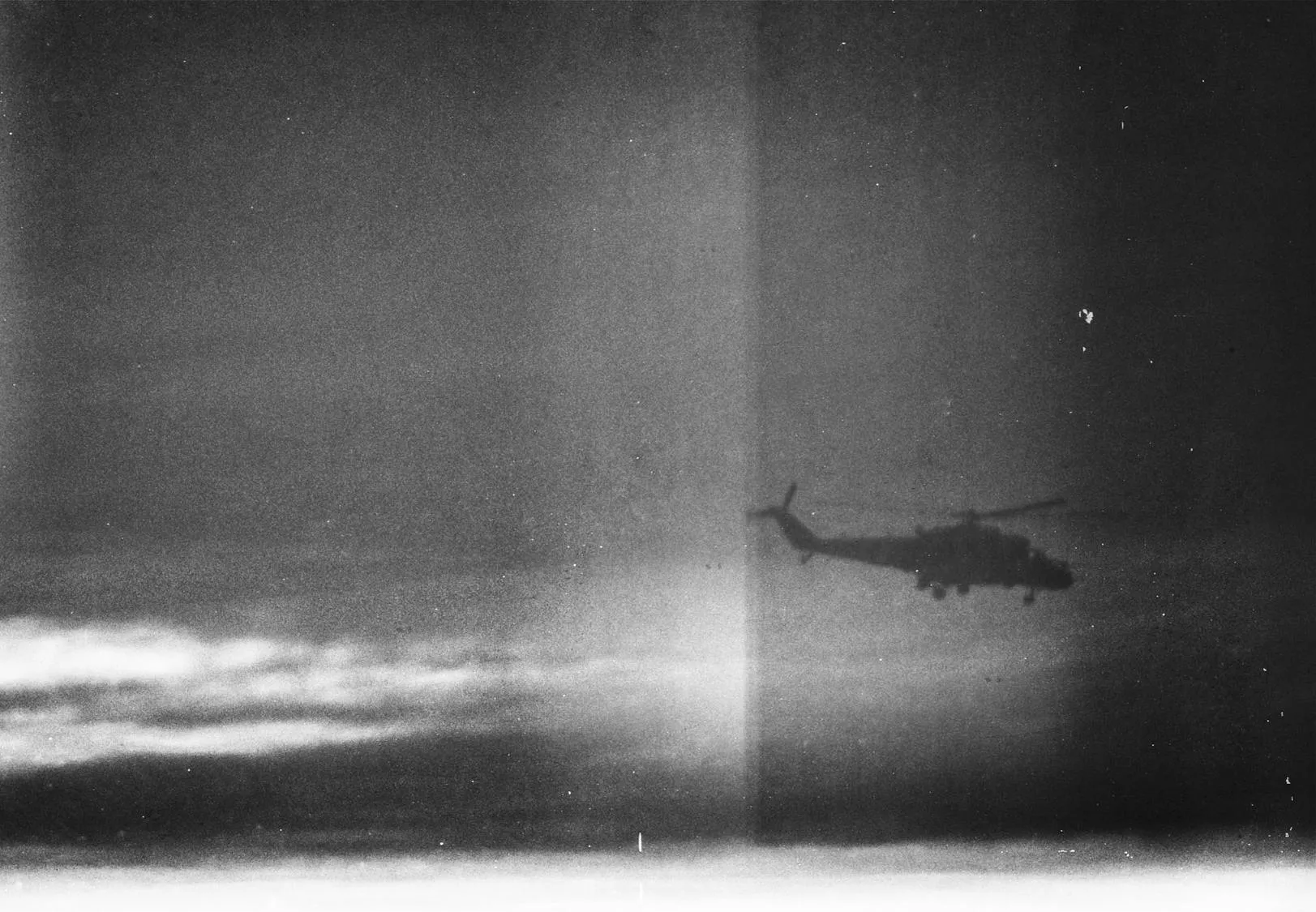
The roughly two dozen videos, which total approximately 41 minutes of footage, were captured primarily by infrared cameras. Most show an unidentified object as a white speck moving through the air against a thermal background. The footage is not visually dramatic, but it carries weight when set alongside the attached government case files that document who observed what, under what operational circumstances, and what attempts were made to identify the object.
Of the 162 files, 108 contain redactions. The Pentagon stated that information was withheld to “protect the identity of eyewitnesses, the location of government facilities, or potentially sensitive information about military sites not related to UAP.” The department added a specific caveat: “No redactions have been made to any files released under President Trump’s directive concerning information about the nature or existence of any encounter reported as a UAP or related phenomena.” If the government has reached a conclusion about the nature of these phenomena, that conclusion is not among the things being withheld.
Notable Records: Apollo Missions, a 195-Foot Object, and the Nuclear Connection
Among the highest-profile documents in the tranche are NASA transcripts and photographs from the Apollo 12 and Apollo 17 missions. Five photographs from the Apollo 12 landing site at the Ocean of Storms in 1969 show unidentified objects above the lunar horizon. An Apollo 17 image from December 1972 captures three lights in a triangular formation in the lower right quadrant of the lunar sky.
The government’s treatment of the Apollo 17 image is particularly significant. New preliminary analysis conducted by the Department of War indicates the feature is “potentially the result of a physical object in the scene.” The department has obtained the original Apollo 17 mission film for further scientific review. The photograph has been in the public domain for decades through NASA’s mission archives, but the government has now formally opened a case file on it under the unresolved designation.
One of the more striking entries in the tranche is a composite witness sketch accompanying a case file that describes “an apparent ellipsoid bronze metallic object materializing out of a bright light in the sky, 130 to 195 feet in length, and disappearing instantaneously.” The sketch is paired with a detailed eyewitness account. No corresponding instrument data or photographic record of the object exists in the file.
A recurring pattern across multiple filings is proximity to nuclear infrastructure. The Department of Energy contributed records from incidents near nuclear facilities that trace back to the Cold War era — incidents concentrated in the 1950s and 1960s near sites in Germany, parts of the former Soviet Union, and locations adjacent to U.S. nuclear weapons storage and production facilities. More recent reports show a concentration in the Middle East, where the U.S. conducted sustained air operations against Iranian military infrastructure through early 2026. The pattern of unresolved sightings clustering near active military operations appears consistent across the decades covered by the release.
What the Files Don’t Resolve
None of the 162 records contain evidence of extraterrestrial contact. The Department of War’s press release makes no such claim. Every participating agency maintains the same baseline position: the PURSUE files represent unresolved incidents, not confirmed encounters with beings or technology originating off Earth.
Sean Kirkpatrick, the physicist and former intelligence officer who led AARO from its founding through 2023, has publicly stated that the records he reviewed during his tenure showed no evidence of recovered extraterrestrial technology. That professional assessment is the most authoritative inside view of the government’s full UAP holdings available — everything he could access, reviewed systematically, without political pressure to downplay findings.
Harvard astrophysicist Avi Loeb, who directs the Galileo Project — an academic research effort applying rigorous scientific instruments to the study of UAP — reviewed the release and told NewsNation that the most significant disclosures are likely still ahead. “The best is yet to come in the context of the data that we will see,” Loeb said. He noted that some of the released videos and images are missing the field calibration data — field of view, sensor specifications, precise GPS coordinates — that would be required for independent scientific analysis, limiting what researchers outside government can do with the material as released.
What percentage of the government’s total UAP record this tranche represents is not publicly stated.
How the Disclosure Framework Got Here
Congress has embedded UAP transparency requirements in every major defense authorization bill since 2022. The 2022 NDAA created AARO and required the Secretary of Defense to establish systematic UAP reporting procedures across the military services. Subsequent legislation expanded the mandate and, in the 2024 NDAA, explicitly required the executive branch to declassify UAP records and make them publicly available. Those provisions created the legal architecture PURSUE now operates within; Trump’s presidential directive added executive momentum and interagency coordination.
Multiple congressional hearings between 2023 and 2024 featured testimony from former government officials and military pilots describing firsthand encounters they said were never satisfactorily explained through conventional means. That testimony intensified pressure on both the executive branch and the intelligence community to produce documentary evidence — or explain what the government actually has. PURSUE is the administration’s response to that accumulated pressure.
The program’s rolling-release design is intended to separate the disclosure process from the political calendar. Files will continue to appear at war.gov/UFO as they clear review, decoupled from any single news cycle. Whether future tranches will contain records substantively different from the 162 released Friday — or whether the most significant materials remain classified for reasons unrelated to UAP phenomena — will become clearer as the program matures.
For the administration’s broader approach to national security and executive action, see earlier reporting on Trump’s 2026 Counterterrorism Strategy, which establishes the policy framework within which agencies like AARO operate. American Courant will continue tracking the PURSUE releases as part of ongoing science and technology reporting.
Sources 6 cited · 2 primary
- Department of War Releases Unidentified Anomalous Phenomena Files in Historic Transparency Effort
- Presidential Unsealing and Reporting System for UAP Encounters (PURSUE)
- UFO files released: Defense Department publishes trove of records
- Pentagon publishes first batch of declassified UFO files under new program
- Pentagon Launches UAP Transparency Effort With First 'PURSUE' File Release
- Harvard's Avi Loeb says 'best is yet to come' from UAP file release
American Courant cites its sources and links to primary documents where they exist. How we report →