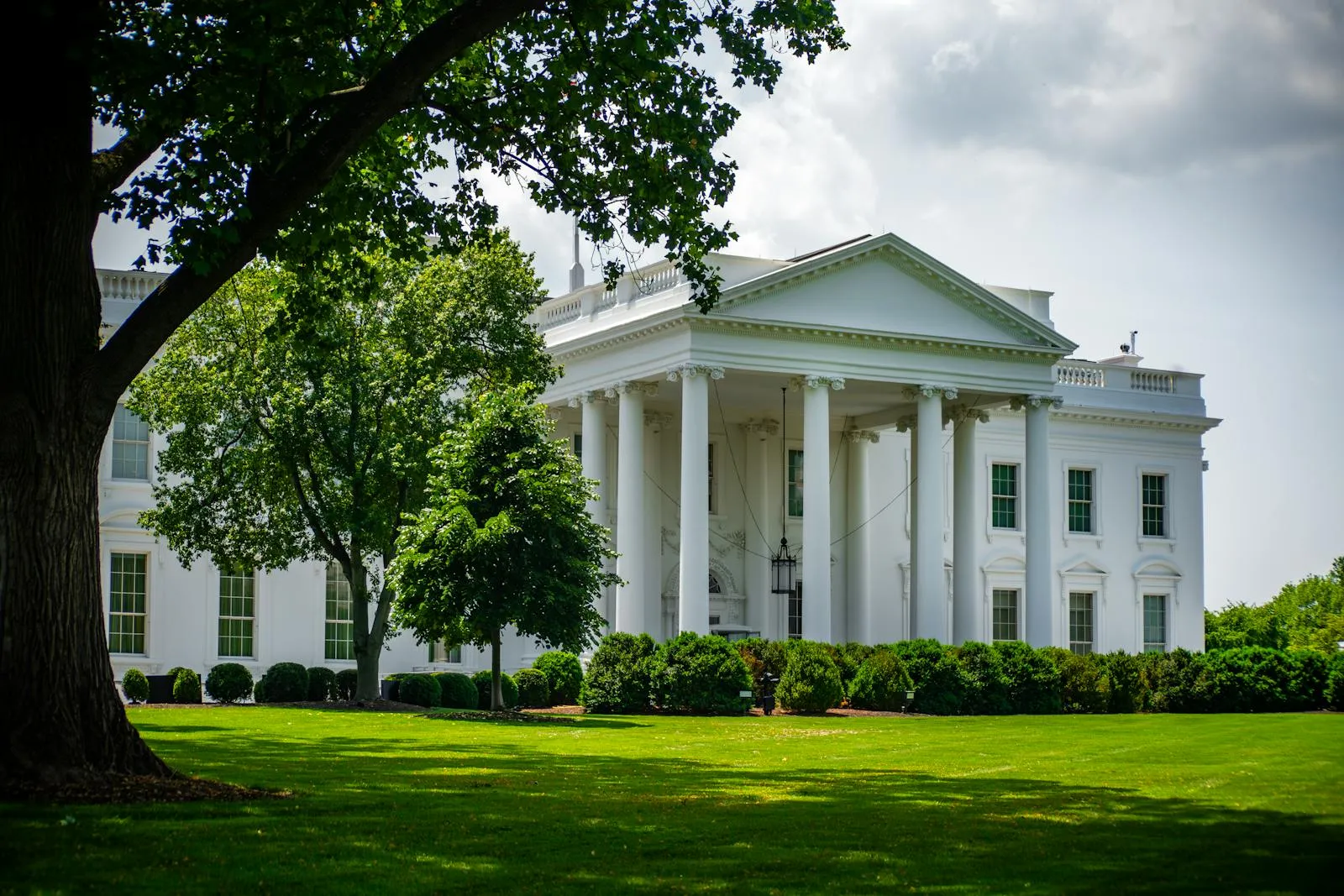
The White House released its 2026 Counterterrorism Strategy on Wednesday, formally designating drug cartels and transnational criminal organizations in the Western Hemisphere as the United States’ top national security threat — a ranking that places them above al-Qaeda, the Islamic State, and every other threat that has dominated the counterterrorism enterprise since September 11, 2001.
The 16-page document, signed by President Donald Trump, is the first counterterrorism strategy of his second term. It was spearheaded by Sebastian Gorka, the administration’s senior director for counterterrorism, and organizes U.S. national security priorities into three distinct threat tiers. The most significant break from prior administrations is the explicit demotion of Islamist terror groups from the top slot they have occupied in every national security document since 2001.
“The CT Strategy first prioritizes the neutralization of hemispheric terror threats by incapacitating cartel operations until these groups are incapable of bringing their drugs, their members, and their trafficked victims into the United States,” the document states.
Priority One: The Cartel Threat
Gorka’s central argument for elevating cartels to the top of the U.S. threat ladder is demographic: more Americans have died from drugs pushed into the country by cartels than service members have died in all U.S. military conflicts since the end of World War II. That framing — which the strategy presents as a correction long overdue — redefines the fentanyl overdose crisis as a national security casualty count rather than a public health failure.
The strategy’s primary tools against cartels include expanding Foreign Terrorist Organization designations to cover additional cartel networks, thereby increasing intelligence authorities and enabling the seizure of financial assets with fewer legal constraints. The Trump administration had already moved in this direction: the Drug Enforcement Administration designated the Sinaloa Cartel, the Chapitos faction, and several other organizations as FTOs in early 2026, and federal prosecutors charged the sitting governor of Sinaloa, Rubén Rocha Moya, with drug trafficking and narcoterrorism allegations tied to those designations in late April. Wednesday’s strategy document frames those actions as components of a coherent whole rather than discrete enforcement decisions.
The strategy also calls for disrupting the financial infrastructure that cartels use to move proceeds from U.S. drug sales back into Mexico and Central America, and for coordinating more aggressively with partner nations in the hemisphere to dismantle what the document describes as the cartels’ gatekeeping role over land and maritime routes into the United States.
The Mexico-U.S. relationship sits at the center of this framework. The strategy does not name Mexico as a hostile state, but it establishes that cartel territorial control within Mexican border states is a direct threat to U.S. national security — language that carries implications for bilateral cooperation and the degree of pressure Washington is willing to apply diplomatically and economically to Mexican authorities who fail to act against cartel infrastructure.
Islamist Groups: Still Targeted, Now Second
The strategy’s second priority addresses what the document calls “legacy Islamist terrorists” — the five groups it names as having the intent and capability to plan operations against the U.S. homeland from abroad. Those groups are al-Qaeda, al-Qaeda in the Arabian Peninsula (AQAP), the Islamic State (ISIS), ISIS-Khorasan (ISIS-K), and their most aggressive subgroups.
The downward shift in Islamist groups’ priority ranking does not mean the administration has concluded they no longer pose a threat. Gorka noted in briefings accompanying the strategy’s release that the named groups retain the operational planning capability and the motivation to strike the United States or its allies. ISIS-K’s January 2024 attack on Moscow’s Crocus City Hall — which killed more than 130 people — demonstrated that the group remains capable of mass-casualty operations despite years of U.S. and allied pressure. AQAP’s longstanding focus on aviation security vulnerabilities has not abated.
The practical consequence of the priority shift, however, is resource allocation. In a government where counterterrorism budgets are constrained and intelligence capacity is finite, placing cartels first means directing more analysts, more military assets, and more interagency coordination toward the Western Hemisphere threat at the potential expense of legacy CT infrastructure in the Middle East and South Asia. The U.S. military’s posture in the region has already shifted substantially during and after Operation Epic Fury, the 66-day Iran campaign that concluded May 6. Whether that campaign degrades or inadvertently strengthens Islamist networks operating in Iran-adjacent theaters is a question the strategy does not address.
The Contested Third Category: Domestic Left-Wing Extremists
The most politically contentious element of the strategy is its third priority tier: “violent left-wing extremists, including anarchists and fascists.” The document uses language that Gorka has deployed consistently in public appearances — calling for “rapid identification and neutralization of violent secular political groups whose ideology is anti-American, radically pro-transgender, and anarchist.”
This framing extends the federal government’s counterterrorism framework explicitly to domestic actors whose violence or incitement the administration links to ideological opposition to its policies. Previous administrations, including Trump’s first term, have designated Antifa-affiliated actors as domestic violent extremists. The 2026 strategy elevates that category to a standing priority in the national counterterrorism framework for the first time, placing it alongside foreign cartels and jihadi organizations.
The document includes a caveat that has received attention from civil liberties lawyers and national security analysts who have reviewed the text: “Our counterterrorism powers will not be used to target our fellow Americans who simply disagree with us.” That sentence is notable less for what it commits the government to than for what its inclusion implies — namely, that the question of where political disagreement ends and targeted domestic extremism begins was significant enough to require explicit disavowal.
The Senate’s broader immigration and border security legislation, which passed this spring and significantly expanded ICE’s domestic enforcement authorities, created a legal architecture that dovetails with parts of this strategy. The counterterrorism document does not cite that legislation, but both documents reflect the same administrative logic: an expansion of the categories of domestic threat that warrant enhanced federal enforcement capacity.
What Changes Operationally
National counterterrorism strategies are planning documents, not binding orders. They set priorities, direct agency coordination, and signal to partner nations where U.S. resources and diplomatic pressure will concentrate. The operative changes flow from executive orders, budget allocations, and agency directives that this document will inform but does not itself contain.
For the DEA, the practical effect of the cartel-first priority is additional authorization to pursue the disruptive operations it has been conducting under the Fentanyl Free America framework — the multi-month sweep that ran January through February 2026, netting more than 4.7 million fentanyl pills, nearly 148,000 pounds of cocaine, and more than 3,000 arrests nationwide. That operation would continue under an intensified mandate.
For the intelligence community, cartel prioritization means more signals intelligence resources directed at Mexican and Central American cartel networks and more coordination with foreign liaison services in partner countries.
For local law enforcement and state-level partners, the strategy formalizes the federal government’s interest in treating fentanyl trafficking as a national security matter — which affects how federal task force grants are awarded, how intelligence is shared with state and local agencies, and how prosecutorial priorities are set for federal cases involving cartel-connected defendants.
The strategy does not include a timeline or measurable benchmarks against which cartel threats would be considered sufficiently degraded to warrant revisiting the priority order. That absence is consistent with how national security strategies are typically structured — they establish direction without defining the conditions under which that direction would change.
Sources 6 cited · 1 primary
- 2026 U.S. Counterterrorism Strategy
- Trump's counterterrorism strategy makes targeting drug cartels the top priority
- New Trump 'Counterterrorism' Plan Highlights Cartels, Antifa
- Trump Administration Releases 2026 Counterterrorism Strategy
- Trump counterterrorism strategy focuses on cartels and left-wing extremists
- Trump admin. launches counterterrorism strategy targeting cartels, Islamist groups and domestic 'violent left-wing extremists'
American Courant cites its sources and links to primary documents where they exist. How we report →