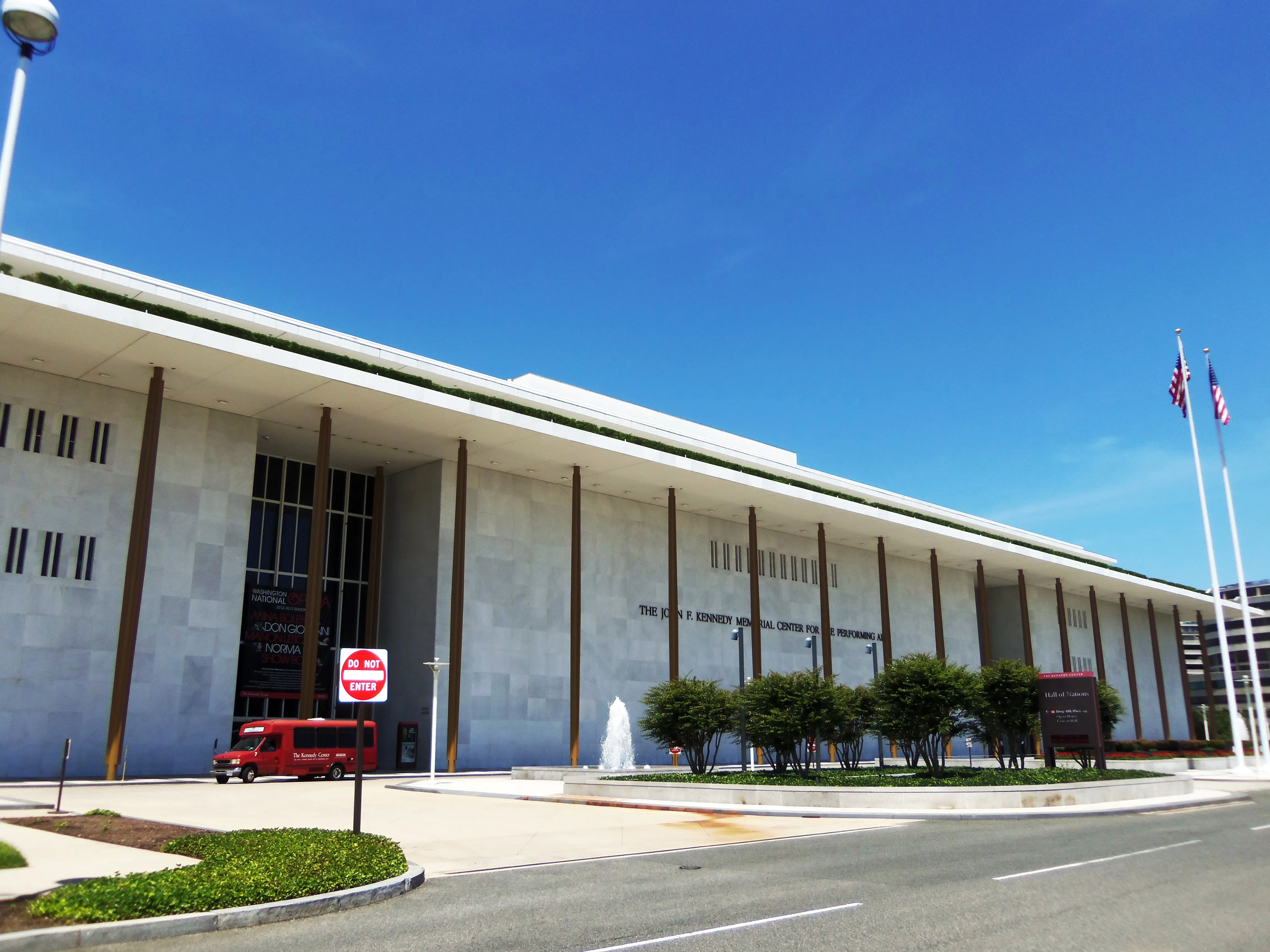
A federal judge ruled Friday that the Kennedy Center’s board of trustees acted illegally when it placed President Trump’s name on the building last December, ordering officials to remove all Trump signage within two weeks and blocking a planned two-year closure — a decision that throws a $257 million renovation into legal uncertainty and drew an immediate furious response from the president.
U.S. District Judge Christopher Cooper issued the 94-page ruling in Washington in response to a lawsuit filed by Representative Joyce Beatty, a Democratic congresswoman from Ohio who serves as an ex officio trustee by virtue of her seat in Congress. The judge’s central finding is narrow but significant: Congress designated the center as a living memorial to President John F. Kennedy by act of law in 1964, and no board of trustees, however constituted, has the power to change that designation unilaterally.
“The Kennedy Center’s organic statute makes crystal clear that the Center is to be named for President Kennedy, and it cannot bear any other formal name or public memorial based on the Board’s unilateral say-so,” Cooper wrote. “Congress gave the Kennedy Center its name, and only Congress can change it.”
The ruling delivers two concrete outcomes: the board must strip Trump’s name from the building’s facade, interior signage, and official website within 14 days, and the planned closure — scheduled to begin July 7 — is blocked for now. The Kennedy Center announced Friday afternoon it will appeal.
The Two-Part Decision
Cooper’s opinion addresses two distinct Board decisions, both of which he found legally defective.
The first concerns the December 18, 2025, vote by Trump’s newly appointed board to rename the venue “The Donald J. Trump and the John F. Kennedy Memorial Center for the Performing Arts.” The name was installed on the building’s exterior the following day. Cooper ruled the Board simply did not have that authority. The Kennedy Center’s governing statute designates the institution as a living memorial to President Kennedy and places that designation in Title 20 of the U.S. Code, the same section of federal law that governs education and cultural programs. Altering a statutory name requires an act of Congress — not a board resolution.
The second concerns the March 16, 2026, vote to shutter the center for two years. Cooper found that meeting procedurally tainted from the outset. The judge wrote that the closure decision was the product of “an insufficient, one-sided presentation of information” and was “ill-informed and seemingly preordained.” At that same meeting, the board stripped Beatty of her voting rights as an ex officio trustee — a move Cooper also found unlawful. He ordered her voting rights restored, writing that “The Center’s organic statute makes no distinction between the powers of general and ex officio trustees.”
Ex officio trustees are congressional members who sit on the board automatically, by law, as long as they hold their seats. The trustee list includes designated members of both chambers. When Trump’s board attempted to silence Beatty at the March meeting, it effectively cut Congress out of a vote on the fate of a federally chartered institution — a structural problem, Cooper found, that independently undermined the validity of the closure vote.
How the Kennedy Center Got Here
The Kennedy Center’s brush with renaming is the most prominent episode in a broader pattern of the Trump administration placing the president’s name on federal buildings, geographic features, and government programs. The administration has added Trump’s name to multiple Washington institutions and has sought congressional action to rename others permanently.
For the Kennedy Center, the process began quickly after Trump’s second inauguration. He fired then-president Deborah Rutter and removed former board chair David Rubenstein, along with trustees appointed during the Biden administration. The new board includes Usha Vance, Susie Wiles, and Fox News host Laura Ingraham, with Trump himself serving as board chair — an arrangement that departs significantly from the center’s historical governance.
The December 18 vote was unanimous. By the following morning, the new name appeared on the building’s exterior. In February, incoming center president Richard Grenell announced the annual Kennedy Center Honors would be renamed the “Trump Kennedy Center Honors.”
The closure vote followed in March, with the board citing decades of deferred maintenance and a federal appropriation of $257 million secured for the renovation. The closure was set to begin July 7, after this summer’s July 4 performances — including a ceremony that had become a marquee event under the new board. After the closure, the building would have gone dark for roughly two years.
Beatty filed her lawsuit in late March, challenging both the renaming and the planned closure as illegal. The lawsuit argued that neither action was within the board’s statutory authority and that the ex officio trustees’ vote suppression at the March meeting was independently unlawful.
What Changes Now
The immediate practical effect of Cooper’s ruling is significant.
Summer performances continue. “Moulin Rouge” is currently scheduled for June, and the Mark Twain Prize ceremony — where Bill Maher is set to be honored on June 28 — will proceed. All of these were at risk if the July 7 closure had gone forward.
Within two weeks, the board must remove the Trump name from the building’s facade, all interior signage, and the institution’s website. Every reference to “Trump Kennedy Center” or the full renamed title must come down. Whether and how quickly that happens in practice may depend on whether the center immediately moves in the D.C. Circuit Court of Appeals for a stay of the order while it appeals.
Beatty is back at the table. With her voting rights restored as an ex officio trustee, any future votes by the board on the renovation, the closure, or the center’s governance now require her inclusion.
The $257 million remains appropriated, but its deployment is uncertain. The Kennedy Center spokesperson, Roma Daravi, said in a statement Friday that “the Center requires an urgent and significant restoration — a truth that even the plaintiff acknowledges,” and emphasized that Congress had approved the funding. But the judge’s ruling blocks the board from proceeding with the closure until the case resolves — or until an appeals court disagrees with Cooper.
The Reactions
Trump responded Saturday on Truth Social in a 580-word post that attacked Judge Cooper by name, questioned the building’s structural integrity, and announced an abrupt change of posture toward the institution.
“Unfortunately, Judge Cooper and the Radical Left would rather see it DIE than have President Trump transform it into something that everyone could be proud of,” Trump wrote. He claimed the judge had been shown a presentation documenting “rotting beams, parking areas that are subject to collapse, and various other Life and Safety problems” and chose to ignore it. Trump closed the post with a declaration that he was walking away from the renovation entirely: “We are going to be working with Congress to transfer this failing Institution back to them.”
The Kennedy Center responded through Daravi, who told NPR in an email that the center will appeal and expressed confidence the ruling would be overturned. “We are confident that on appeal the court will uphold the Board’s will to recognize President Trump’s historic contributions to our nation’s cultural center,” Daravi said.
The contrast between Trump’s pledge to hand the Kennedy Center back to Congress and the center’s plan to appeal the ruling that enforced congressional authority reflects the competing legal and political pressures now converging on the institution.
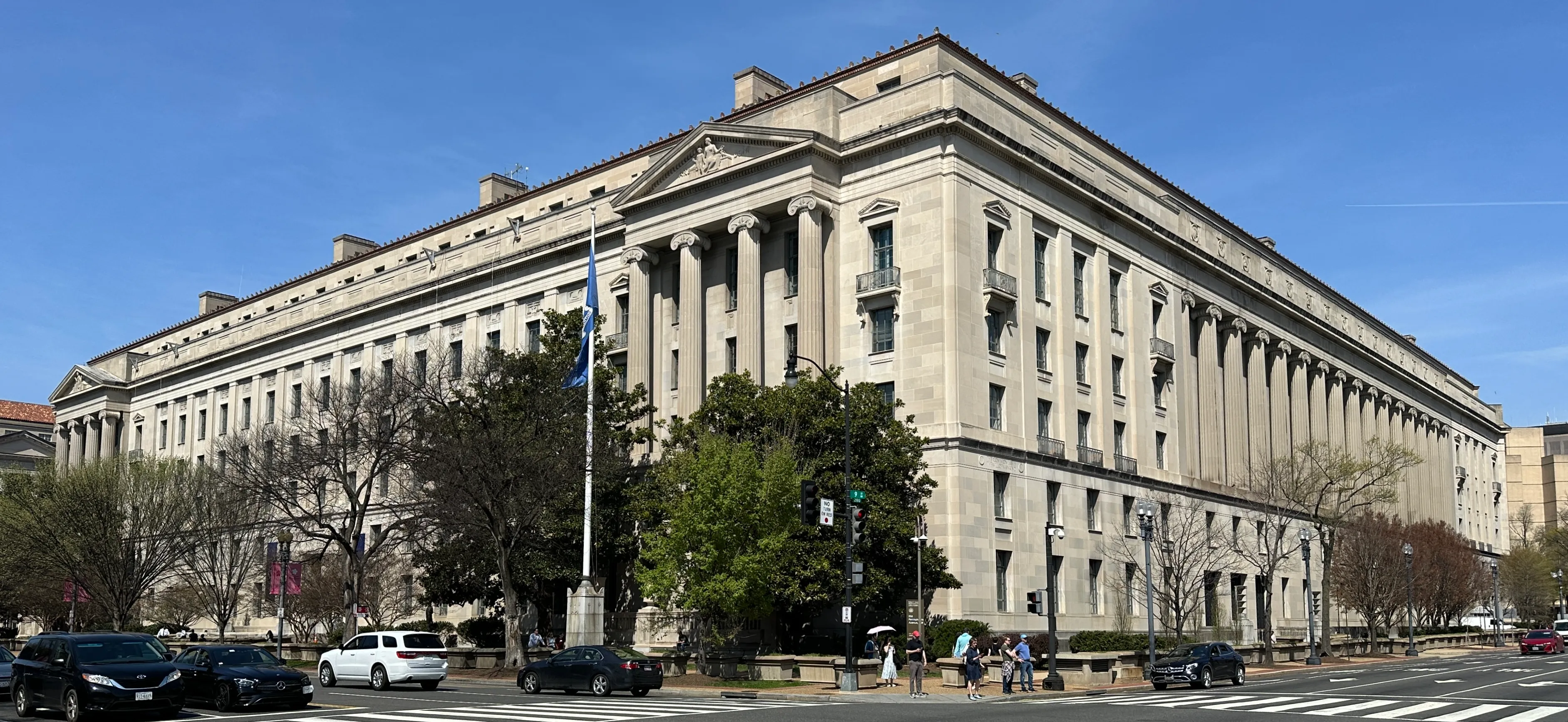
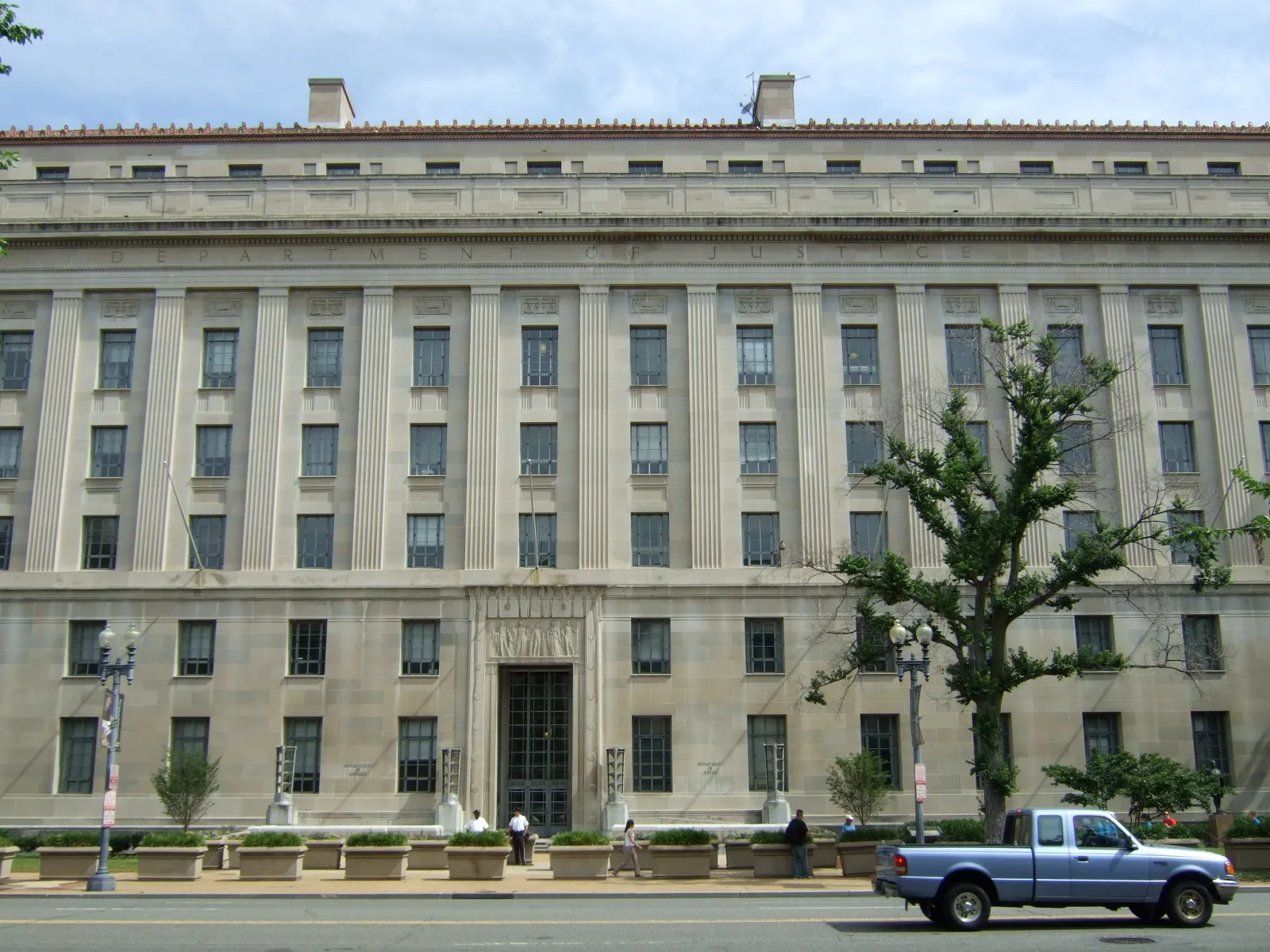
The separation-of-powers question at the heart of the ruling — whether the president can direct a federally chartered board to override a congressional designation — is not confined to arts institutions. Similar arguments have arisen in other legal fights over executive action. American Courant’s earlier coverage of the congressional authority fight over the Justice Department’s anti-weaponization fund documented a parallel dispute: Congress sets institutional structures through law, and the executive branch cannot reroute that authority through administrative action alone.
What Happens Next
The Kennedy Center’s appeal will go to the U.S. Court of Appeals for the D.C. Circuit. The center may simultaneously seek a stay of Cooper’s order to prevent the name-removal requirement from taking effect during the appellate process. Given the tight 14-day deadline, that motion could come early next week.
A congressional fix remains theoretically possible. If Congress were to pass legislation explicitly authorizing the name change — the approach Trump gestured toward in his Truth Social post — it would moot the legal dispute. But passing legislation renames a monument associated with one of the country’s most revered presidents, and congressional Republicans would face significant political exposure in a midterm cycle where courts have repeatedly been called on to adjudicate Trump administration institutional decisions.
The renovation itself hangs in suspension. The $257 million is appropriated and waiting. The deferred maintenance is real — the building opened in 1971 and has not undergone a comprehensive structural renovation in its 55-year history. But until the legal fight resolves, none of that money can be deployed under the board’s current plan.
What is now clear is that the Kennedy Center is heading into a summer of legal uncertainty, with performances continuing, a name change in contest, and a once-settled renovation timeline now subject to the D.C. Circuit’s calendar.
For the performing arts community in Washington, the immediate outcome is relatively favorable: the lights stay on, the stage stays open. For the question of who ultimately decides what a federal institution is called — and who gets to govern it — the answer is heading to a higher court.
Sources 6 cited · 1 primary
- Memorandum Opinion and Order, Beatty v. Trump Kennedy Center, No. 1:26-cv-00842 (D.D.C. May 29, 2026)
- Trump's name must be removed from Kennedy Center, judge rules
- Judge blocks closure of Kennedy Center and orders removal of Trump's name
- Trump blasts judge over Kennedy Center ruling in angry statement
- Trump Blasts Judge Who Ordered President's Name Removed From Kennedy Center
- President Trump's name must come off of the Kennedy Center, judge rules
American Courant cites its sources and links to primary documents where they exist. How we report →