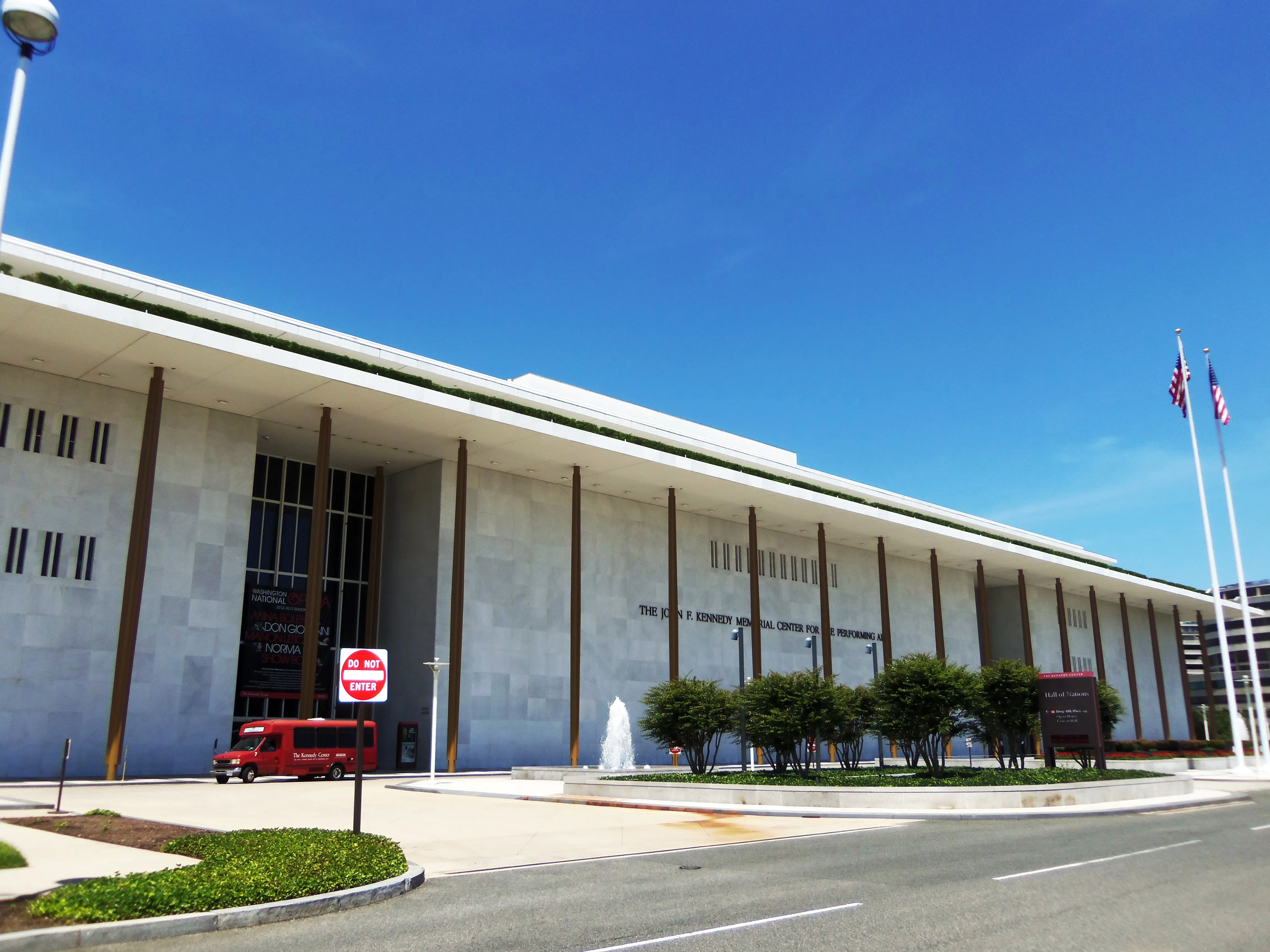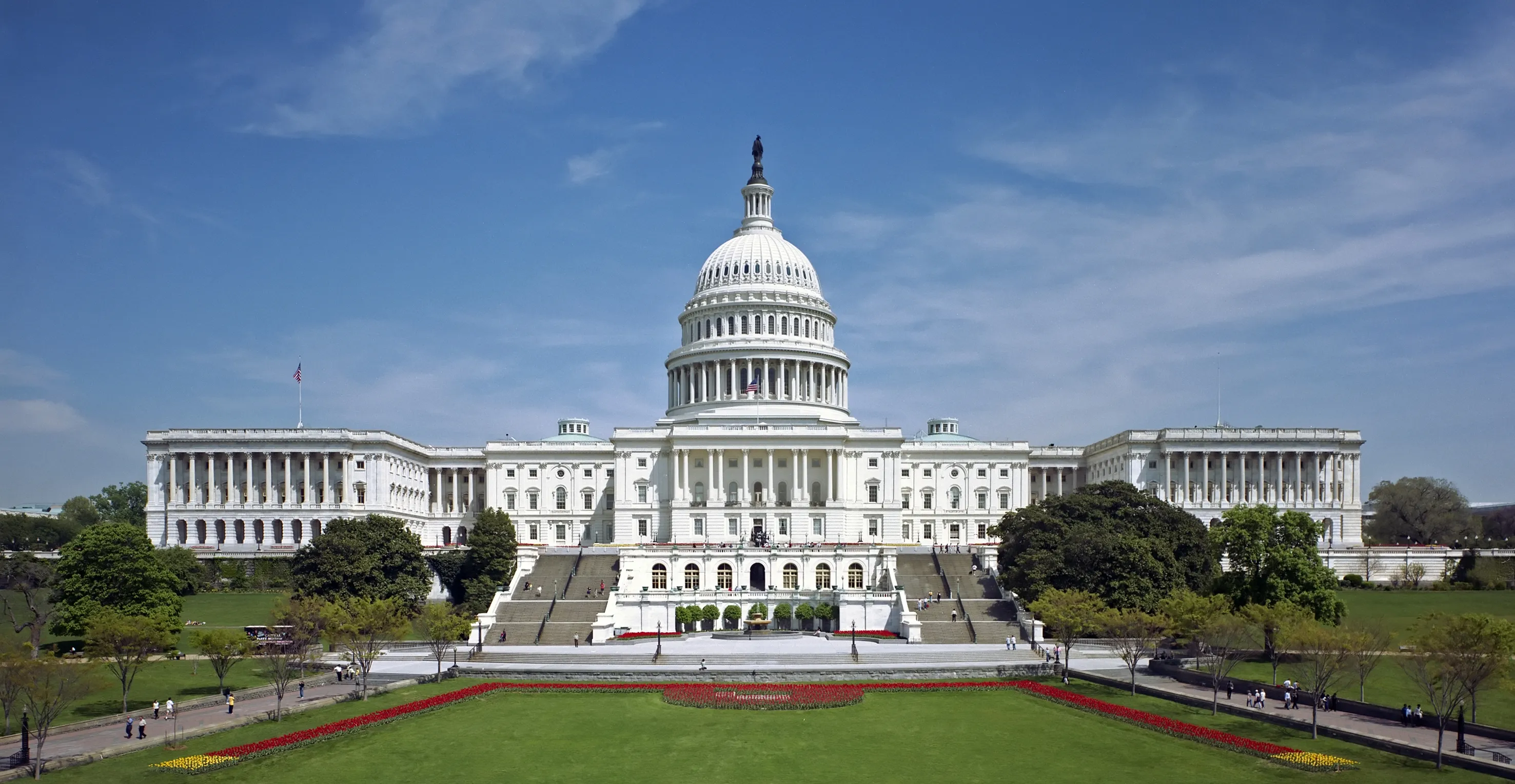
The name is coming off the building. Within 14 days of Friday’s ruling, the words “Trump” must be stripped from the facade, the interior signage, and the website of the John F. Kennedy Center for the Performing Arts. The board that placed them there has announced an appeal. The president has declared on Truth Social that he is walking away from the whole enterprise.
That reaction — abandoning the institution rather than adjusting to the ruling — is worth reading carefully. Because the legal question the Kennedy Center case posed and answered isn’t really about performing arts programming, renovation costs, or whether any president’s name belongs on a famous building. It’s about whether an executive-appointed board can override what Congress put in statute. And the answer, from U.S. District Judge Christopher Cooper in a 94-page opinion, is a clear no.
“Congress gave the Kennedy Center its name,” Cooper wrote, “and only Congress can change it.” That sentence concerns one performing arts center on the Potomac. It is also a sentence about how the executive branch is required to treat the law — a requirement the current administration has tested repeatedly, and lost repeatedly, in courts across the country.
What the Court Actually Found
When Trump’s newly reconstituted board of trustees voted unanimously on December 18, 2025, to rename the building “The Donald J. Trump and the John F. Kennedy Memorial Center for the Performing Arts,” it proceeded as though authority naturally flowed from appointment. It does not.
The Kennedy Center’s governing statute, passed in 1964 and embedded in Title 20 of the U.S. Code, does not grant the board naming authority. It names the institution itself — and that naming lives in federal law, not in a board charter or a governance bylaw. To alter a statutory designation requires another act of Congress. A board resolution, however unanimous, however recently constituted, does not amend the statute.
That distinction is not a technicality. The board can govern, schedule, hire, and manage. What it cannot do is effectively edit the text of a law passed by a co-equal branch of government. Cooper’s ruling makes the constitutional logic explicit: “The Kennedy Center’s organic statute makes crystal clear that the Center is to be named for President Kennedy, and it cannot bear any other formal name or public memorial based on the Board’s unilateral say-so.” The clarity of the prose is its own kind of ruling.
Cooper also found a second defect in the board’s actions, one that has received less attention than the renaming dispute. At the March 16, 2026, meeting where the board voted to close the institution for two years, it simultaneously stripped Representative Joyce Beatty — a Democratic congresswoman from Ohio who holds an ex officio trustee seat by virtue of her congressional position — of her voting rights. Cooper ruled that unlawful as well. The Kennedy Center’s statute grants ex officio trustees the same powers as appointed trustees, with no exception for partisan inconvenience. “The Center’s organic statute makes no distinction between the powers of general and ex officio trustees,” Cooper wrote, restoring Beatty’s seat and voting rights.
The combined effect is significant. A federally chartered institution voted to close itself for two years while actively excluding the congressional representatives the law required to be at the table. The closure vote is not just contested on policy grounds — it was structurally defective from the moment the board silenced Beatty.
The Truth Social Post Was a Legal Admission
When presidents lose in court, their responses tend to fall into one of two categories: they argue the court read the law wrong, or they accept the legal conclusion while contesting the outcome on political grounds. President Trump’s response to the Kennedy Center ruling — a 580-word Truth Social post attacking Judge Cooper by name and questioning the building’s structural integrity — falls firmly in the second category.
Buried in the anger is this sentence: “We are going to be working with Congress to transfer this failing Institution back to them.”
That sentence should be read as the legal document it amounts to. The president who spent five months directing his board to rename and close a federally chartered institution without a vote in Congress is now saying the solution is to go to Congress. That is the court’s holding restated in the first person. To change the Kennedy Center’s legal status — its name, its governance structure, whether it continues to operate — you need an act of Congress. That’s what the judge found. That’s what the president confirmed.
There is something clarifying about this concession. The administration did not appeal on the grounds that Cooper misread the statute. Its board announced an appeal while the president simultaneously announced a legislative strategy. Both responses acknowledge the same underlying reality: on the legal question, the administration lost because the court got the law right. Whether the appeals court agrees is a separate question. The president’s own reaction suggests he knows the answer.
The Principle Beyond One Building
The Kennedy Center is not the only federally chartered institution where this dynamic has played out. As American Courant reported in May, the Justice Department’s attempt to create a $1.776 billion Anti-Weaponization Fund without a congressional appropriation raised an identical structural question: when Congress establishes the purpose and structure of federal spending or federal institutions through statute, can the executive branch override or redirect that through administrative action?
Courts have consistently said no. The pattern in the Kennedy Center case fits within a series of rulings that establish the same principle from different angles. When Congress designates an institution by law, names a program in statute, or structures a board’s governance in the text of federal law, those decisions belong to the legislative branch until the legislative branch changes them.
That principle was settled constitutional law before the current administration arrived in office. What has changed is the frequency and directness with which it has been tested, and the clarity with which courts have articulated its limits when it is. Courts have been called on repeatedly to adjudicate the boundaries of this administration’s institutional decisions. The Kennedy Center ruling adds a prominent cultural example to a growing body of case law.
The argument that courts are themselves engaged in partisan overreach — a version of which appears in Trump’s Truth Social post — loses explanatory power when the rulings come from courts of varied composition applying straightforward statutory text. Cooper’s opinion in this case does not break new doctrinal ground. It applies existing law to the specific words of a specific statute. The conclusion is difficult to read as ideologically motivated when the statutory text is as plain as it is.
What the Counterargument Gets Right
The strongest case for what the board attempted has almost nothing to do with the name, and almost everything to do with the building.
The Kennedy Center opened in 1971 and has not undergone a comprehensive structural renovation in 55 years. The deferred maintenance is real. Congress appropriated $257 million for the renovation. That money is sitting, waiting to be used, while the litigation proceeds. Roma Daravi, the Kennedy Center’s spokesperson, described it accurately in a statement Friday: “the Center requires an urgent and significant restoration — a truth that even the plaintiff acknowledges.”
Cooper’s ruling is not a statement that the renovation shouldn’t happen. He acknowledged the maintenance need and the congressional appropriation. His ruling blocked the closure because the board conducted a defective vote that excluded a congressionally mandated trustee, and did so under Cooper’s finding of “an insufficient, one-sided presentation of information.” The deferred maintenance becomes a legal and practical problem when the process used to address it is itself structurally unsound.
The building needs work. The ruling doesn’t prevent that work from happening — it requires that it happen under proper governance with all legally mandated trustees participating, and under a name that Congress, not a board, is authorized to assign. Those constraints are not unreasonable. They are the law.
What Comes Next
The D.C. Circuit will hear the Kennedy Center’s appeal. The board may simultaneously seek a stay of the name-removal order, which could extend the 14-day deadline while the case is briefed. Whether the appeals court agrees with Cooper’s statutory reading will shape the outcome for this specific dispute.
But the ruling’s significance doesn’t depend entirely on its outcome at the appellate level. It has now articulated, in a high-profile case with a concrete 14-day compliance clock, the principle that executive-appointed boards cannot override congressional statutory designations. That principle will be cited in future disputes over the same question — disputes that will arise, as they have already arisen, wherever the administration has moved quickly against institutions that Congress has governed through statute.
The name is coming off the building, for now. The principle behind the order is considerably harder to remove.
The Kennedy Center case is not primarily a story about the performing arts. It is a story about what it means to govern a country under law — where some decisions belong to the branch that makes the laws, and other branches, however powerful, are bound to respect that.
Congress named this building. A court just reminded everyone what that means.
Sources 5 cited · 1 primary
- Memorandum Opinion and Order, Beatty v. Trump Kennedy Center, No. 1:26-cv-00842 (D.D.C. May 29, 2026)
- Trump's name must be removed from Kennedy Center, judge rules
- Judge blocks closure of Kennedy Center and orders removal of Trump's name
- Trump blasts judge over Kennedy Center ruling in angry statement
- President Trump's name must come off of the Kennedy Center, judge rules
American Courant cites its sources and links to primary documents where they exist. How we report →