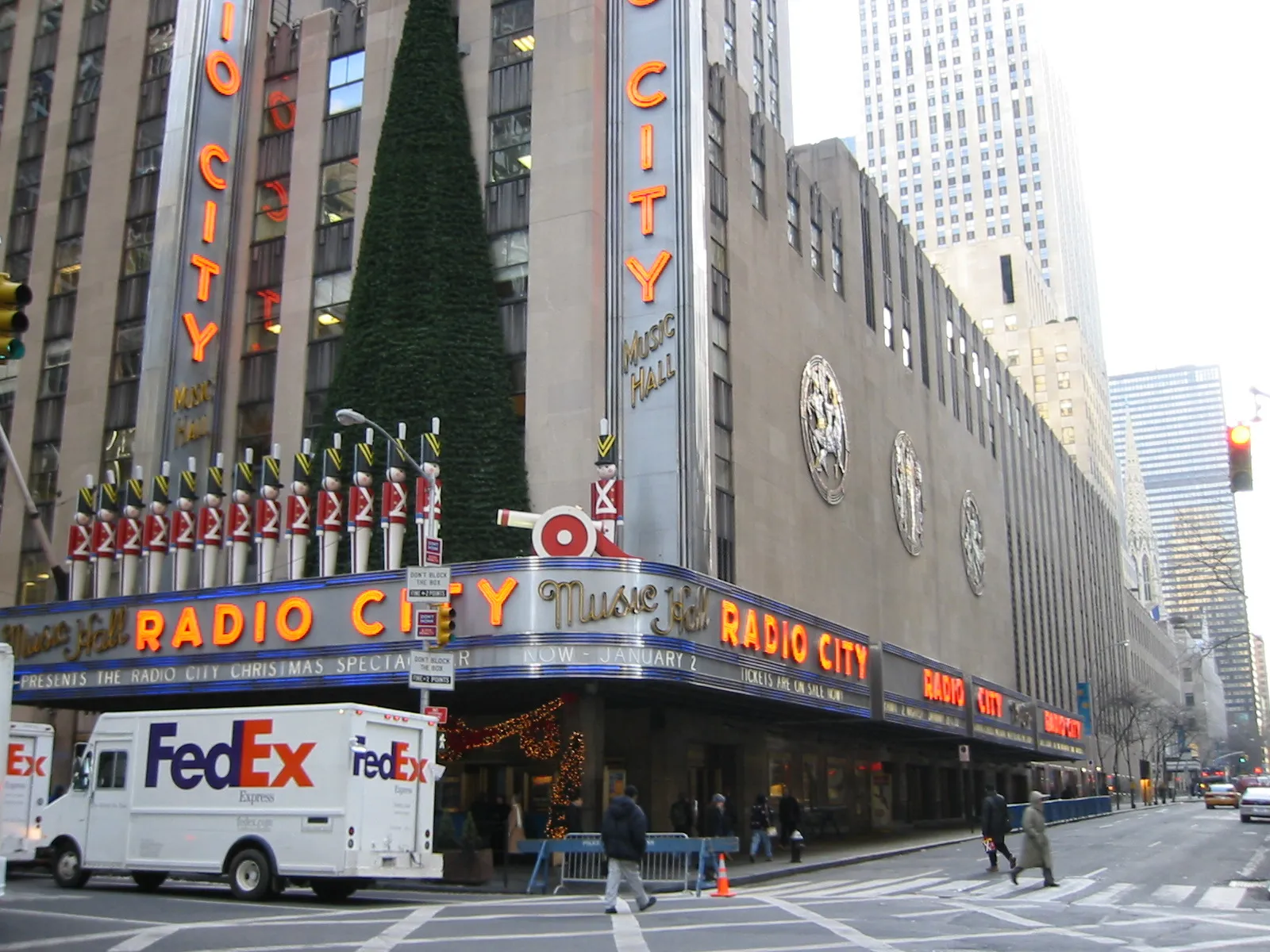
Broadway’s biggest night arrives Sunday, June 7, when the 79th Tony Awards air live from Radio City Music Hall on CBS, with Paramount+ streaming the ceremony in the United States and the pop singer Pink serving as host. The trophies handed out that evening will close one of the most unusual Broadway seasons in recent memory — a season defined less by what won than by how little there was to choose from, and by where most of the front-runners came from.
Just 30 productions were eligible for Tony nominations this season, a sharp drop from the 42 that qualified a year earlier, according to the official nominee tally published by the American Theatre Wing and the count reported by Playbill. That contraction reshaped the competition. With fewer shows in contention, several categories drew shorter slates than usual, and the productions that did break through clustered around a small group of titles. Two new musicals, “The Lost Boys” and “Schmigadoon!,” led the entire field with 12 nominations each, followed by “Ragtime” with 11.
The arithmetic matters because the Tonys are not only an awards show. They are the marketing engine of an entire commercial ecosystem. A Best Musical win or a televised performance can extend a show’s run by months and reshape its national tour prospects. When the eligible pool shrinks by a quarter in a single year, it is a signal about the health of the business that sits underneath the broadcast — and this season the signal is mixed.
A Best Musical field built mostly from screens
The clearest throughline in this year’s race is where the leading new musicals originated. Of the four shows nominated for Best Musical — “The Lost Boys,” “Schmigadoon!,” “Titaníque” and “Two Strangers (Carry a Cake Across New York)” — three are adaptations or send-ups of screen properties.
“Schmigadoon!” began as an Apple TV+ series, a two-season parody of Golden Age musicals starring Cecily Strong and Keegan-Michael Key, before being reworked for the stage. “The Lost Boys: A New Musical” adapts the 1987 cult vampire film. “Titaníque,” which moved to Broadway after a long Off-Broadway run, retells the 1997 blockbuster “Titanic” as narrated by Celine Dion, stitched together with her hits. Only “Two Strangers (Carry a Cake Across New York),” a British two-hander by Jim Barne and Kit Buchan that traveled from regional UK stages and the West End before reaching the Longacre Theatre, is an original story not drawn from an existing movie or TV show.
That pattern is not new, but its concentration this year is striking. Broadway has leaned on familiar intellectual property for the better part of a decade because recognizable titles lower the marketing cost of selling an expensive night out. The same logic now drives much of Hollywood, where established franchises and remakes crowd the release calendar. The film world saw it again this spring when a sequel to a two-decades-old fashion comedy posted one of the season’s larger openings. Broadway’s 2026 Best Musical slate shows the theater business running the same play: when the audience is uncertain and capital is cautious, producers reach for stories ticket buyers already know.
June Squibb, Danny Burstein and a record-setting night
If the new-musical race tilts toward borrowed material, the acting categories delivered the season’s genuine history.
June Squibb, the 96-year-old actor best known to film audiences from “Nebraska” and the 2024 comedy “Thelma,” earned the first Tony nomination of her long career for her featured role in the play “Marjorie Prime.” In doing so she became the oldest acting nominee in Tony Awards history, surpassing Lois Smith, who held the previous mark after a 2020 nomination at age 89, as Playbill and NPR reported. Smith, in a coincidence that theater fans noticed immediately, had starred in an earlier Off-Broadway production of “Marjorie Prime” a decade ago.
The same play produced a second record. Danny Burstein, a fixture of the Broadway stage, picked up his ninth career nomination for “Marjorie Prime,” making him the most-nominated male performer in Tony history. He had previously been tied at eight with Jason Robards, breaking a benchmark that had stood for decades. Burstein has long been one of Broadway’s most reliable character actors without a corresponding pile of wins; the nomination cements his standing regardless of how the June 7 vote falls.
Those milestones give the broadcast something awards producers prize: a built-in narrative that does not depend on which title takes the top prize. A 96-year-old first-time nominee and a record-setting veteran are the kind of stories a live telecast can build a segment around, and they arrive at a moment when every awards show is fighting to justify three hours of prime-time real estate.
Why a smaller season is the real story
The shrinking eligible pool is the development that will outlast the ceremony. Thirty eligible productions is a low figure by recent standards, and it reflects a Broadway economy still working through high production costs, cautious investors and an audience that has not fully returned to pre-pandemic volume across the board. Fewer shows means fewer jobs, fewer touring productions seeded for the years ahead, and a narrower funnel of new work competing for attention.
It also raises the stakes for the telecast itself. The Tony Awards have never drawn the raw audience of the Oscars or the Grammys, and like every legacy awards broadcast they are navigating a fragmented viewing landscape. The Academy recently bet on continuity to steady its numbers, re-upping the same Oscars host for an unusual third consecutive year after a soft ratings result. CBS, which carries both the Tonys and a growing share of the awards calendar, has leaned into marquee live events even as its late-night lineup contracts — the network ended a long-running franchise when “The Late Show” aired its finale this spring. The Tony broadcast sits inside that same strategic question: how to keep a live cultural event commercially viable when fewer people watch linear television on any given Sunday.
Hosting duties this year fall to Pink, continuing a recent pattern of pairing the theater world’s biggest night with a mainstream music star to widen the broadcast’s reach — the same instinct that has shaped how CBS programs its other music-driven awards telecasts. Whether that draws viewers who would not otherwise tune in is the kind of result that won’t be clear until the Nielsen numbers land the following week.
What to watch on June 7
The night’s suspense is concentrated in a handful of races. “The Lost Boys” and “Schmigadoon!” enter as the nomination leaders and the presumptive front-runners for Best Musical, with “Ragtime,” a revival of the sweeping 1998 musical, positioned to anchor the revival categories. The acting races carry the Squibb and Burstein storylines into the room, and the performance slots — the live musical numbers that function as commercials for the shows and for Broadway itself — will do the heaviest lifting for an industry that needs the exposure.
What the ceremony cannot paper over is the underlying math. A season with 30 eligible productions and a Best Musical field leaning heavily on screen adaptations describes a Broadway that is leaning on the familiar to manage its risk. The trophies handed out at Radio City will crown this season’s winners. The more durable question is whether the business that produced them can widen its pipeline again — or whether a thinner, more adaptation-driven Broadway is the shape of the seasons to come.
Sources 6 cited · 1 primary
- Tony Award Nominations 2026 (official nominees list)
- Tony Nominations 2026, Read the Complete List; The Lost Boys and Schmigadoon! Lead
- June Squibb Makes History as Oldest Tony Awards Acting Nominee in History
- 2026 Tony Awards: See the complete list of nominations
- Tony Nominations 2026: 'The Lost Boys,' 'Schmigadoon!' Lead Complete List
- Tony nominations 2026: A thin field, and a telling moment for Broadway
American Courant cites its sources and links to primary documents where they exist. How we report →