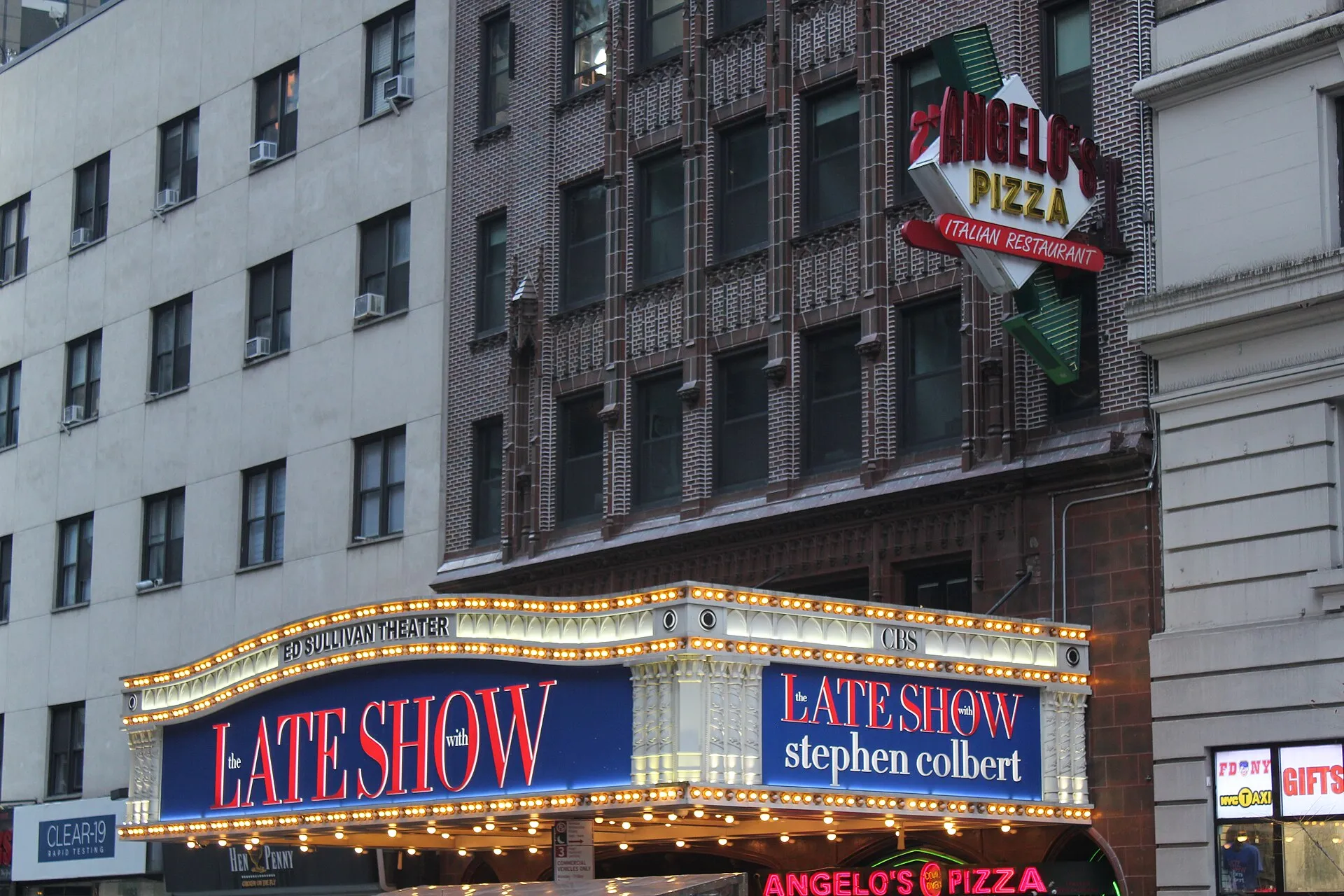
For 33 years, the 11:35 p.m. slot on CBS belonged to a host at a desk, a monologue, and a guest couch. As of last Friday it belongs to a rerun-friendly panel of comedians who were told, on purpose, not to talk about anything that might offend an advertiser. The man who arranged that swap is Byron Allen, and he is not finished rearranging the media landscape. In the same week his apolitical comedy block took over Stephen Colbert’s old time period, Allen closed a majority stake in BuzzFeed and reiterated that he intends to own the premium cable network Starz outright.
The pieces are not unrelated. They describe a single strategy from a former stand-up comic turned billionaire dealmaker who has spent two decades buying the parts of the entertainment business that other companies were willing to shed cheaply — and who now controls a flagship network time slot, a digital publisher, and a stake in a streaming service, all acquired on terms that favor low cost and broad advertiser appeal over prestige.
What happened on CBS
Comics Unleashed with Byron Allen moved into the 11:35 p.m. ET slot on Friday, May 22, 2026, one day after The Late Show with Stephen Colbert aired its finale on May 21. Allen also leases the 12:37 a.m. hour for his comedy game show Funny You Should Ask. According to CBS’s announcement through Paramount Press Express, both shows are treated as national network programming, and CBS expects its affiliates to continue clearing the late-night block.
The arrangement is a “time buy.” Rather than CBS paying to produce a show, Allen leases the time period from the network and recoups his cost by selling the advertising inside it himself. He has described the pitch to CBS bluntly. “Okay, do you like money?” he recalled asking the network, telling interviewers that he offered to buy the time period so CBS “can save over $110 million.” Allen has characterized himself as putting money in the network’s “cash register” and called himself a gift from “the money and comedy gods.”
The economics behind that pitch are not in dispute. Paramount, now Paramount Skydance, announced last July that it was ending The Late Show, calling the move “purely a financial decision” and citing a late-night business losing audience and advertising. The franchise was reportedly losing roughly $40 million a year even as Colbert exited as the linear ratings leader in his slot — a point critics raised when the company declined to try cheaper fixes like fewer production days and instead cancelled the show outright. The decision arrived amid the company’s $8 billion merger with Skydance Media and after Colbert publicly attacked Paramount’s $16 million settlement of a lawsuit President Trump brought over a 60 Minutes interview edit, which Colbert called “a big fat bribe.” Our earlier coverage of CBS handing the slot to a Byron Allen time buy laid out how the deal came together before the show aired.
The first-week numbers
Now the show has aired, and the early audience figures show the gap between a star-driven monologue program and an evergreen panel block. The first half-hour of Friday’s debut drew a national average of 995,000 total viewers and 116,000 in the 18-to-49 demographic that advertisers prize, according to ratings reported by LateNighter. Measured against Colbert’s finale — an extended episode that drew 6.74 million viewers and beat his own 2015 debut, as detailed in our report on the record-setting Late Show finale — the debut was down about 85 percent in total viewers and roughly 95 percent among younger viewers.
A near-million viewers is not the same as failure under Allen’s model. Because he carries the production cost rather than CBS, the relevant question is whether the ad revenue he sells against that audience exceeds what he pays for the slot, not whether he matches Colbert’s reach. Comics Unleashed has run in syndication for nearly two decades and has never been a critical favorite; its draw is its predictability, not its topicality. Allen has said he instructed his writers and comedians to steer clear of political and topical material to keep the program evergreen and palatable to advertisers — a deliberate inversion of the host-driven, often political late-night format that defined the era he is replacing.
David Letterman, who launched the CBS franchise in 1993, read the move in plain business terms. “They don’t want to spend any money, so they’re going to make money,” he said on his podcast, describing how CBS charges Allen a price and lets Allen sell the advertising. Letterman allowed that the concept itself is sound — “The show is a pretty good idea. It’s all panel,” he said — while making clear the change was about cost, not creative ambition.
Why it matters
The handoff marks a structural shift, not just a personnel one. For decades, network late-night functioned as a loss-leading prestige property: expensive to make, valuable as a cultural anchor, and a stage where hosts could be pointed and political. The replacement is the opposite by design — cheap to the network, profitable to a third party, and engineered to avoid the kind of commentary that made the slot culturally central in the first place. The same logic that ended Colbert’s run is now the operating model of what follows it.
That model is also a personal vehicle. Allen, who built Allen Media Group from a syndication business into a company holding broadcast stations, cable channels, and the Weather Channel, has long bought distressed or undervalued media assets and run them lean. The late-night time buy fits the pattern: acquire access to a marquee position without the marquee cost.
The empire around it
The CBS deal landed in the same week as a far larger move. On May 27, 2026, Allen’s family office, Allen Family Digital, LLC, completed its acquisition of roughly 51 percent of BuzzFeed’s outstanding shares, according to a company press release filed with the Securities and Exchange Commission. The filing describes Allen Family Digital acquiring 40 million shares at $3.00 each for a total of $120 million — $20 million in cash at closing and a $100 million promissory note due in five years at 5 percent annual interest. Allen became chairman and chief executive of BuzzFeed; founder Jonah Peretti shifted to president of BuzzFeed AI.
Allen has tied the purchase to a streaming ambition. “The world’s two favorite words right now: ‘Free’ and ‘streaming,’” he said, pointing to his existing free, ad-supported Local Now platform as the base for a larger video strategy that would draw on BuzzFeed and HuffPost content. The pairing — a digital publisher feeding a free, advertiser-funded streaming service — is the same advertiser-first logic that governs the CBS panel show, scaled up.
The third piece is Starz, the premium network spun off from Lionsgate. Allen paid $25 million for a stake of nearly 11 percent, buying it from an investment firm tied to former Treasury Secretary Steven Mnuchin. Starz responded in March by adopting a shareholder rights plan — a “poison pill” that would let other shareholders buy discounted stock, diluting any party that crosses a 17.5 percent ownership threshold. Allen’s answer was to escalate. “When I decide to buy the whole company — I will buy the whole company — I do plan on controlling Starz,” he told The Hollywood Reporter. A subscription service like Starz would give the free, ad-supported ecosystem a paid tier, completing a span from broadcast to free streaming to premium.
What to watch next
The near-term test is financial, not cultural. If the advertising Allen sells against a 995,000-viewer panel show clears what he pays CBS, the time-buy model is validated and other networks staring at their own unprofitable late-night blocks have a template. Letterman’s framing — networks that “don’t want to spend any money” outsourcing the slot to someone who will — could become the default rather than the exception.
The longer arc is whether the BuzzFeed deal and the Starz pursuit cohere into the “premier global free streaming service” Allen describes, or remain a collection of cheaply acquired assets. The Starz board’s poison pill signals that not every target will sell willingly, and the BuzzFeed note comes due in 2031. What is already settled is the cultural marker: the loss-leading, host-driven, politically pointed late-night show that ran on CBS for 33 years has been replaced by its commercial opposite — and the person who made that trade is using the same playbook to assemble everything around it. The shift in what mainstream entertainment rewards, away from the appointment-viewing monologue and toward formats built to be cheap, evergreen, and inoffensive, is visible in how this year’s awards-season audiences are fragmenting across platforms too.
Sources 6 cited · 2 primary
- BuzzFeed, Inc. Form 8-K — Allen Family Digital completes majority acquisition (press release dated May 27, 2026)
- CBS SHIFTS 'COMICS UNLEASHED with BYRON ALLEN' TO 11:35 PM BEGINNING FRIDAY, MAY 22
- 'Comics Unleashed' 11:35 Debut Draws 995K Viewers, -85% From Colbert Finale
- Byron Allen is paying CBS to air 'Comics Unleashed,' a panel show designed not to offend
- Byron Allen on How He Plans to Use BuzzFeed to Create a 'Premier Global Free Streaming Service'
- David Letterman Sounds Off on CBS Replacing 'The Late Show' With Byron Allen Comedy Hour
American Courant cites its sources and links to primary documents where they exist. How we report →