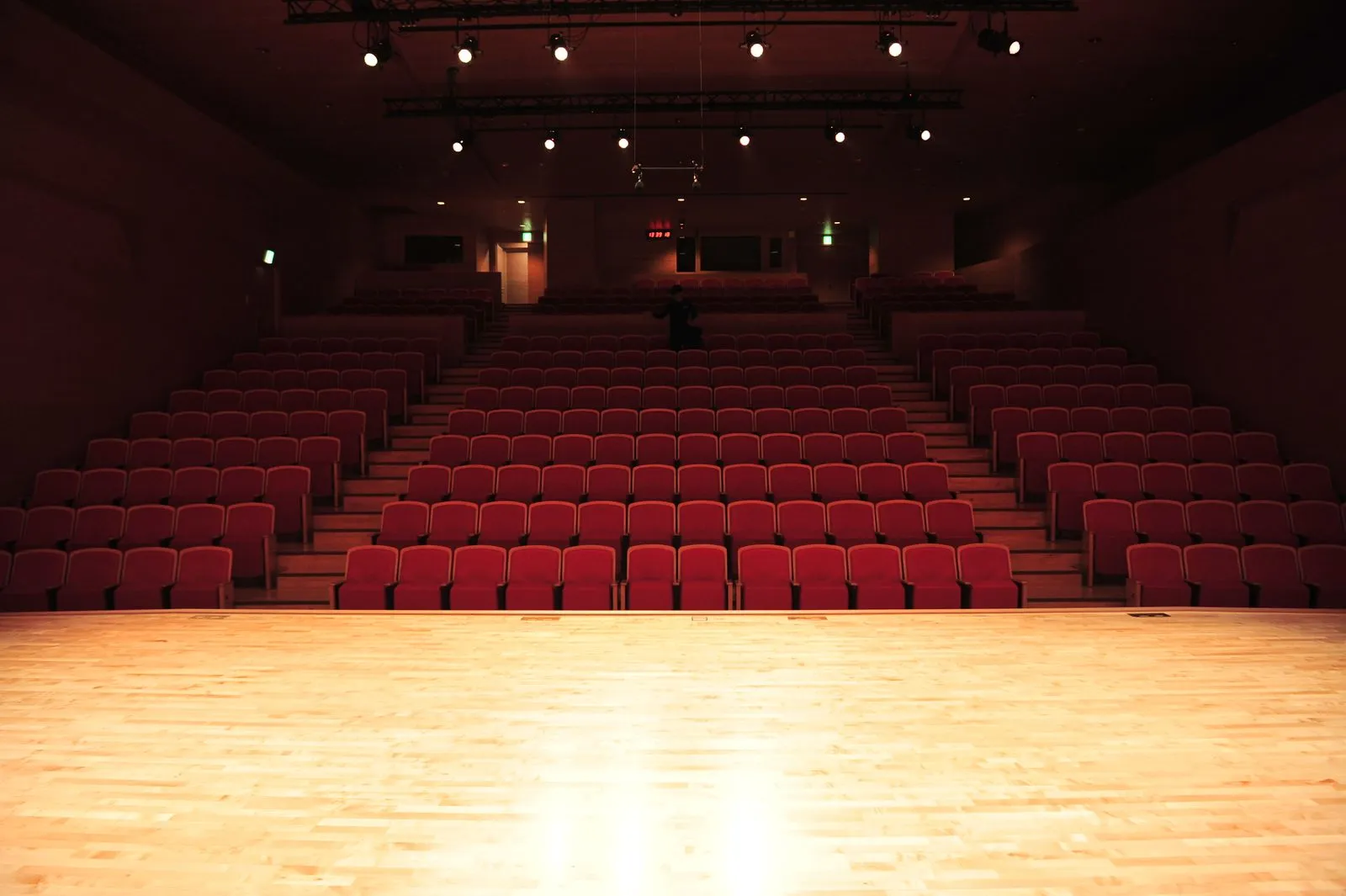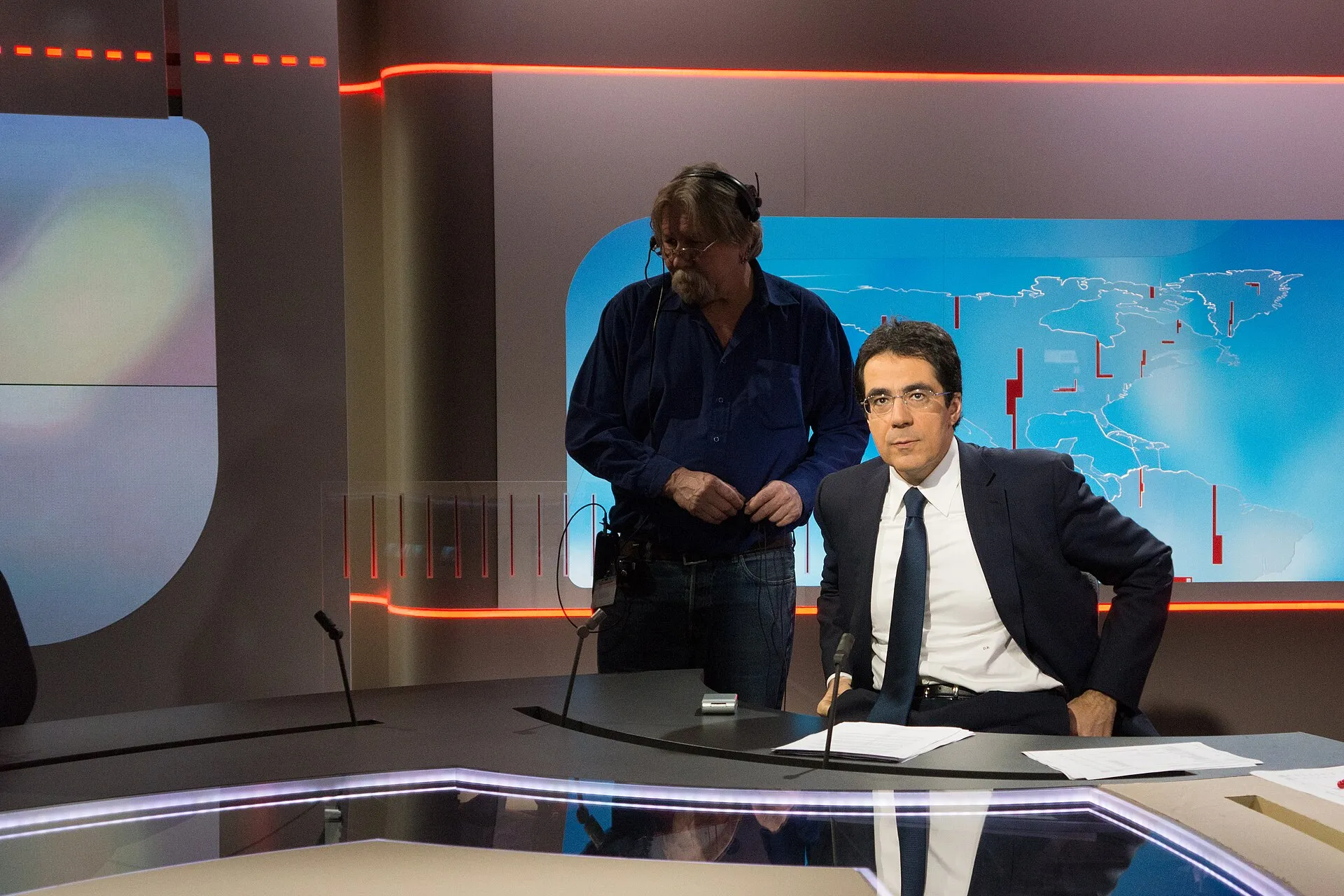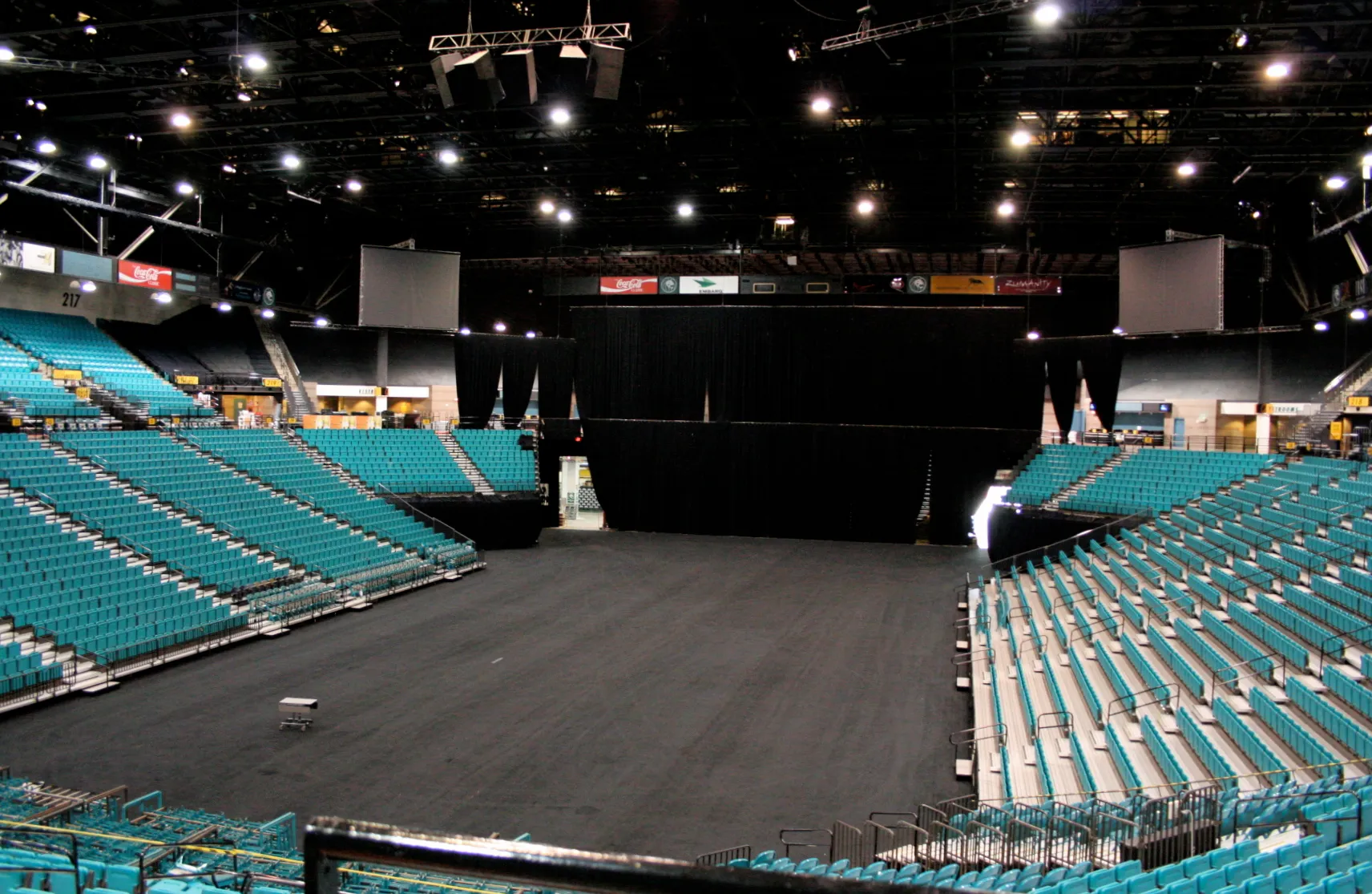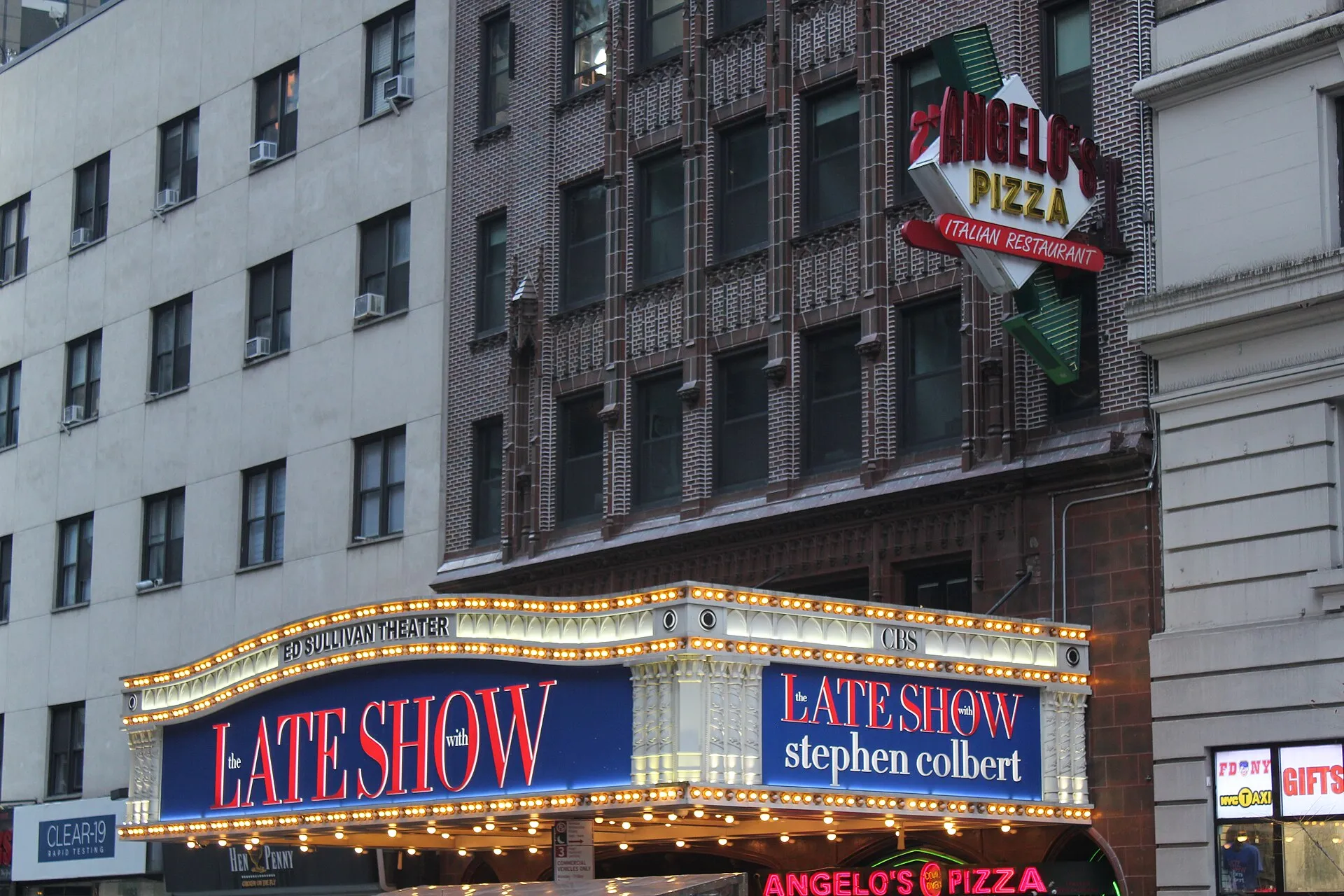
On Thursday night, Stephen Colbert will walk onto the Ed Sullivan Theater stage on Broadway and host the final episode of The Late Show. Then a name plate that has hung over CBS at 11:35 p.m. since August 30, 1993 — first under David Letterman, then under Colbert — comes down. On Friday at 11:35, the slot belongs to Byron Allen and a syndicated stand-up showcase called Comics Unleashed.
This is not a host change. This is the end of the franchise.
CBS told the press in July 2025 that ending the Late Show was “purely a financial decision against a challenging backdrop in late night,” and called Colbert irreplaceable. The numbers since have made the framing harder to argue. Colbert’s Late Show has been No. 1 in late night for nine straight seasons. In the second quarter of 2025, it averaged 2.42 million viewers per first-run episode, well ahead of ABC’s Jimmy Kimmel Live! at 1.77 million and NBC’s Tonight Show Starring Jimmy Fallon at 1.19 million. CBS is walking away from the most-watched late-night talk show on American television.
What’s replacing it tells you why. Allen, the billionaire founder of Allen Media Group, is paying CBS — in his own words to LateNighter, “tens of millions of dollars” — for a one-year time buy through the 2026–2027 TV season. Comics Unleashed, his syndicated comic showcase that first aired in 2006, runs back-to-back at 11:35 p.m. and 12:05 a.m. ET on weeknights starting Friday, May 22. The 12:37 a.m. half-hour and the 1:07 a.m. half-hour go to Funny You Should Ask, an Allen-owned game show hosted by Jon Kelley. Both are stripped Monday through Friday. CBS gets immediate profitability without producing a single late-night program of its own.
What’s happening this week
The final week began Monday with a “Worst of the Late Show” retrospective hosted by Colbert. Deadline reported the rest of the week’s schedule in advance. Tuesday brings Jon Stewart for a sit-down — the two were colleagues at Comedy Central before Colbert moved to CBS in 2015, and Stewart was the figure who turned a Daily Show correspondent into a satirist with national reach. Wednesday is built around “The Colbert Questionert” with rotating guests, followed by a Bruce Springsteen performance. Thursday is the finale. Filmmaker Steven Spielberg has appeared at some point during the week, with David Byrne performing.
The final-two-weeks runway has already produced one moment that will outlive the show. Letterman returned on the May 14 episode — exactly one week before the finale — and went on the roof of the Ed Sullivan Theater with Colbert. Stagehands lifted two of Colbert’s blue guest sofas, his desk chair, watermelons, and a CBS-branded sheet cake to the rooftop. The two hosts then hurled all of it off the building, where it landed on a target painted over a giant CBS “Eye” logo. Letterman signed off with: “Good night and good luck, motherf—ers.”
A previous generation of late-night television had its own farewell rituals. Letterman’s last Late Show in May 2015 closed with a Foo Fighters performance of “Everlong” over a montage of show clips. Johnny Carson’s 1992 Tonight Show sign-off had Bette Midler singing “One for My Baby.” Neither was a roof-throw with a four-letter exit line. That choice — and Colbert’s grin behind it — is the editorial position of two men who do not consider the cancellation amicable.
How the math actually worked
The late-night business model that built the Late Show franchise relied on three pieces holding together: a network producing the show, advertisers paying premium rates to reach a live broadcast audience, and that audience being big enough to justify a writers’ room, a band, a house staff, and an Ed Sullivan-sized theater. Two of the three have eroded in the streaming era. The first-run audience has shrunk across late-night even as Colbert’s share of it has grown; the show’s clips do enormous numbers on YouTube, but those views accrue to Google, not to CBS’s nightly ad inventory. Variety reported that CBS’s stated focus with Allen is “immediate profitability in that slot,” language that only makes sense if the previous slot was not profitable on the network’s preferred timeline.
The Allen deal is structurally different from a Carson-to-Leno or Letterman-to-Colbert handoff. Allen, not CBS, is the producer of record. Allen is renting the air time and selling the commercials directly to his own advertisers. CBS keeps a guaranteed payment, regardless of whether anybody watches. This is the format known in the industry as a time buy — common in fringe-hours infomercial programming and Saturday-morning syndication, vanishingly rare for the 11:35 p.m. slot on a Big Three broadcast network. The avclub.com headline summarized it bluntly: “CBS is basically leasing the Late Show slot to Byron Allen.”
Allen, to his credit, has not pretended this is a sure thing. Speaking to LateNighter about the financial commitment, he said he had told his team: “This better work.”
The Worldwide Pants asterisk
The Late Show name is not actually CBS’s to retire. The trademark belongs to Worldwide Pants, the production company David Letterman founded in 1991 and which produced his Late Show from its 1993 launch through 2015. When Colbert took over in 2015, CBS licensed the Late Show name from Letterman’s company. When the show ends Thursday, the license expires.
This is why CBS’s announcement specifically retired the franchise — not just the Colbert iteration — and why Comics Unleashed cannot inherit the Late Show name even if CBS wanted that branding. Letterman owns it. Comics Unleashed will air in the 11:35 slot under its own title, with no historical continuity to anything CBS broadcast in that hour since the early 1990s.
That detail also helps explain Letterman’s rooftop performance. He came back to the building he occupied for 22 of those 33 years, and gave the network the on-camera middle finger before walking out. The Late Show name, the chairs, the desk, and the Eye logo on the sidewalk are his last comment on a 33-year arc that ends not because the show stopped working, but because the network found a model that pays it more reliably to do less.
What gets lost
The Late Show in either era was not a small piece of American culture. Letterman invented the modern late-night sensibility — sardonic, knowing, alert to absurdity — that Conan O’Brien, whom the Academy just signed for a third straight year as Oscars host, and Jimmy Fallon and Seth Meyers all worked inside or beside. Colbert took an alter-ego conservative-pundit character honed at Comedy Central and re-emerged as the public-affairs interviewer that a CBS broadcast audience would actually watch in 2016, 2020, and 2024 election years.
Late-night television is also one of the last consistently live formats on broadcast TV. A monologue that addresses a news event from the same day, on the same night, has no streaming equivalent — the algorithmic shows that compete with it are taped weeks ahead. The format does not transfer cleanly to YouTube; what travels on YouTube is the four-minute monologue clip, not the hour of conversation around it. The streaming economy that has rewritten the rules of music distribution has not produced a viable conversational-television model to replace late-night, and the network was paying for the show, not for the clips. When the format goes, the YouTube clips slow with it.
That argument has limits. Late-night has been shrinking for a decade. The Late Show audience is older than the audience advertisers want to pay top rates for. CBS is not a charity, and Paramount, its parent, has its own balance-sheet pressures heading into the back half of the 2020s as the streaming-versus-cable transition continues. The Hollywood pullback at Cannes this year — covered in our piece on the festival’s empty studio row — is the same story in a different room: the network and studio incumbents are conserving cash and walking away from formats they used to consider load-bearing.
What changes Thursday is not the audience’s appetite for late-night humor. It’s the network’s willingness to underwrite it.
What happens next
The 11:35 slot becomes a comedy showcase rather than a chat show. Comics Unleashed runs short stand-up sets in a roundtable format Allen first introduced in 2006. Funny You Should Ask is a celebrity-panel comedy game show. Neither is built around news, politics, or the day’s events. Neither requires writers responding to a news cycle by 5 p.m. Neither needs a 370-seat theater. Allen is paying for the slot. CBS is collecting a check.
ABC still has Jimmy Kimmel Live! at 11:35. NBC still has Jimmy Fallon’s Tonight Show at the same hour and Seth Meyers at 12:35, both products of the original network late-night model. The pattern that CBS is breaking — that a major broadcast network owns and produces its own late-night hour — is now down to two of the three. The fact that one of the three has decided the model no longer pencils, while the cancelled show was the most-watched late-night talk show on American television, is the cultural turn worth noting.
The Worldwide Pants name comes off the building Thursday at 12:35 a.m. Eastern. On Friday at 11:35 p.m., a different company — and a different theory of what an American broadcast network’s late-night hour is for — moves in.
Sources 7 cited · 2 primary
- CBS SHIFTS 'COMICS UNLEASHED with BYRON ALLEN' TO 11:35 PM BEGINNING FRIDAY, MAY 22
- 'The Late Show with Stephen Colbert' to end in May 2026
- 'Late Show With Stephen Colbert' Sets Final Week Guests: Jon Stewart, Steven Spielberg, Bruce Springsteen & More
- CBS Seals Deal With Byron Allen to Lease All of Late Night After Stephen Colbert Exits in May
- Colbert and Letterman Launch Pieces of 'Late Show' Set Off Ed Sullivan Theater Onto CBS Logo Ahead of Show's Final Week
- Late night hosts bid farewell to Stephen Colbert and 'The Late Show'
- Byron Allen on Paying 'Tens of Millions' to Claim 'Late Show' Slot: 'This Better Work'
American Courant cites its sources and links to primary documents where they exist. How we report →