A corrosive chemical tank at a Washington state paper mill collapsed Tuesday morning, killing at least one worker and leaving nine others unaccounted for in conditions so dangerous that local emergency officials said Wednesday they hold no hope of finding more survivors.
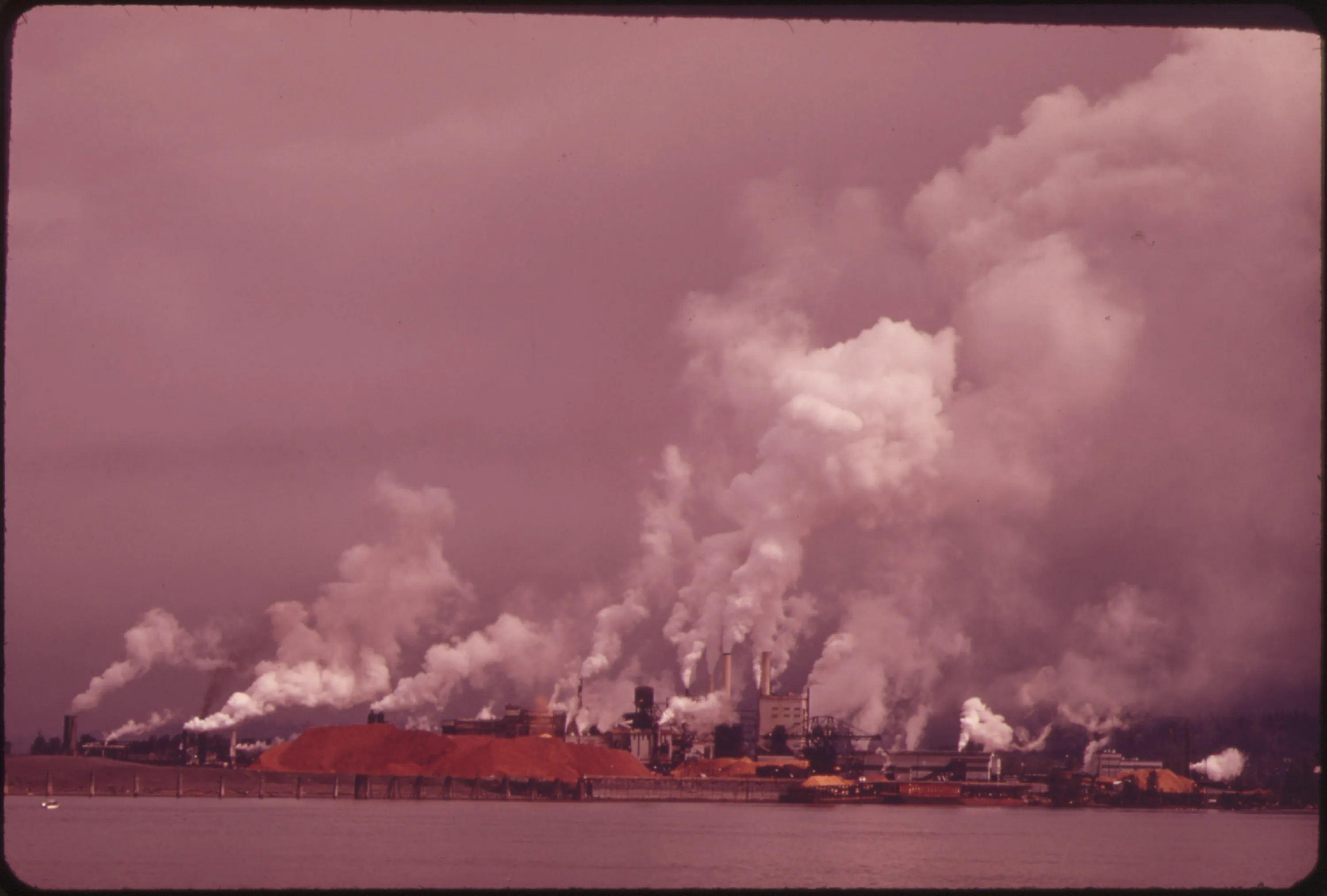
The disaster struck at 7:15 a.m. at the Nippon Dynawave Packaging Company facility in Longview, Washington — a kraft pulp and paper plant on the Columbia River that employs roughly 1,000 workers. A 900,000-gallon storage tank containing white liquor, a highly caustic chemical compound central to paper production, imploded and released its contents across portions of the facility. Workers who had just begun the morning shift were trapped in the surrounding area.
By Wednesday afternoon, one death had been confirmed and recovery crews were preparing to return to the site after suspending operations the previous evening due to chemical hazards and structural instability. Officials made clear the operation was now a recovery mission, not a rescue.
What Happened Tuesday Morning
Longview firefighters and Cowlitz County emergency personnel responded to the Nippon Dynawave plant — located at 3401 Industrial Way — shortly after the implosion was reported. The facility houses both a kraft pulp mill and a liquid packaging plant, processing roughly 280,000 tons of bleached paperboard and pulp annually. Its products are converted into approximately eight billion single-serve beverage containers each year.
Longview Fire Department Battalion Chief Matt Amos, who has led public communications for the emergency response, described conditions inside the plant as severely compromised from the moment firefighters arrived. “Due to the instability of the site, some areas remain inaccessible at this time,” Amos said Tuesday evening, after crews had suspended operations for the night.
Scott Goldstein, a Cowlitz County fire official, said approximately 90,000 gallons of white liquor remained inside the damaged tank as of Tuesday evening — enough to continue posing a chemical hazard to anyone approaching the most heavily affected sections of the plant. Before recovery crews can safely enter those areas, engineers must first stabilize the structure of the tank and assess whether additional failure is possible.
Nine workers were hospitalized: eight Nippon Dynawave employees and one firefighter who responded to the initial alarm. The firefighter was treated and released. The eight employees are being treated for burns and respiratory injuries consistent with exposure to white liquor.
The Missing Nine
Nine workers remained unaccounted for as of Wednesday, with officials at the scene explicitly telling reporters there is no reasonable expectation of finding them alive.
The one confirmed fatality has been identified as Gilbert Bernal, 52, an electrician who spent approximately 15 years at the Longview mill. His son also worked at the same facility. A GoFundMe organized by a family friend described Bernal as “one of the best people I have ever met” and “a Godly man in every sense of the word.”
The names of the nine missing employees had not been publicly released by Wednesday afternoon, as officials worked to notify families. Longview, a city of roughly 40,000 on the Washington side of the Columbia River, has depended on the mill as a major employer since the plant opened in 1953. Word of the implosion and the missing workers spread rapidly through the community on Tuesday, with family members gathering near the perimeter as crews worked.
Recovery operations that were halted Tuesday evening are expected to resume during daylight hours Wednesday, restricted to areas where structural conditions allow crews to work safely.
Why Rescue Is So Difficult
White liquor is a standard processing chemical in kraft pulp production, used to break down the lignin that binds wood fibers together so that cellulose pulp can be extracted. The compound is composed primarily of sodium hydroxide — the same base as industrial drain cleaner — and sodium sulfide. Together, they form one of the most caustic alkaline solutions in common industrial use.
A release at the scale of Tuesday’s implosion — from a tank storing roughly a million gallons — created conditions that render conventional search-and-rescue procedures dangerous for responders without full chemical protective equipment. White liquor causes severe tissue damage on contact with skin, eyes, and mucous membranes. Vapor inhalation causes serious respiratory harm. Even diluted runoff from a release of this size remains hazardous for extended periods.
Emergency officials said recovery teams must work in full hazmat gear and are limited to areas where the ground has been assessed and decontaminated. The fallen and flooded sections of the plant — where the nine missing workers were believed to have been at the time of the implosion — remain inaccessible pending structural stabilization.
A Safety Record Under Review
Investigators are now examining a documented history of safety concerns at the Nippon Dynawave facility.
A KGW Portland investigation published Wednesday found that federal and state safety authorities had received at least two formal safety complaints against the plant in 2026 alone — one filed March 4 and another filed May 6, three weeks before Tuesday’s implosion. Both complaints were still open and unresolved at the time of the disaster.
Federal OSHA records show Nippon Dynawave was cited in 2021 for a violation classified as “serious,” with a penalty of $2,700 — a figure that drew attention Wednesday given the scale of the operation and the nature of the chemicals used on site. Washington State’s Department of Labor and Industries has cited the company for a total of three health and safety violations, with combined fines of $3,400.
KING 5 Seattle separately found a documented history of past fires at the facility going back multiple years. Federal OSHA is expected to open a formal fatality investigation under standard protocols for industrial deaths.
The findings arrive at a moment when OSHA’s inspection workforce has been thinned by the broader reduction in federal employment documented in the April jobs report, which showed federal agencies shedding positions across departments with safety and inspection responsibilities. Whether that reduction has affected the agency’s ability to follow up on pending complaints at facilities like Nippon Dynawave is part of what investigators are likely to examine.
The Company Behind the Mill
The Longview facility has operated since 1953, originally built as a packaging materials manufacturer. Weyerhaeuser, the Pacific Northwest timber giant, operated the mill for decades as part of its paper division before selling it in 2016 to Nippon Paper Group, a Tokyo-based company, for approximately $285 million.
Nippon Paper Group is one of Japan’s largest paper manufacturers, with operations across Asia, North America, and Australia. As the parent company of Nippon Dynawave, it bears ultimate corporate responsibility for safety conditions at the Longview plant.
The company issued a statement Tuesday acknowledging the incident: Nippon Paper Group said it was offering its “deepest condolences and heartfelt sympathies to the bereaved families.” The statement did not address the cause of the implosion, what safety measures were in place for the tank that failed, or whether an internal review had been launched.
The cause of the tank failure remained under investigation as of Wednesday, with no official explanation released. Industrial tank implosions of this type can result from structural fatigue, pressure imbalances, maintenance failures, corrosion, or operational errors — all factors that state and federal investigators will evaluate.
State Emergency Response
Washington Gov. Bob Ferguson mobilized state resources within hours of the disaster. He directed the Washington National Guard Civil Support Team — a unit trained for hazardous materials environments — to deploy to the Longview site to assist with search, recovery, and decontamination operations.
The Washington State Department of Ecology dispatched teams to monitor air quality and assess whether white liquor runoff posed a threat to the surrounding neighborhood or the Columbia River, which flows immediately adjacent to the industrial corridor. The state Department of Labor and Industries, which oversees occupational safety in Washington, also sent investigators to the scene.
Ferguson confirmed that the National Guard’s Homeland Response Force — a heavier support unit with mass decontamination capability — was placed on standby for potential deployment if conditions required.
What Happens Next
The timeline for completing recovery operations at the Nippon Dynawave facility remains uncertain and is contingent on when engineers can safely stabilize the damaged tank and clear enough of the chemical hazard for crews to access the most affected areas.
Formal investigations will proceed in parallel. Federal OSHA is required to open an inspection under its Fatal Accident Investigation Protocol for any incident resulting in a worker fatality. Washington State L&I will conduct its own concurrent inquiry with independent authority to issue citations, order operational changes, or assess penalties. The state attorney general’s office could also review whether criminal referrals are warranted depending on what investigators find in the safety complaint history.
Families of the nine missing workers may pursue civil claims against Nippon Dynawave and its parent company. The pattern of unresolved safety complaints and prior citations at the facility — combined with the scale of the catastrophe — makes the legal exposure for the company significant regardless of how the criminal investigation unfolds. The trajectory of earlier industrial accountability cases, such as the Purdue Pharma opioid settlement that finalized earlier this month after years of documented safety and compliance warnings went unaddressed, illustrates how a long paper trail of unresolved concerns can shape subsequent litigation.
The Longview community has organized a vigil for the family of Gilbert Bernal and for the families of the nine workers still missing. Local officials asked residents to stay away from the facility perimeter and to follow official updates through the Longview Fire Department and Cowlitz County emergency management.
For a mill that has been part of this Columbia River city for more than seven decades, Tuesday’s disaster represents an industrial reckoning whose full human cost will not be known until recovery crews can safely reach every part of the collapsed and flooded site.
Sources 6 cited · 4 primary
- 1 confirmed dead, 9 others missing after chemical implosion at facility in SW Washington
- 9 missing after Washington paper mill tank implosion and officials say there's no hope of survivors
- Corrosive chemicals hamper recovery efforts at Longview industrial site; 9 still unaccounted for
- Records show safety complaints, past fires at Longview plant before tank rupture
- Longview paper mill had history of safety violations, KING 5 finds
- Governor Bob Ferguson statement on Longview explosion
American Courant cites its sources and links to primary documents where they exist. How we report →