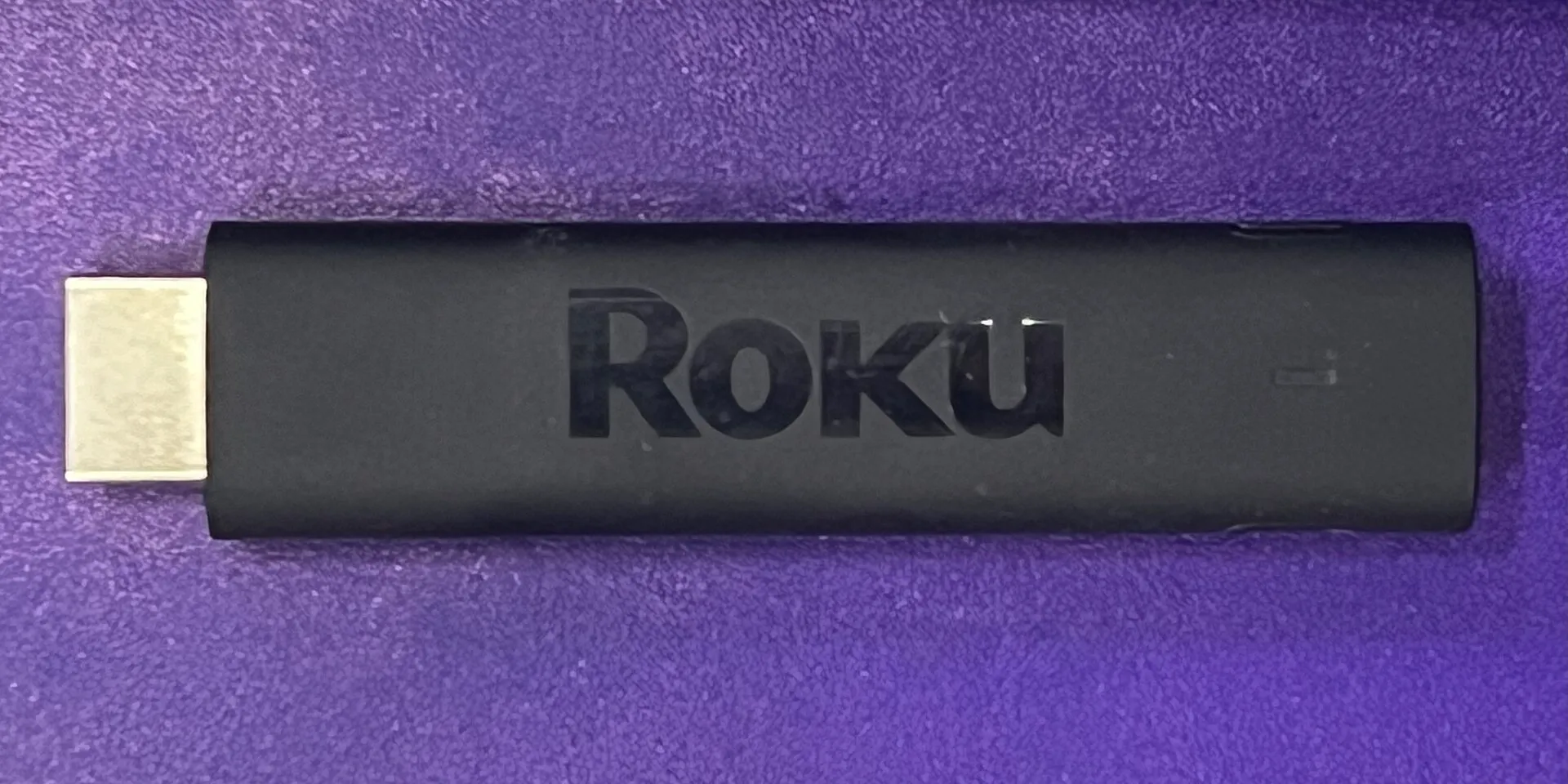
Fox Corporation agreed on Monday to buy Roku, the company that built one of the most common ways Americans turn on a television, in a cash-and-stock deal valuing the streaming pioneer at about $22 billion. It is one of the largest media acquisitions in years, and it makes a clear bet: in a fragmented streaming market, the company that controls both the live content people can’t skip and the screen they watch it on holds the high ground.
Under the agreement, Fox will pay $160 for each Roku share — a mix of $96 in cash and 0.9693 shares of Fox Class A common stock — putting the enterprise value at roughly $22 billion. The deal pairs Fox’s sports, news and entertainment library and its free, ad-supported Tubi service with Roku’s connected-TV operating system, The Roku Channel, advertising technology and direct relationship with more than 100 million streaming households around the world. The companies expect the transaction to close in the first half of 2027, subject to regulatory approval.
For Fox, long defined by cable news and broadcast sports, it is the boldest move yet into the plumbing of streaming. For Roku, founded in 2002 and for years a scrappy hardware-and-software independent, it is an exit into the arms of a content giant.
The Terms, and the Logic
Fox Executive Chair and Chief Executive Lachlan Murdoch framed the purchase as a turning point for the company. He called it “a defining moment for FOX,” describing the combination as “bringing together the most valuable live content portfolio in video consumption with the preeminent streaming platform through which America watches it.”
Anthony Wood, Roku’s founder and chief executive, will keep an ongoing role at the combined company and join the Fox board of directors. In a statement, Wood pointed to the platform he built over two decades: “Over the past two decades, we’ve built Roku into the leading TV streaming platform, reaching more than 100 million households globally and reshaping how people discover and enjoy entertainment.”
The strategic case is straightforward. Roku’s strength is not blockbuster shows; it is distribution. Its operating system runs on tens of millions of smart TVs and streaming sticks, its home screen is among the most valuable pieces of advertising real estate in the living room, and it owns a trove of first-party data about what households actually watch. Fox’s strength is the opposite: it owns live content — NFL games, college football, Fox News and Fox Sports programming — that viewers will not wait to stream later and cannot easily get elsewhere. Marrying the two gives Fox a way to reach cord-cutters directly and to sell ads against its own programming on its own pipe.
Roku’s history makes the fit even clearer. Wood originally built the company around an early streaming player developed for Netflix before spinning it into an independent business, and over two decades it grew from a hardware maker into a platform that increasingly earns its money from advertising and content rather than from the cheap sticks it sells at the checkout counter. That shift put Roku at the center of the fastest-growing corner of television advertising — free, ad-supported streaming, often called FAST — where channels carry no subscription fee and the entire business runs on ads. Tubi and The Roku Channel are two of the largest players in that space, and combining them under one owner concentrates a meaningful share of the ad-supported streaming audience in Fox’s hands.
What It Means for Viewers
For the roughly 100 million households that already use Roku, the immediate experience is unlikely to change. Notably, Fox has signaled it expects to keep The Roku Channel and Tubi operating separately rather than folding one into the other — a sign it values Roku’s status as a broad, neutral storefront that carries rivals’ apps alongside Fox’s own.
That neutrality is also where the tension lies. Roku’s business has depended on being an even-handed gateway to every major streaming service, from Netflix to Disney+ to the apps of Fox’s direct competitors. Once it is owned by a company that produces and sells content, competitors and regulators will watch closely for any sign that Fox programming gets favored placement on the home screen or in search results. Antitrust reviewers at the Federal Trade Commission or Justice Department will examine whether a content owner controlling a dominant TV operating system can disadvantage rivals who depend on that same platform to reach viewers — the kind of vertical-integration question that has drawn renewed scrutiny in Washington in recent years.
There is also a practical question for advertisers and consumers. Roku’s pitch to brands has rested on the breadth and neutrality of its audience data; folding that into a single programmer’s sales operation could reshape how ads are bought and sold across the connected-TV market. For households, the promise is more relevant recommendations and, Fox would argue, a smoother path to live sports and news on the same screen they already use. The risk is a living-room gateway that quietly tilts toward its owner’s content.
The deal also lands in a year crowded with megadeals reshaping American business, and it reflects the same gravitational pull toward streaming that is now reshaping the economics of legacy media catalogs. The free, ad-supported model that Tubi and The Roku Channel both run on has become one of the few reliably growing corners of the television business as subscription fatigue sets in.
The Stakes for an Industry in Consolidation
The streaming wars were supposed to be won on content — on who had the most shows and the deepest catalog. The Fox-Roku deal argues the next phase will be won on control of the connection between content and the couch. Owning the operating system means owning the data, the advertising and, increasingly, the moment of choice when a viewer picks something to watch.
It is a thesis other media companies will be forced to answer. If live sports and news are the content that still commands real attention, and if the home screen is where that attention is captured and monetized, then every major programmer has reason to ask whether it needs its own distribution layer rather than renting space on someone else’s. That logic tends to produce more deals, not fewer, and Wall Street has spent 2026 treating media and technology consolidation as a question of when rather than whether. The backdrop is a television business still being reshaped by cord-cutting: as traditional pay-TV subscriptions keep shrinking, the companies that once relied on cable bundles are racing to own the streaming relationships that replace them, and a platform sitting inside 100 million homes is among the most direct ways to do it.
For now, the focus shifts to the regulators. The transaction’s expected close in the first half of 2027 leaves a long runway for antitrust scrutiny in Washington and abroad, and the central question — whether one company should own both a major live-content portfolio and the screen through which a hundred million homes reach it — is exactly the kind that draws a hard look. The deal’s fate, and what it signals for the rest of the industry, will be a defining story for the business and markets beat in the year ahead.
Sources 6 cited · 2 primary
- Fox Corporation to Acquire Roku, Inc.
- Fox Corp — Form 8-K (FY2026), acquisition agreement
- Fox to Acquire Roku in $22 Billion Deal
- Fox Corp. to buy streaming pioneer Roku in a $22 billion deal
- Fox buying streaming platform Roku in cash-and-stock deal worth about $22 billion
- Fox's 'Expectation' Is to Keep The Roku Channel and Tubi Separate
American Courant cites its sources and links to primary documents where they exist. How we report →