Federal immigration authorities issued a sweeping policy memo this week that ends more than six decades of standard practice, requiring most people on temporary U.S. visas who want green cards to leave the country first and apply from abroad — a change that immigration lawyers say will disrupt the legal status of hundreds of thousands of residents who never anticipated having to leave.
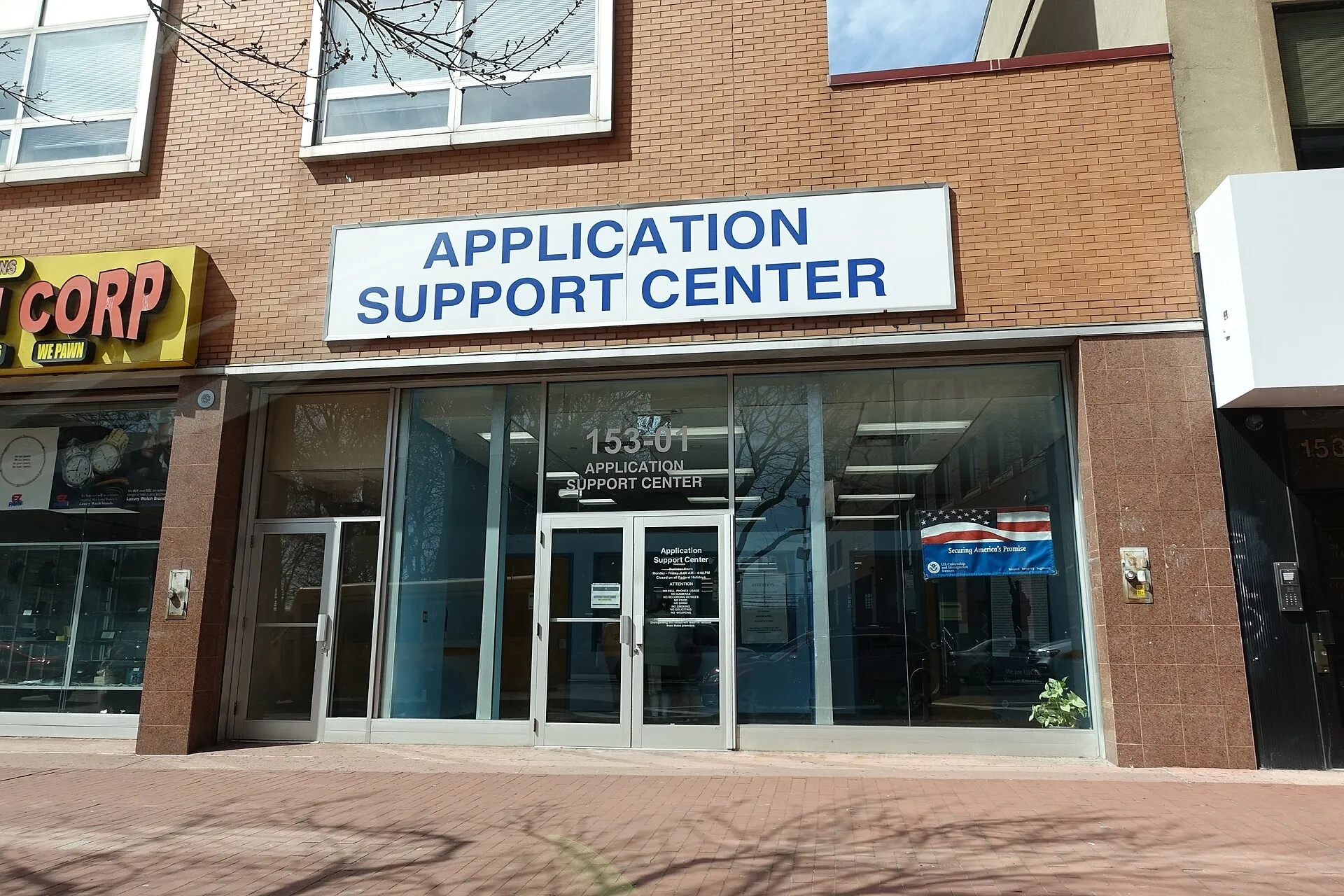
U.S. Citizenship and Immigration Services published Policy Memorandum PM-602-0199 on May 21, formally recharacterizing adjustment of status — the process that allows foreign nationals to convert temporary visas to permanent residency while remaining in the United States — as a discretionary “extraordinary” measure available only when applicants can demonstrate “unusual or even outstanding equities.”
USCIS spokesman Zach Kahler told reporters that going forward, “foreign nationals temporarily in the United States who want a green card will generally be expected to return to their home countries to apply to a consulate, except in extraordinary circumstances.”
The memo does not change the law. Adjustment of status remains technically available under the Immigration and Nationality Act. But by directing officers to treat in-country applications as disfavored rather than standard, USCIS has effectively flipped the default posture that has governed millions of green card applications for more than half a century.
How the Process Worked — and Why the Change Cuts Deep
From the 1960s onward, adjustment of status gave foreign nationals on temporary visas a practical path to permanent residency without breaking the chain of their legal presence in the United States. An engineer on an H-1B visa whose company had filed an immigrant petition could submit Form I-485, keep working, keep paying taxes, and keep their family in school while waiting for the government to process the case. Many applications took years. The system allowed people to wait in place.
The alternative — consular processing — requires applicants to leave the United States, appear at a U.S. consulate or embassy in their home country, obtain an immigrant visa there, and re-enter as a lawful permanent resident. The two paths have historically produced the same legal result: a green card. But consular processing is more disruptive in practice. Applicants must give up their U.S. work authorization during the waiting period, which in some cases stretches months. They must arrange housing abroad. And they face the added uncertainty of overseas posts that can be slow, unpredictable, or inaccessible to applicants from countries under a travel ban.
USCIS’s new memo reframes the choice between those two paths. Rather than treating in-country applications as a standard option for eligible applicants, the agency will now default to consular processing and treat in-country applications as something that needs extra justification before it can be granted.
The discretionary factors officers must now weigh are broad: prior visa violations, inconsistencies in statements to federal agencies over any prior application, whether the applicant entered on a parole grant or in any irregular manner at any point, and any conduct after admission that appeared inconsistent with the original visa’s purpose. Those considerations can reach back years — or decades — into an applicant’s immigration history, covering circumstances many people may not even be aware create a legal problem.
Ballard Spahr immigration attorneys, analyzing the memo for their corporate clients, called it a “sweeping policy shift” carrying “significant practical consequences for employers with foreign national workforces.”
Who Is Most Exposed to the New Rules
The policy cuts across every visa category, but several populations face particular exposure.
H-1B visa holders and L-1 intracompany transfer holders have traditionally occupied the most protected position in adjustment of status proceedings because those visas carry “dual intent” status — meaning the visa holder is legally permitted to pursue permanent residency while maintaining their nonimmigrant visa, without that intent being treated as a violation. The new USCIS memo acknowledges that H-1B and L-1 workers can seek in-country adjustment of status without the intent alone disqualifying them.
But the memo then adds a qualifier that alarmed immigration attorneys: simply holding lawful dual-intent status “is not sufficient, on its own, to warrant a favorable exercise of discretion.” In plain terms, even the most protected category of workers — those with an explicit legal right to pursue green cards while in the U.S. — can no longer count on in-country approval as a matter of routine.
About 1.3 million H-1B visa holders and their family members currently reside in the United States, according to FWD.us, an immigration advocacy organization. Indian and Chinese nationals among that group already face green card backlogs stretching a decade or more in some employment categories, driven by per-country caps in U.S. immigration law. Those workers have depended on continuous in-country status to maintain work authorization during long waits. A required departure to apply through a U.S. consulate abroad would interrupt that authorization during processing — potentially costing workers their jobs and their employer sponsorship, and restarting backlogs they have spent years advancing through.
For students on F-1 visas, visitors on tourist visas, and others on short-term nonimmigrant status, the cutoff is more direct: unless they can qualify for the undefined “extraordinary circumstances” exception, the in-country path is effectively closed.
One group is explicitly shielded by statute. Refugees and asylees adjusting under INA Section 209 are not subject to the new presumption because their adjustment is mandatory by law when requirements are met — USCIS has no discretion to deny it.
A Dead End for People With Nowhere Safe to Go
World Relief, a humanitarian organization that works extensively with refugees and new immigrants, called the policy “cruel” and “anti-family,” saying it would “disrupt the plans of hundreds of thousands of families and employers annually” and effectively halt a practice that has allowed lawfully present immigrants to remain stable during often-years-long administrative processes.
Immigration attorney Rosanna Berardi raised a harder concern: the policy creates a specific trap for Afghans who supported U.S. military and government operations and Ukrainians who fled the war there. Many of those individuals entered the United States on legal status, have built lives here, and are midway through green card applications that were initiated with the assumption of in-country processing. Under the new policy, unless their circumstances meet the “extraordinary” threshold — a bar USCIS has not publicly defined — they would need to return home to continue their cases.
For Afghans, that means a Taliban-controlled country where cooperation with American forces can mark a person as a target. For Ukrainians, it means returning to a conflict zone. Whether being in genuine danger qualifies as “extraordinary circumstances” is a question the memo does not answer.
Citizens of 39 countries — most of them in Africa and Asia — already face outright bans or restrictions on entering the United States under an existing travel ban. For those nationals living inside the U.S. on valid visas today, the combination of the new adjustment of status restrictions and their country-of-origin travel bans creates a genuine impasse: unable to remain in the country as a permanent resident through in-country filing, unable to safely depart, and legally blocked from re-entry if they leave.
Legal Challenges and the Broader Legislative Push
Immigration attorneys have flagged a significant legal question: whether USCIS can reframe adjustment of status as an “extraordinary” benefit through an internal policy memo without going through formal notice-and-comment rulemaking. The INA does not use the word “extraordinary” in its adjustment of status provisions. The scope of the agency’s discretion — and whether a memo can effectively raise the threshold for a statutory benefit — is a question that federal courts are likely to be asked to answer.
The USCIS memo arrived as Congress is also pressing forward with sweeping changes to legal immigration through the administration-backed budget reconciliation bill. That legislation, which passed the House in a narrow overnight vote earlier this month and now faces a procedural fight in the Senate over the Byrd rule, contains provisions that would reduce legal immigration levels, cap certain pathways to permanent residency, and cut federal spending on immigration-related programs.
The Senate is separately weighing enforcement legislation that would expand ICE detention capacity and increase oversight of visa holders inside the country. Together, the executive-branch memo and the legislative push signal a coordinated effort to narrow legal immigration through every available channel at once — an approach that immigration advocates say moves faster than the legal infrastructure can absorb.
The agency has not addressed how pending I-485 applications already in processing will be handled under the new policy — whether existing filings will be evaluated under the old standard or the new one. That ambiguity alone leaves hundreds of thousands of applicants in an uncertain position, waiting to learn whether the ground shifted under applications they filed months or years ago under a set of rules that no longer applies.
Sources 6 cited · 2 primary
- USCIS Policy Memorandum PM-602-0199: Adjustment of Status and Discretion
- U.S. Citizenship and Immigration Services Will Grant 'Adjustment of Status' Only in Extraordinary Circumstances
- Non-immigrant visa holders must return to home countries to apply for green cards, Trump administration says
- Trump administration to force foreigners in the U.S. to apply for a green card abroad
- Trump administration will make green card hopefuls return to home countries before applying
- DHS Announces Sweeping Policy Shift on Adjustment of Status — Key Implications for Employers
American Courant cites its sources and links to primary documents where they exist. How we report →