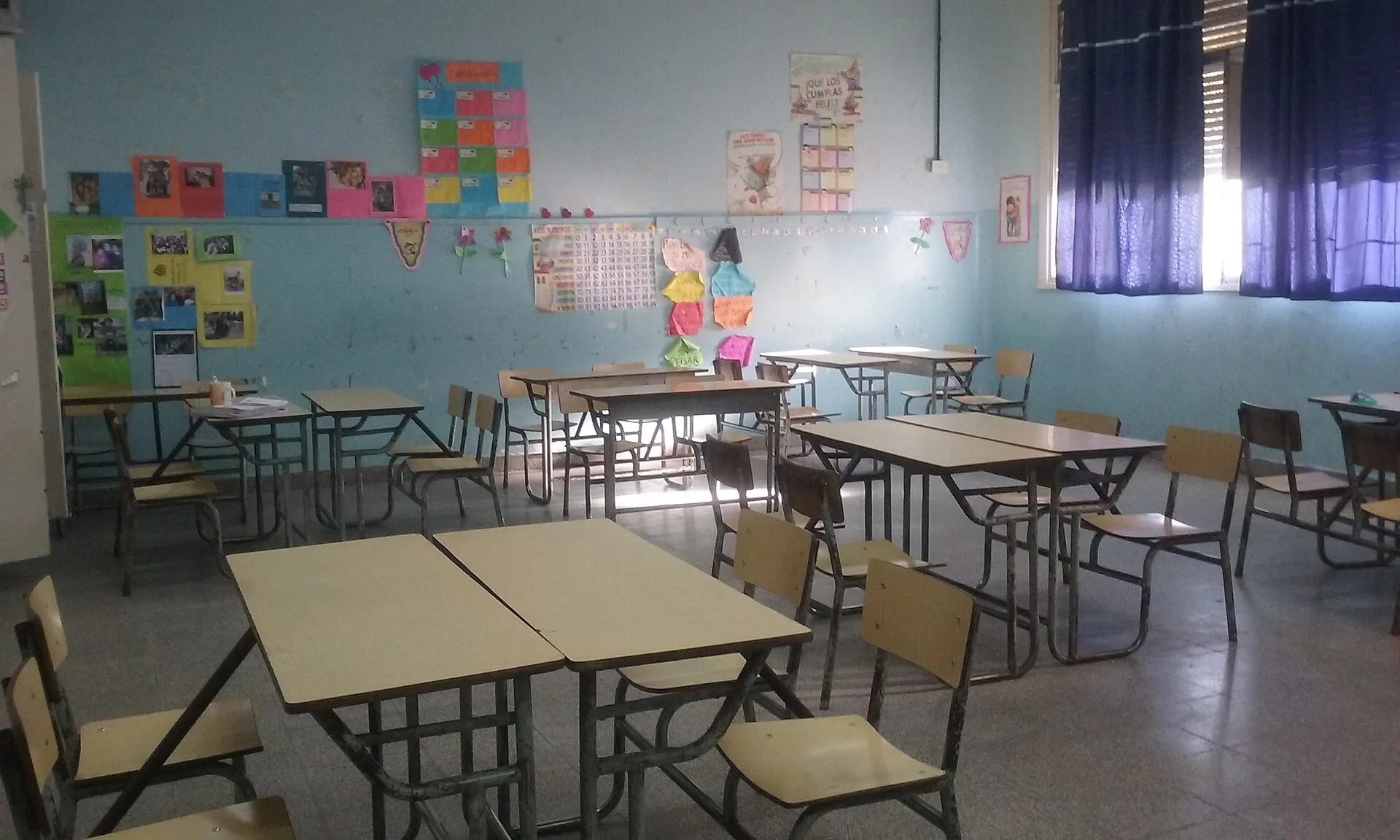
Sweden announced this week that it will ban mobile phones in schools starting this fall, and the most telling thing about the decision is who is making it. This is not a country that distrusted technology. For years, Sweden was a poster child for the digital classroom, the place that handed tablets to preschoolers and treated screens as the future of learning. Now its center-right government is pulling phones out of the building, the way you’d remove something that turned out to be a mistake.
That reversal is the real story, and it carries a lesson that reaches well past Stockholm. When the true believers in screen-based education start banning the screens, the argument is effectively over. Phones don’t belong in classrooms. The evidence has caught up to what every parent and teacher already suspected, and the United States, which has stumbled toward the same conclusion in a chaotic, district-by-district scramble, should stop treating this as an open question and finish the job.
The reversal is the point
Sweden didn’t arrive here by accident or by panic. Since 2023, its governing coalition has been deliberately walking back a decade of classroom digitization, shifting money and class time back toward physical books and handwriting, especially for the youngest students. Joar Forsell, who chairs the Swedish parliament’s education committee, has tied the new ban to a measured decline in Swedish children’s basic reading and writing ability, the kind of slow erosion that doesn’t make headlines until someone reads the test scores out loud.
The Swedes are not alone, and that’s what makes this a trend rather than a one-off. A Finnish law restricting mobile devices in schools took effect last August. Denmark is moving toward a similar ban. Countries from Spain to South Korea have layered on their own limits, from classroom-only bans to caps on screen-based homework. The same governments that spent the 2010s racing to wire up every desk are now, one after another, deciding the wiring was a problem. Institutions almost never reverse a fashionable policy this fast or this publicly. When they do, it’s worth paying attention to why.
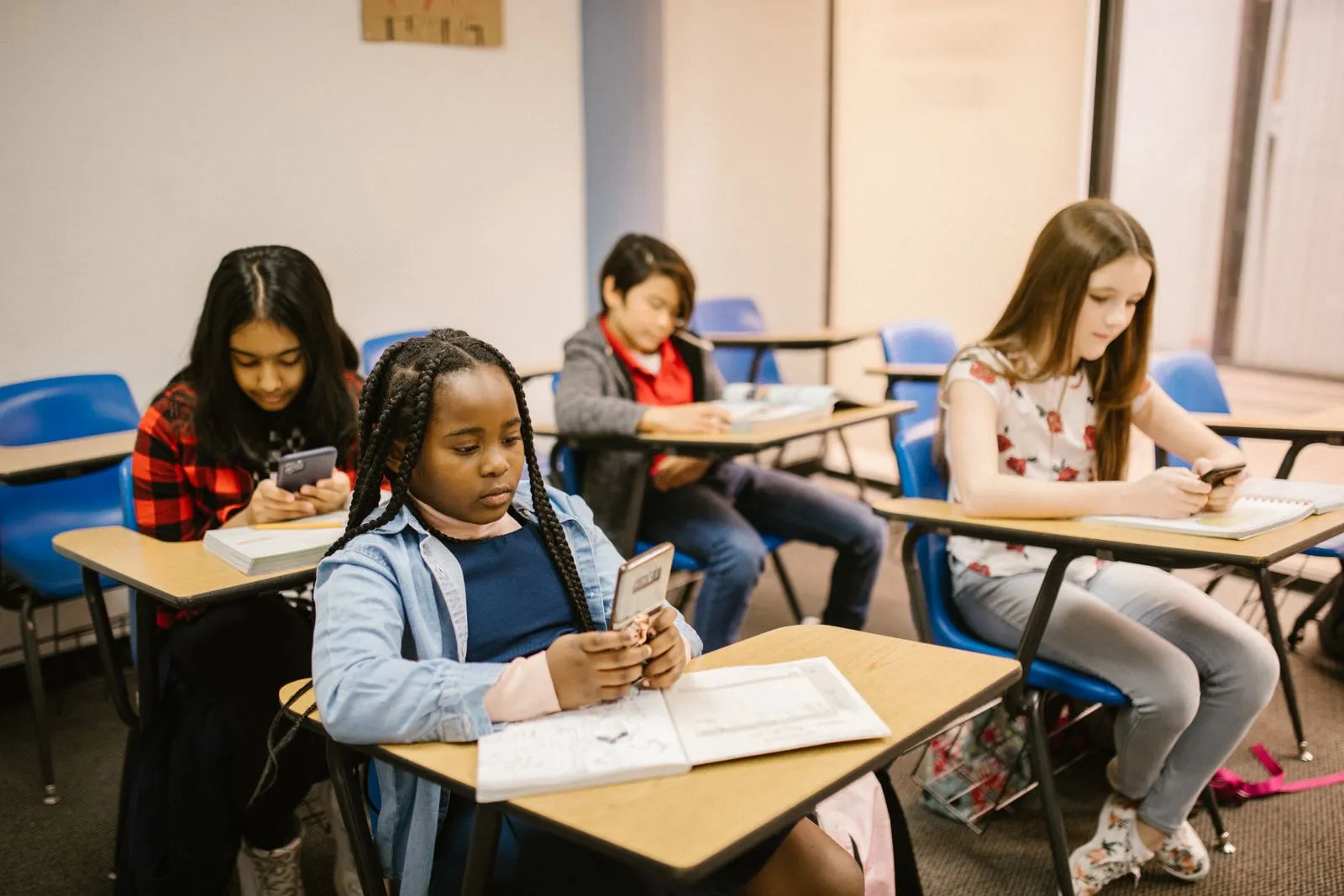
The why isn’t mysterious. UNESCO laid it out in its 2023 global education report, which recommended that countries keep smartphones out of classrooms. The report found that the mere presence of a phone — face-down, silent, just sitting there with the possibility of a notification — is enough to pull students’ attention off the task in front of them, and cited research suggesting it can take up to 20 minutes to fully refocus after a single distraction. A device built by the best engineers in the world to be impossible to ignore was never going to lose a fair fight with a long-division worksheet.
America is ahead in numbers and behind in nerve
Here’s where an American reader might object: we’re already doing this. And to a point, that’s true. As of late 2025, roughly 35 states and Washington, D.C., had adopted some policy on student phones, and 26 states had gone all the way to full-day, “bell-to-bell” bans that keep phones away from the moment students arrive until they leave. Twenty-two of those laws passed in 2025 alone. By raw count, the U.S. is further down this road than Sweden is.
But look at how we got there, because the contrast with Sweden is unflattering. America didn’t reach this point through any coherent national judgment. It happened through a patchwork: a governor’s executive order here, a state bill there, a school board fight somewhere else, driven largely by exhausted teachers and frustrated parents who overrode an ed-tech industry and a professional consensus that spent fifteen years insisting phones and apps were tools of engagement. The bans are spreading because the bottom-up pressure became impossible to resist, not because the people who shape education policy led the way. That’s the same vacuum American schools keep falling into, the one visible in their scramble to write rules for classroom AI after the technology was already everywhere: the technology arrives, the institutions wave it in, and the cleanup falls to whoever is left holding the classroom.
The result is that a kid’s right to a phone-free school still depends on his zip code. A teenager in one of the bell-to-bell states gets a school day without a slot machine in his pocket. A teenager two states over gets whatever his district’s overwhelmed administrators managed to negotiate. Sweden just demonstrated what it looks like to settle the question at the national level and mean it. The U.S. doesn’t need to copy Sweden’s mechanism, but it could stand to borrow its conviction.
The objections worth taking seriously
The honest case against a hard ban isn’t that phones are good for learning. It’s logistical and emotional, and it deserves a real answer. Enforcement is genuinely hard; a rule that teachers can’t realistically police becomes a rule that breeds contempt for every other rule. And the deepest objection is about safety. Parents who lived through a decade of school-shooting drills want to reach their children in an emergency, and telling them to surrender that lifeline is asking a lot.
Those concerns are real, but they argue for doing the ban well, not for skipping it. The bell-to-bell states have shown the workable answers already: phones locked in pouches or cubbies rather than confiscated, clear medical and disability exceptions, and a front office that can still reach any student instantly, which is, not incidentally, how parents actually got information during real emergencies, not through a panicked group chat with a frightened 14-year-old. The harder truth about safety is that a phone in a child’s hand during a crisis is as likely to spread rumor and panic as reassurance.
There’s also a caution Sweden’s own story contains, and it’s the part Americans should sit with longest. The lesson here is not that all screens are evil and books are virtuous. UNESCO’s actual standard is narrower and smarter: technology belongs in a classroom only when it has a clear, demonstrated role in learning. Banning phones while quietly handing every student a district laptop running attention-harvesting software would just be trading one distraction machine for another. The point isn’t nostalgia for chalkboards. It’s that the burden should sit on the device to prove it helps, the same way it now sits on Sweden’s neighbors to justify what stays in the broader fight over which technologies actually earn a place in children’s hands.
Why it matters now
This is one of those rare moments when a long argument tips, and you can watch it happen in real time. A country that bet as heavily on classroom technology as any in the world has looked at its own reading scores and its own children and decided the phones have to go. Finland did it. Denmark is doing it. Half of American states have done it the hard way, against the grain of their own experts.
The remaining holdouts, the districts still treating a bell-to-bell ban as too blunt, too punitive, too 20th-century, are defending a position the evidence has already abandoned. Sweden didn’t ban phones because it fell behind the times. It banned them because it caught up to them. The American schools still waiting should ask themselves what, exactly, they’re waiting for.
Sources 6 cited · 1 primary
- Sweden set to ban mobile phones in schools
- Technology in education: A tool on whose terms? (2023 GEM Report)
- Twenty-two states enacted K-12 cellphone bans so far in 2025
- Top 2025 Policy Trend: 28 States Commit to Phone-Free Classrooms and Schools
- Here are the states banning cellphones in schools and what it means for students
- Map Shows US States With School Phone Bans In 2026
American Courant cites its sources and links to primary documents where they exist. How we report →