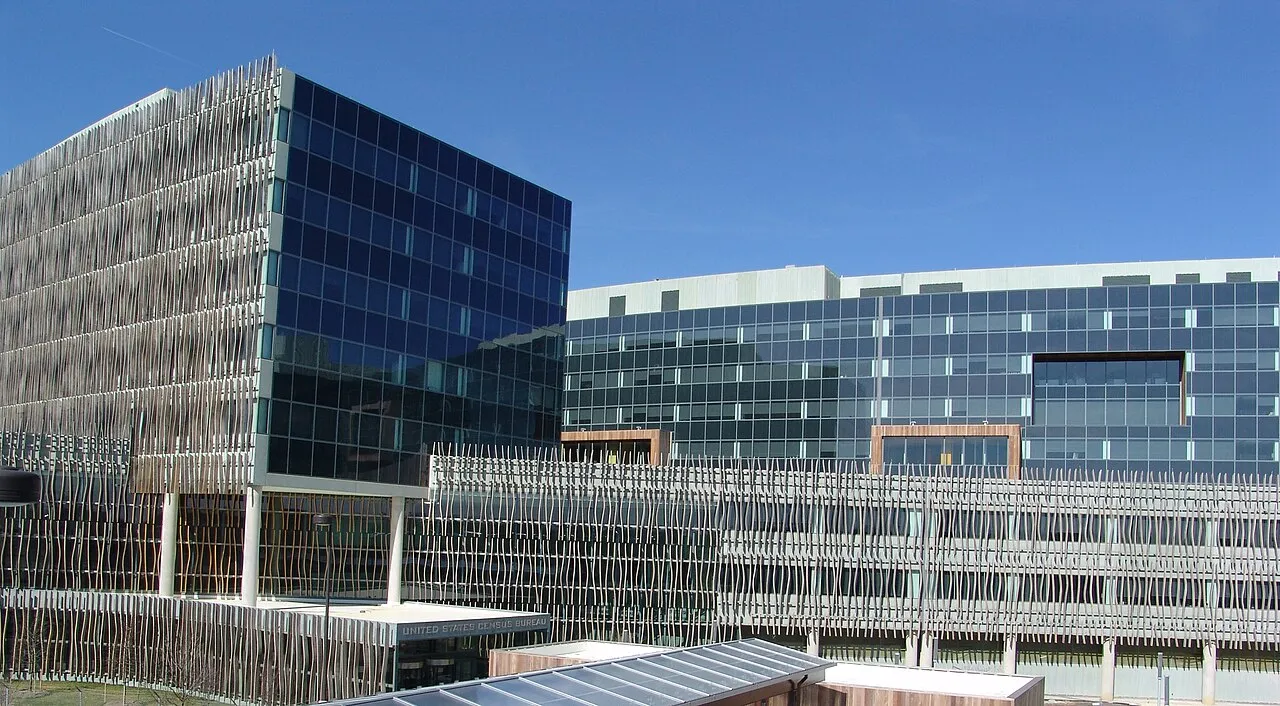
On June 12, the Commerce Department ordered the Census Bureau and the Bureau of Economic Analysis to stop using “noise infusion,” the practice of adding small, controlled amounts of mathematical randomness to published statistics so that individual people can’t be picked back out of the tables. The order, according to a Commerce spokesperson, prioritizes a different technique, “coarsening,” and frames noise as something that has eroded trust in federal data. The spokesperson said “indiscriminate use of noise infusion—even when not mandated by law—ultimately undermined confidence in the department’s products and cast doubt on their integrity.”
It sounds like a cleanup. A return to honest, unmanipulated numbers. It is closer to the opposite. Stripping noise out of the Census does not make the data truer. It forces the bureau to protect privacy the only other way it can, by blurring and combining categories until small-area detail disappears, while reopening the door to exactly the reidentification that noise was adopted to shut. The order trades one genuine grievance for two larger problems, and the people who draw the country’s legislative districts will inherit both.
What noise was actually doing
The Census Bureau is required by law to keep individual responses confidential. For most of its history it did that with older techniques, including swapping some records and suppressing small cells. The problem is that the math of privacy changed underneath those tools. As computing power grew and voter registration files and commercial datasets became cheap and widely available, researchers demonstrated that “anonymized” published tables could be cross-referenced and reverse-engineered to reconstruct details about real individuals.
The bureau’s own internal testing drove the point home. Its researchers ran a reconstruction experiment on already-published 2010 census tables and found they could rebuild individual-level records for the entire population, then confirm a meaningful share of them against commercial data. That result, not abstract theory, is what convinced the agency that its older methods were no longer enough.
In response, the bureau, under then-chief scientist John Abowd, adopted a framework called differential privacy for the 2020 census. The idea is to inject a calibrated, measured amount of noise into the data so the published figures stay accurate in the aggregate while carrying a provable mathematical guarantee that no single person can be confidently identified from them. The bureau has documented the approach at length: the point of the noise was never to muddy the numbers. It was to make reconstruction attacks fail while keeping the data usable.
The grievance is real
Here is where the order’s defenders have a point worth conceding. The 2020 rollout of differential privacy genuinely angered demographers, local officials, and redistricting analysts. Calibrated too aggressively for small geographies, the noise produced counts that looked implausible: tiny towns with strange totals, block-level tables that didn’t add up the way people expected. For users who depend on precise local figures, that was maddening, and the frustration crossed party lines.
So the Commerce Department’s complaint that noise can undermine confidence in the data is not invented out of nothing. There was a real fight, and the bureau itself spent years adjusting the system in response to it. A critic who says the 2020 implementation overshot is standing on solid ground.
But the fix isn’t abolition
The trouble is that the remedy for noise calibrated too aggressively is to calibrate it better, not to ban the method outright. Remove noise entirely and the bureau is left with one main tool: coarsening. That means suppressing small cells, merging age brackets, and rolling small geographies up into larger ones until the privacy risk falls. Abowd, who served as the bureau’s chief scientist under both the first Trump administration and the Biden administration, has warned that the order upends privacy protections across multiple ongoing surveys and that the 2030 redistricting data would have to be redesigned from the ground up. Privacy researchers make the blunt version of the point: coarsening is all but guaranteed to reduce the level of detail in published data drastically.
That is the first of the two new problems. The order is sold as restoring detail and integrity, but the technique it mandates does the reverse for exactly the small-area numbers people complained were broken. You don’t get sharper local data. You get less of it.
The privacy half of the trade
The second problem is the one almost no one is talking about. Coarsening doesn’t actually neutralize the threat that drove the switch to differential privacy. The reconstruction risk came from cross-referencing detailed public tables against outside datasets like voter files and consumer records. Coarsening removes some detail, but wherever usable detail survives, the underlying reidentification math still works. The threat didn’t go away because the bureau changed its preferred method.
So the realistic outcome is data that is both less granular and, in places, no safer than before. That is the definition of a lose-lose. The order asks the country to give up local accuracy and accept renewed privacy exposure, in the name of a fix that delivers neither.
Why this lands on redistricting
None of this is academic, because census data is the backbone of how political power gets divided. Apportionment, district drawing, and Voting Rights Act analysis all run on the bureau’s small-area counts. If the 2030 figures arrive coarser, every downstream use inherits the blur, from the block-level counts behind redistricting fights like Virginia’s to Voting Rights Act challenges like the one over Memphis’s Black-majority district. Drawing fair maps requires fine-grained, reliable numbers. Coarsening makes them harder to produce, and the people most likely to vanish into merged categories are residents of small and minority communities, the same groups confidentiality rules exist to protect.
The reach goes beyond the decennial count. The order also binds the Bureau of Economic Analysis, the agency behind the gross domestic product figures and the regional economic statistics that businesses, banks, and state governments use to plan. Forcing coarsening across those products risks the same erosion of usable detail in numbers that move markets and budgets, not just maps. A privacy method that was controversial in one corner of the census is being swapped out everywhere at once, with little public accounting of what each affected dataset loses.
There is also a waste problem hiding in the timeline. The order can be revoked by a future administration as easily as it was issued. That leaves the bureau potentially rebuilding its disclosure system twice, retooling now and again later, burning years of technical work either direction.
Why it matters
Public statistics are infrastructure, the unglamorous kind the whole country quietly runs on. The genuine debate underneath this order, how much local precision to trade for how much privacy, is a real and hard question, and it deserves to be argued in the open by the statisticians and data users who understand the tradeoffs. What it does not deserve is to be settled by directive in a way that degrades both halves of the bargain at once. The fight over census data and the privacy technology behind it looks like a quarrel over arcane methodology. It is really a decision about whether the numbers that govern representation will be accurate, protected, or, after this order, neither.
Sources 4 cited · 3 primary
- A Trump push to cut 'statistical noise' could mean less data from the Census Bureau
- Differential Privacy and the 2020 Census (fact sheet)
- Disclosure Avoidance for the 2020 Census: An Introduction
- Second Declaration of John M. Abowd, Fair Lines America Foundation v. Department of Commerce
American Courant cites its sources and links to primary documents where they exist. How we report →