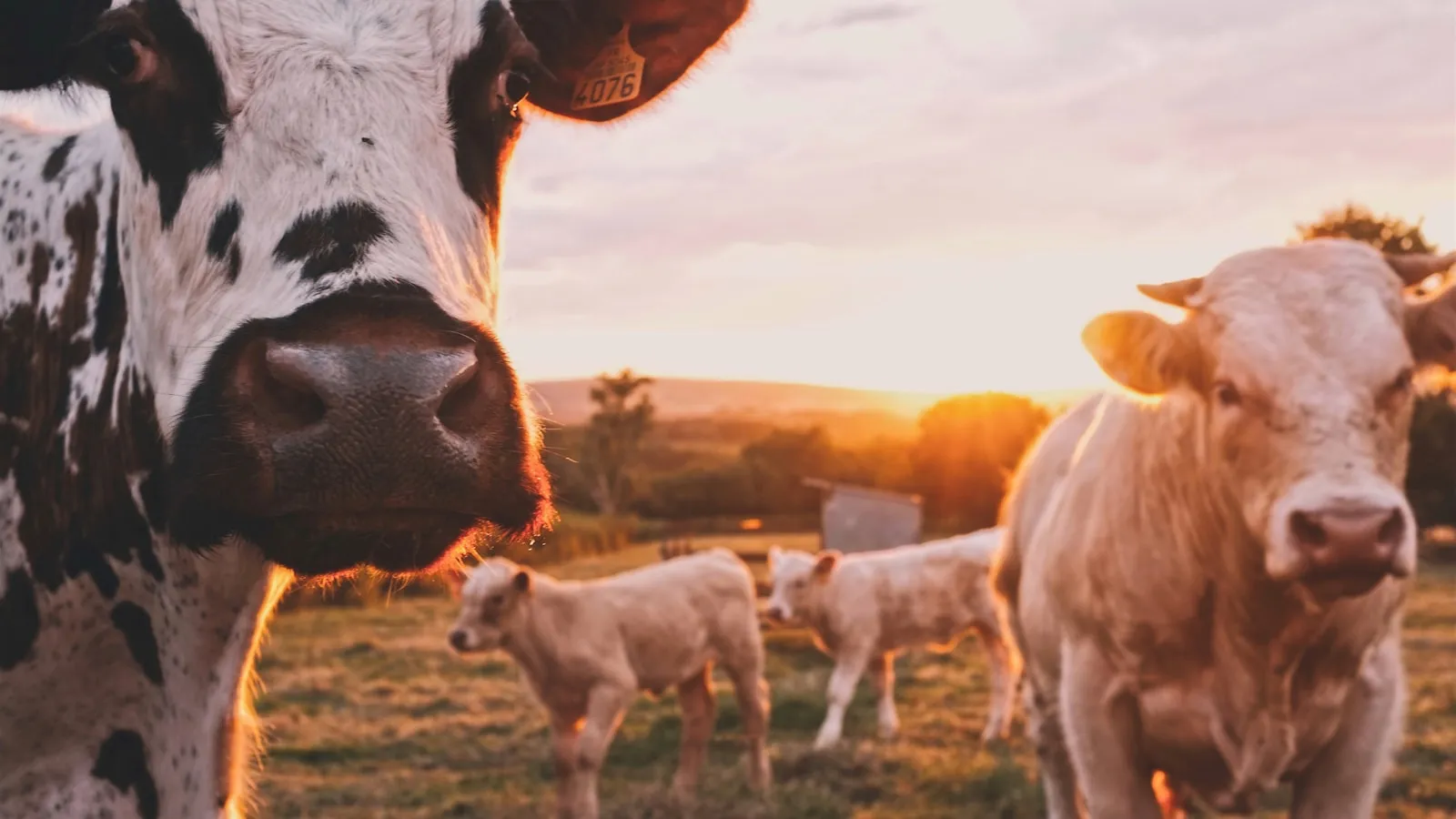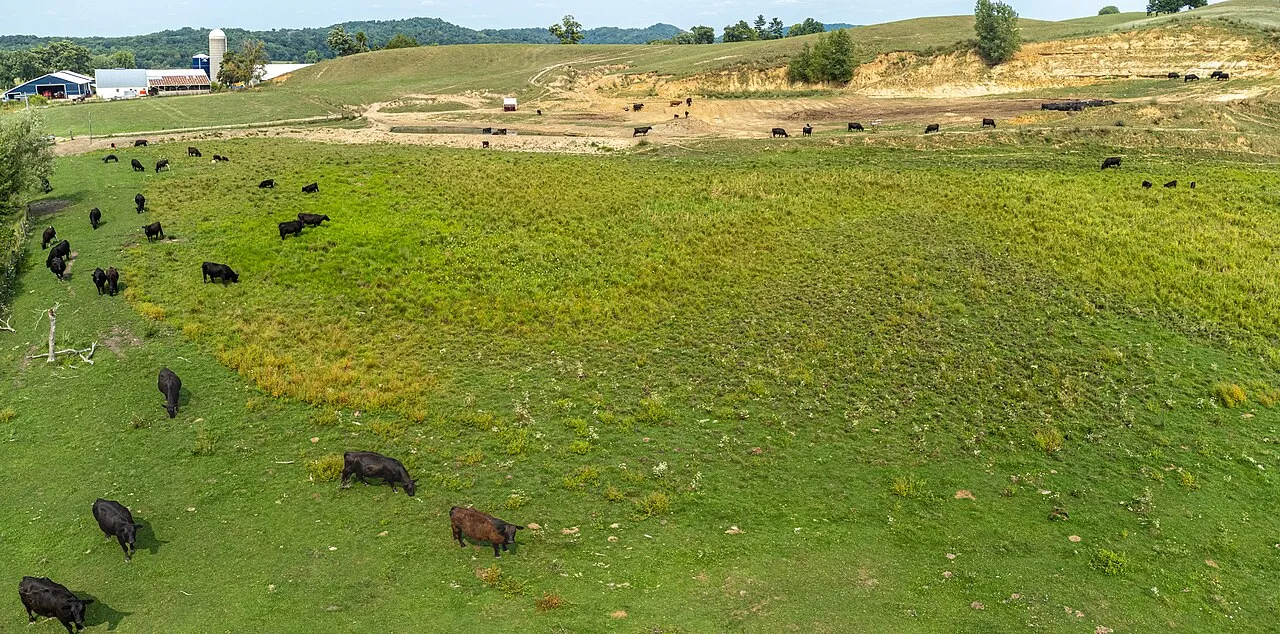
On June 3, the U.S. Department of Agriculture confirmed something the country had not seen in roughly six decades: a New World screwworm, alive and feeding, inside a three-week-old calf in Zavala County, Texas. Inspectors found the larvae in the animal’s umbilical area. It is the first confirmed case of the flesh-eating parasite on American soil in a generation, and the federal government’s response was immediate: a quarantine zone, movement restrictions on warm-blooded animals, and sterile flies dropped over the area by air and released on the ground.
Read quickly, this looks like a system working. Read honestly, it is a system cleaning up after a failure that was years in the making. The United States already beat this parasite once, completely, using one of the most elegant public-science programs the government has ever run. The screwworm did not sneak back because nature is unbeatable. It came back because the barrier that kept it out was allowed to erode, hundreds of miles to the south, while the warnings piled up. A single infected calf in South Texas is not bad luck. It is a bill coming due.
A solved problem, unsolved again
The screwworm, Cochliomyia hominivorax, or “man-eater,” is not an ordinary maggot. Female flies lay eggs in the open wounds or soft tissue of living animals, and the larvae burrow inward, eating live flesh. Left untreated, an infested animal can die within days. Before it was eradicated, the pest cost American ranchers enormous losses every year and routinely infested wildlife, pets, and occasionally people.
By 1966, the United States had wiped it out within its borders. The method, developed by USDA entomologists Edward Knipling and Raymond Bushland, was the sterile insect technique: rear screwworm flies by the billions, sterilize the males with radiation, and release them into the wild. Females mate only once. Pair them with sterile males and they lay eggs that never hatch. Repeat at scale and the population collapses in on itself. It was bloodless, species-specific, and permanent. The idea earned its inventors the World Food Prize and saved the livestock industry sums that dwarf what the program ever cost.
Eradication, though, is never the end. The fly still thrived in South America, so the U.S. and its neighbors maintained a living wall: a sterile-fly barrier anchored for years at the narrow Darién Gap in Panama, keeping the parasite penned south of Central America. That wall held for decades. The lesson of this week is what happens when it stops holding.
How a barrier 1,000 miles away ended up in a Texas calf
The collapse was not sudden, which is exactly why it indicts the response. Over roughly the last two years, the screwworm pushed north out of Panama and marched up the isthmus, through Costa Rica, Nicaragua, Honduras, Guatemala, El Salvador, and Belize, and then into Mexico, with detections reaching as far north as the states of Oaxaca and Veracruz, several hundred miles from the U.S. border. Each step was reported. Each step was a flashing light.
Washington did react as the threat climbed. In May 2025, Agriculture Secretary Brooke Rollins suspended imports of live cattle, horses, and bison through southern-border ports of entry, a costly move that drew an immediate response from cattle producers, and APHIS poured sterile flies into southern Mexico and Central America to slow the advance. Those were the right instincts. But they were rearguard actions against a parasite that should never have been allowed to leave the Darién Gap in the first place. A barrier that takes decades to build and a steady, unglamorous budget to maintain is precisely the kind of thing that gets quietly shortchanged in the years when nothing is going wrong, until something is. This is the same pattern of complacency that has let a different eliminated threat creep back: the United States is now reviewing whether it can still claim it has eliminated measles after cases topped 1,800 across dozens of states.
The boring science that actually works
Here is the part worth defending without irony. The sterile insect technique is government science at its best: patient, decades-long, invisible when it succeeds, and wildly cost-effective. It does not generate headlines or campaign applause lines. It generates the absence of a problem, which is the hardest kind of success to fund because no one can see it. The sterile flies now going up over South Texas by the millions, and the new production capacity the USDA says it is racing to build, are not improvisation. They are the same proven tool, dusted off because the maintenance program upstream was not enough.
This is not even the first time the country has had to dust it off. In 2016, screwworm turned up in the endangered Key deer of the Florida Keys, the first domestic outbreak in decades. APHIS stood up animal-health checkpoints, treated infested deer, and flooded the islands with sterile flies; by the spring of 2017 the infestation was declared gone. That episode proved two things at once: the parasite will exploit any opening to return, and the tool to beat it still works when it is deployed fast. South Texas is the same test on a far larger and more dangerous stage, because it is not a chain of islands. It is the open front door to the biggest cattle country on earth.
That is the uncomfortable takeaway. The response to the Zavala County calf is genuinely impressive: fast detection, a tight quarantine, an eradication playbook pulled straight off the shelf. It is a credit to the career scientists who keep that capability alive. But the need to use it at all is the failure. Prevention is cheap and forgettable; reaction is expensive and dramatic. A country that consistently chose the first over the second would not be airdropping sterile flies over its own cattle country in 2026.
Why it matters now
The immediate stakes are economic and they are not abstract. The U.S. cattle herd is the screwworm’s largest available host, and the border closures meant to contain the parasite tighten an already-strained beef supply. That lands on the same household budgets already absorbing higher costs across the board. A sustained screwworm presence in the Southwest would mean more expensive beef, real losses for ranchers, and constant treatment of livestock and wildlife. The Centers for Disease Control and Prevention is tracking the situation because, rarely, the parasite infests humans too.
The larger stakes are about what kind of government Americans are willing to pay for between emergencies. The screwworm is a near-perfect test case: a threat we know how to beat, with a tool we already invented, defeated entirely once and now back at the door because the watch was relaxed. The good news is that the cure still works, and the people who run it clearly still know how. The warning is that we keep learning the same lesson the expensive way. A calf in South Texas should not have been the alarm. The alarm was sounding all the way down the isthmus, for two years, and the wall was supposed to hold.
Sources 7 cited · 3 primary
- USDA Confirms Presence of New World Screwworm in the United States
- Secretary Rollins Suspends Live Animal Imports Through Ports of Entry Along Southern Border, Effective Immediately
- New World Screwworm Situation Summary
- New World screwworm case detected in Texas calf, threatening U.S. cattle
- Flesh-eating New World screwworm detected in Texas calf, USDA says
- First U.S. screwworm case confirmed in South Texas
- U.S. halts cattle imports from Mexico, citing screwworm spread
American Courant cites its sources and links to primary documents where they exist. How we report →