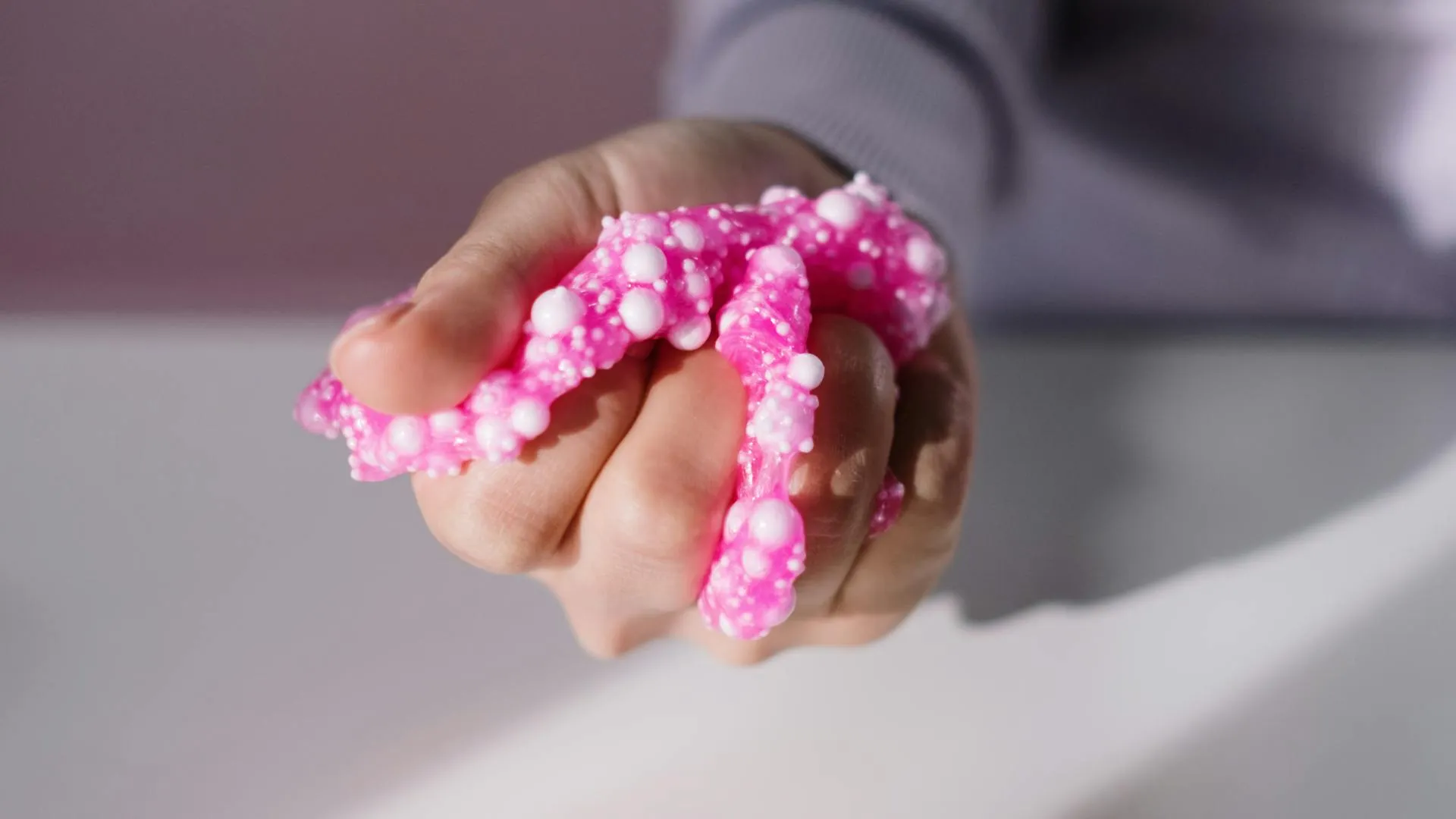
The NeeDoh — a fist-sized stretchy ball that snaps back into shape after every squeeze — has become the most sought-after toy in the United States. Schylling, the 50-year-old Massachusetts company that manufactures it, sold through its entire 2026 annual inventory of NeeDohs in the first nine weeks of the year, chief executive Paul Weingard has told reporters at Parade and Business Insider. The company is now eight to ten weeks behind on shipping to independent toy retailers, and its Chinese manufacturing partner cannot produce new units fast enough to catch up.
The trigger was TikTok. Beginning in late 2025 and accelerating through the winter, content creators began posting “NeeDoh hunting” clips — short videos of the brightly colored squishy ball being squeezed, stretched, twisted, and pulled apart on camera. The videos accumulated tens of millions of views and pushed a product that had spent eight years as a niche sensory aid into mainstream attention. By early February, Hub Hobby in Richfield, Minnesota was selling out within four hours of each shipment. By April, lines were forming outside independent toy stores in St. Paul, Pittsburgh, Sioux Falls, and San Mateo County on delivery days.
Sales growth at Schylling is running at roughly six times last year’s pace, according to figures Weingard has confirmed to multiple outlets — an inflection that has put the company in the unusual position of asking customers to wait for a $5.99 stress ball.
What NeeDoh Is and Where It Came From
NeeDoh is a registered product of Schylling, Inc., a toy company founded in 1976 and headquartered in North Andover, Massachusetts. The company’s broader catalog leans toward retro toys: vintage-style tin robots, classic windups, plastic ray guns of the kind a parent might recognize from a 1980s rec room. NeeDoh, by contrast, is one of Schylling’s more recent introductions. The original Groovy Glob — a roughly tennis-ball-sized stretchy sphere filled with a proprietary non-toxic gel — launched in 2017.
For most of its first eight years, NeeDoh grew steadily but quietly. Weingard, who has run Schylling for sixteen years, has said the line typically doubled in sales each year — strong but not unusual for a sensory-toy category that has expanded broadly over the past decade. The product line itself expanded to more than fifty variants: the Nice Cube, Pulli Pulli, glitter-filled editions, themed seasonal drops. The toy became a regular sight on occupational-therapy shelves, in autism-support classrooms, and in the supplies bins of parents looking for screen-free quiet-down items.
What Schylling never did, Weingard has been candid about, is engineer the current spike. The company has not run paid TikTok campaigns or commissioned influencer content. He told Business Insider in April that the virality “wasn’t intentional,” and told Parade in March that the product line had genuine staying power because it functions as “both a toy and a functional item for people.”
How TikTok Turned a Stress Ball Into a Hunt
The format that drove the trend is not a single iconic clip. It is a category of short videos in which a hand stretches, twists, squeezes, and pulls apart the colorful ball — often with the squish audio emphasized. The proprietary inner gel produces a particular slow-release tactile signature that loops well in the 15-to-30-second TikTok cadence. As views accumulated, creators began chasing newer and rarer variants, posting their finds, and layering a collectibility dynamic on top of the sensory appeal.
Specialty releases have fed the frenzy. Recent NeeDoh drops have included Easter-egg shapes, an octopus, and ice-cream-cone forms, according to retail accounts reported in the Twin Cities and elsewhere. When a store posts that a shipment has arrived, the inventory is typically gone within the hour. One Star Tribune-cited store sold a 150-piece NeeDoh delivery in under an hour after announcing it on TikTok. Hub Hobby cannot keep them on the shelves for more than four hours regardless of shipment size, the chain’s toy buyer Haley Tallman told the paper, adding that any shipment “will sell out same day regardless of how large it is.”
The demographic mix is part of what makes the moment unusual. Sensory squishies have historically been marketed to children and tweens, the same audience that drove the Pop-It wave a few years earlier. The current spike, however, is being driven heavily by shoppers in their twenties and thirties — Gen Z and younger millennials who have folded NeeDoh into a broader category of “hyperfocus” desk toys adopted for stress relief, ADHD support, and anxiety regulation. NBC News framed it as the natural successor to the Labubu craze of 2024 and 2025. There is a meaningful difference, though: where Labubu depended on a blind-box mechanic and engineered scarcity to drive repeat purchase, the NeeDoh appeal is built on the function of the toy itself. The collectibility layer was added by creators on TikTok, not by the manufacturer.
Independent Toy Stores at the Center of It
The shortage has been most visible at small toy retailers, where two or three shipments per week define the customer experience. Abigail Adelsheim-Marshall, co-owner of Mischief Toys in St. Paul, sold her store’s entire 2026 NeeDoh allocation in 48 hours. She has told local outlets that Schylling is currently running eight to ten weeks behind on her store’s orders. Both Mischief Toys and Hub Hobby have started capping the number of NeeDohs any single customer can buy in a visit, partly to keep resellers from clearing inventory in one transaction.
One toy-shop co-owner told Axios Twin Cities the demand level was reminiscent of the Beanie Babies craze of the mid-1990s, in scale if not yet in resale-market mania. NeeDoh has not yet developed a secondary collector market with grading or auction houses. But reseller prices on platforms including eBay and unauthorized TikTok Shop listings have climbed several multiples above the base $5.99 retail starting point, with the harder-to-find “Nice Cube” variant attracting the steepest markups.
The shortage has been a quiet windfall for the kind of independent retailer that has spent the past decade losing share to Amazon’s expanding direct-to-consumer logistics machine. When Target, Walmart, and Amazon all sit empty of NeeDohs, the local specialty toy store regains its position as the place where a parent or a TikTok scroller actually finds the product. Pittsburgh Magazine reported that the local in-person hunt has become part of the experience: shoppers calling stores ahead of delivery days, lining up before opening, comparing notes on which variants have been spotted.
That dynamic has held even as broader consumer-spending conditions remain strained by Iran-war-driven energy costs that have added more than $1,700 to the average two-car household’s annual fuel bill. The squishy toys are small enough — and explicitly framed by buyers as stress-relief — that they have not been cut from discretionary budgets the way larger items have.
Why the Shortage Won’t End Soon
Two structural factors are extending the supply gap. The first is geographic concentration: NeeDoh is manufactured in China, and the factory paused operations in February for the Lunar New Year — at the precise moment TikTok demand was reaching its peak. The second is the product itself. The proprietary internal filling requires a curing time, and the outer skin has a specific construction process that does not scale up by simply adding shifts. Each batch carries a baseline production cycle that cannot be compressed without compromising the squish characteristics that made the videos work in the first place.
Schylling has told reporters it hopes to fully meet demand by summer 2026, implying the inventory gap could persist through Memorial Day and into early July. In the meantime, the company has prioritized allocations to independent specialty retailers over big-box chains, on the theory that small shops are most likely to be the kind of place where the original viral discovery began.
Whether NeeDoh becomes a long-running staple in the sensory-toy aisle or fades the way Pop-Its and Fingerlings eventually did will depend on whether Schylling can scale through the summer without compromising the product, and on whether the TikTok algorithm continues to push squishy-toy content into the For You feeds of new audiences. For now, the most reliable place to find a NeeDoh in 2026 is in a 30-second TikTok video — not on a store shelf.
Sources 6 cited · 2 primary
- What Is NeeDoh? CEO Paul Weingard Explains the Popular Toy
- NeeDoh squishies have gone viral. 'It wasn't intentional,' the CEO tells me.
- NeeDoh trend takes over TikTok and Twin Cities, sells out at toy stores
- NeedOhs craze hits Twin Cities as TikTok trend fuels toy sellouts
- Is NeeDoh the new Labubu? Here's why everyone is obsessed with these viral squishies
- Need-O the NeeDoh: Pittsburghers Are on Board With the Newest Toy Trend — Mostly
American Courant cites its sources and links to primary documents where they exist. How we report →