The 110th running of the Indianapolis 500 ended at the painted line of bricks that gives the track its name. Felix Rosenqvist, a 34-year-old Swede driving the No. 60 Honda for Meyer Shank Racing, rode the high line out of Turn 4 on the final lap, drew alongside David Malukas, and crossed the start-finish stripe in front by 0.0233 seconds. It is the closest finish in the 110-year history of the race — closer than Al Unser Jr.’s 0.043-second pass on Scott Goodyear in 1992, the previous mark. The pass came after 199 laps of slipstreams, two red flags, and an event-record 70 lead changes that broke a 13-year-old benchmark.
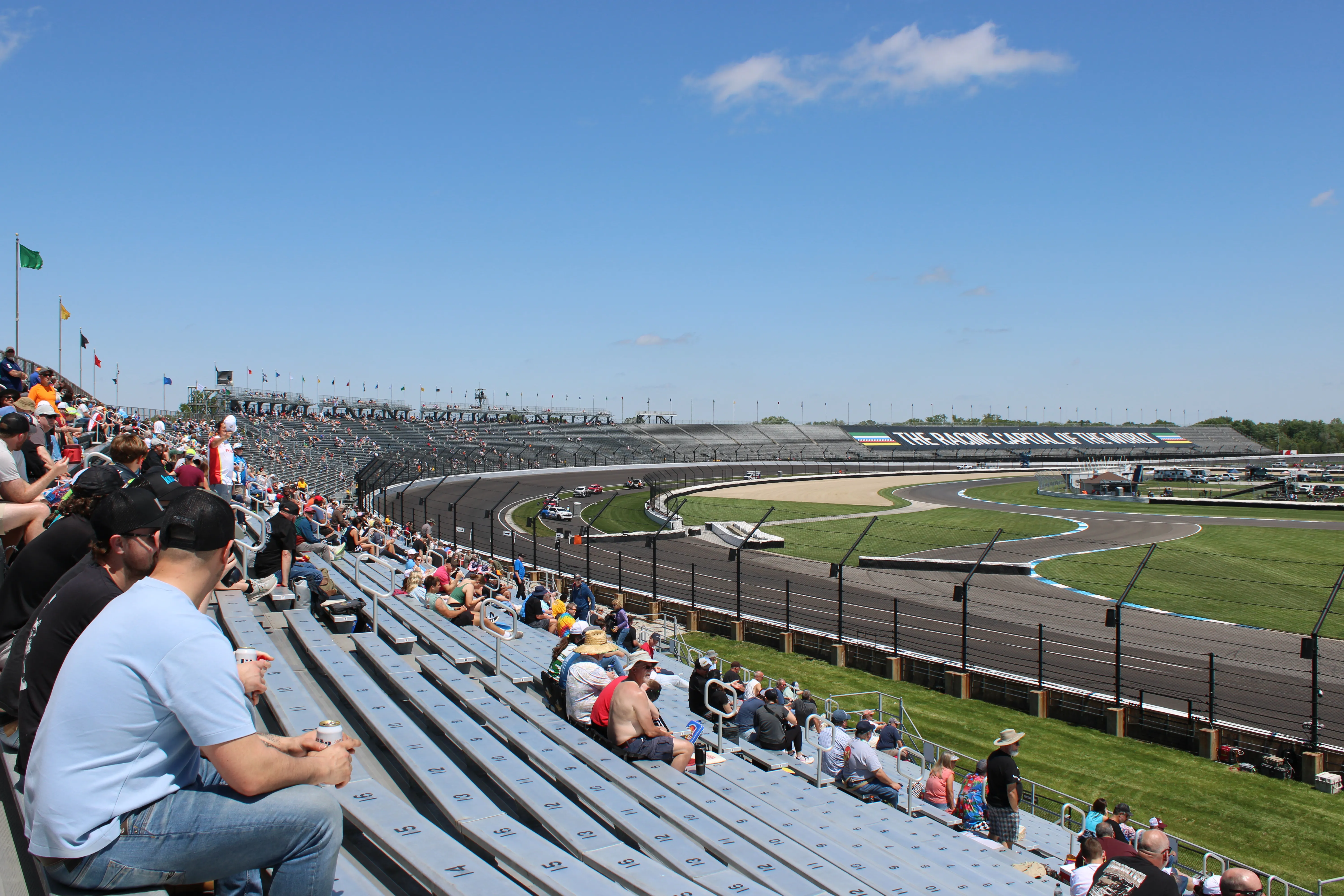
The cultural significance shows up in the ratings. Fox’s broadcast of the race averaged 7.08 million viewers on Sunday, May 24, the largest U.S. television audience for the Indy 500 since 2008 and a 41 percent jump over NBC’s 2024 number. Roughly 350,000 people sat in the speedway’s grandstands, which sold out again. After a decade in which IndyCar mostly disappeared from the American sports conversation between Memorial Day weekends, the race that built Memorial Day Sunday delivered the kind of finish that the league has been promising for years — and a network with money on the line delivered the audience to see it.
The Pass
Rosenqvist had been chasing the lead all afternoon. Malukas, the 24-year-old son of former IndyCar competitor Henry Malukas, had taken the lead late and was holding off Rosenqvist through traffic on a final stint that ran roughly 14 laps under green. With three to go, Rosenqvist closed to within a car length. Malukas defended the inside line through the short chutes, which is the standard play at Indianapolis — the inside line is shorter and harder to overtake on a 2.5-mile rectangle.
Coming to the white flag, Rosenqvist set up the move that would decide the race. He stayed close enough in the slipstream through Turns 1 and 2 to keep the run alive, dropped back slightly through the back straight to cool his Honda engine for one final surge, then committed to the high line out of Turn 4 — running just inches off the concrete SAFER barrier on the outside wall. The dirty air off Malukas’s car pushed Rosenqvist’s nose right, but the higher line carried more momentum onto the front straight. By the time the cars crossed the Yard of Bricks, Rosenqvist’s front wing was clear. The margin, when Fox’s timing graphic settled, was 0.0233 of a second — less than half a car length.
It was the kind of pass that announcing booths spend a year hoping for and that Indianapolis has been short on since the late 2010s. The previous closest finish at Indy involved Al Unser Jr. and Scott Goodyear in 1992; the margin then was almost twice what Rosenqvist’s was on Sunday.
Why the Audience Came Back
The 7.08-million-viewer number matters because IndyCar has spent the last fifteen years bleeding the kind of broad audience NASCAR still commands. Fox’s broadcast was the most-watched Indy 500 since the 2008 edition delivered 7.30 million on ABC. By comparison, NBC’s 2024 broadcast — a rain-delayed race — averaged 5.024 million.
Three things drove the recovery, and only one is luck.
Fox bought 33 percent of IndyCar’s parent company, Penske Entertainment, in 2025, taking a financial stake that gave the network a reason to promote the series across its programming spine. The 2026 race was Fox’s second full season of IndyCar rights and its second running of the 500. Promotion across NFL pregame, college football, MLB, and Fox News properties was visibly heavier than NBC’s late-cycle stewardship, and qualifying-day ratings for 2026 came in at roughly 924,000 viewers — a 7 percent bump on the network’s debut qualifying broadcast a year earlier. Fox also leaned into the broadcast as a production showcase, including a new viewer “excitement-tracking” overlay piloted at the speedway and additional onboard camera angles that the league had previously rationed.
The race itself supplied the substance. Seventy lead changes is not a marketing line — it is a Cup-style number that motor-racing audiences track, and it broke the previous Indy 500 record of 68 set in 2013. The 0.0233-second margin gave the broadcast a moment that can be replayed on social platforms for weeks without losing its kick. And the field had recognizable names trading the lead late: Malukas, Rosenqvist, Pato O’Ward, Scott McLaughlin, and Marcus Armstrong all led laps in the final stint before the yellow flags reshuffled them.
The third factor — luck — was that the race ran in clean weather. Indy’s 2024 edition lost most of its audience to a rain delay that pushed the green flag deep into NBC’s window. Sunday was sunny and dry from green to checker, and Fox kept its window.
Rosenqvist’s Career, in Context
Rosenqvist is a more interesting winner than the casual viewer might have realized in real time. Born November 7, 1991, in Värnamo, Sweden, he came up through the European single-seater ladder, winning three Formula Renault titles and the 2015 FIA Formula 3 European Championship. He raced two seasons in Formula E for Mahindra, finishing third in the 2016–17 standings, and is a two-time winner of both the Masters of Formula 3 and the Macau Grand Prix. He moved to IndyCar in 2019 with Chip Ganassi Racing as Scott Dixon’s teammate, was named series Rookie of the Year, then spent three seasons with Arrow McLaren before joining Meyer Shank Racing for 2024.
Sunday’s victory was his second career IndyCar win and his first at Indianapolis, where he had a 2024 podium but had not previously contended for the win on the final stint. It also made him the third Swede to take the Borg-Warner Trophy, joining Kenny Bräck (1999) and Marcus Ericsson (2022). For American sports culture during the Iran-war stretch — a period defined by sports stories framed against larger national narratives — a Memorial Day weekend race won by a European driver who’s spent half his career outside the United States is also a reminder that the most-American motorsport on the calendar runs on a globalized field.
For Meyer Shank Racing, the win was the team’s first at the Brickyard in its own colors, after a 2023 victory under a partnership with Andretti Autosport, and the team’s first overall IndyCar victory since 2021. The official purse — $4.34 million for the winning entry — set a new Indy 500 record for the largest single payout, per Indianapolis Motor Speedway.
What Changes Now
Two things shift inside the sport. First, IndyCar enters its summer slate with the kind of cultural lift it has been chasing for a decade. Drivers and team principals will spend the next month doing television hits that the league can convert into incremental ticket sales for Detroit, Road America, and Mid-Ohio. Second, Fox now has a usable proof point for a $625-million-per-year rights deal that, until Sunday, looked like an expensive vanity property compared with the NFL package the same network just renewed.
The Indy 500 has always had a peculiar place in American sports. Unlike the Super Bowl or the World Series, it draws hundreds of thousands of physical attendees at a venue most of them cannot easily reach, and most of its television audience tunes in once a year — out of habit, out of Memorial Day ritual, or out of the residual gravitational pull of the event itself. Sunday’s race gave that one-year audience a reason to remember IndyCar exists between Memorial Days. Whether the league converts that into a broader-base sport — the way the NBA’s Madison Square Garden Finals run is testing whether the Knicks’ Eastern crown converts to broad national audience — is the longer question.
There is also a smaller, quieter consequence inside the paddock. The previous closest-Indy-500 mark stood for 34 years. Rosenqvist’s 0.0233-second pass, captured by FOX’s onboard camera and the speedway’s photofinish system, sets a new ceiling that may stand for another generation. The bricks at Indianapolis are 36 inches across at the start-finish line. At an average speed of 162.021 miles per hour, a car covers that distance in about 0.013 seconds. Sunday’s margin was the equivalent of less than two bricks.
That is what made the broadcast finish as the most-replayed sports highlight of the long weekend, ahead of the Knicks’ Eastern Conference sweep of the Cavaliers and a Memorial Day domestic box office that delivered the lowest Disney-era Star Wars opening to date. In a weekend full of sports and entertainment headlines, a race that most American viewers had stopped paying attention to produced the moment everyone watched.
Sources 7 cited · 3 primary
- Felix Rosenqvist Wins Epic in Closest-Ever Indianapolis 500 Finish
- Felix Rosenqvist Drives Final Lap for the Ages To Win at Indy
- Felix Rosenqvist Earns Epic Victory in Closest-Ever Indianapolis 500 Finish
- Rosenqvist wins closest Indy 500 ever by 0.02 seconds
- Felix Rosenqvist wins 2026 Indy 500 in closest-ever finish
- Indy 500 2026 results: Felix Rosenqvist overtakes David Malukas in final lap
- In the blink of an eye: Rosenqvist's closest-ever Indy 500 win rewrites his legacy
American Courant cites its sources and links to primary documents where they exist. How we report →