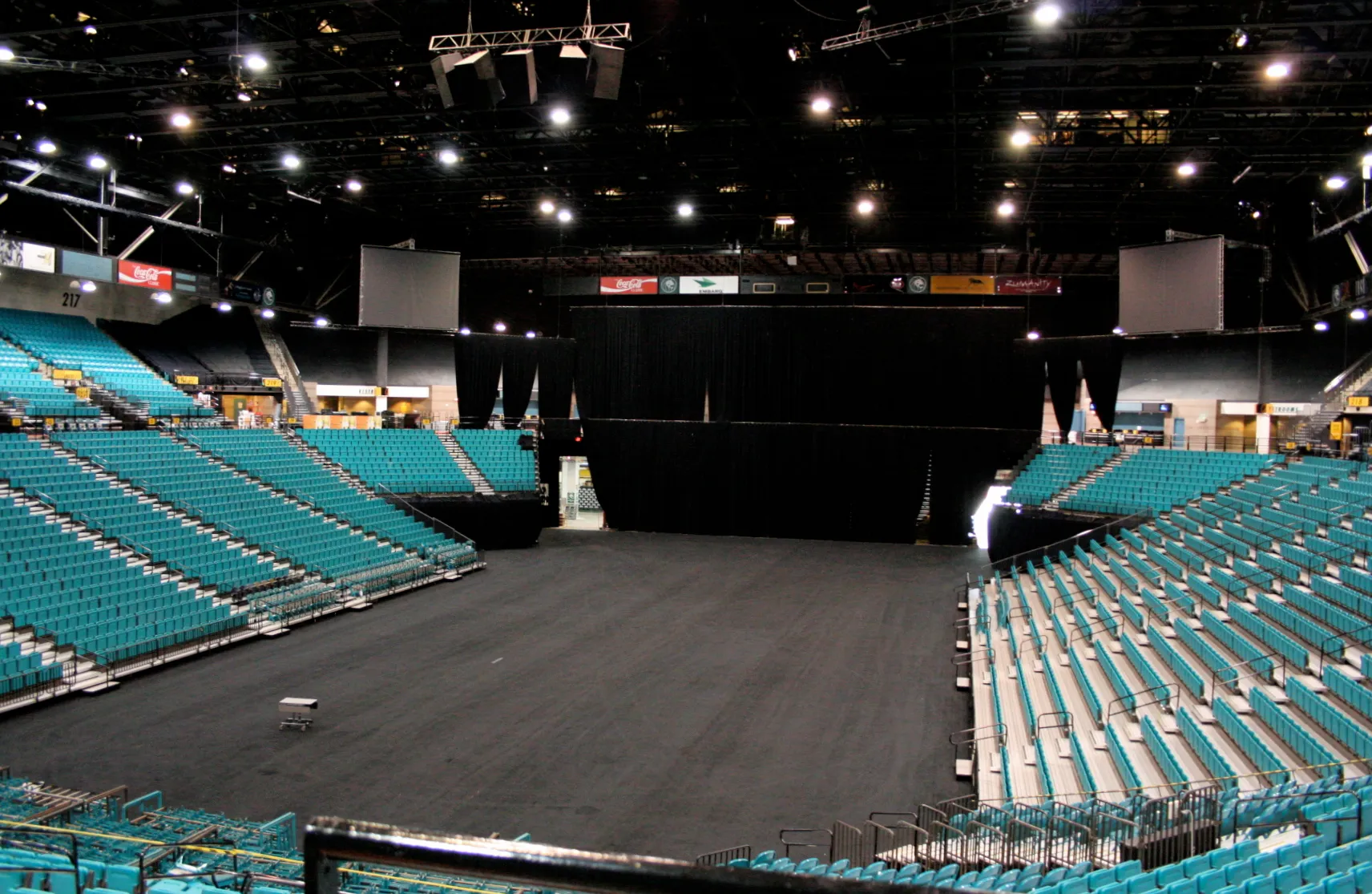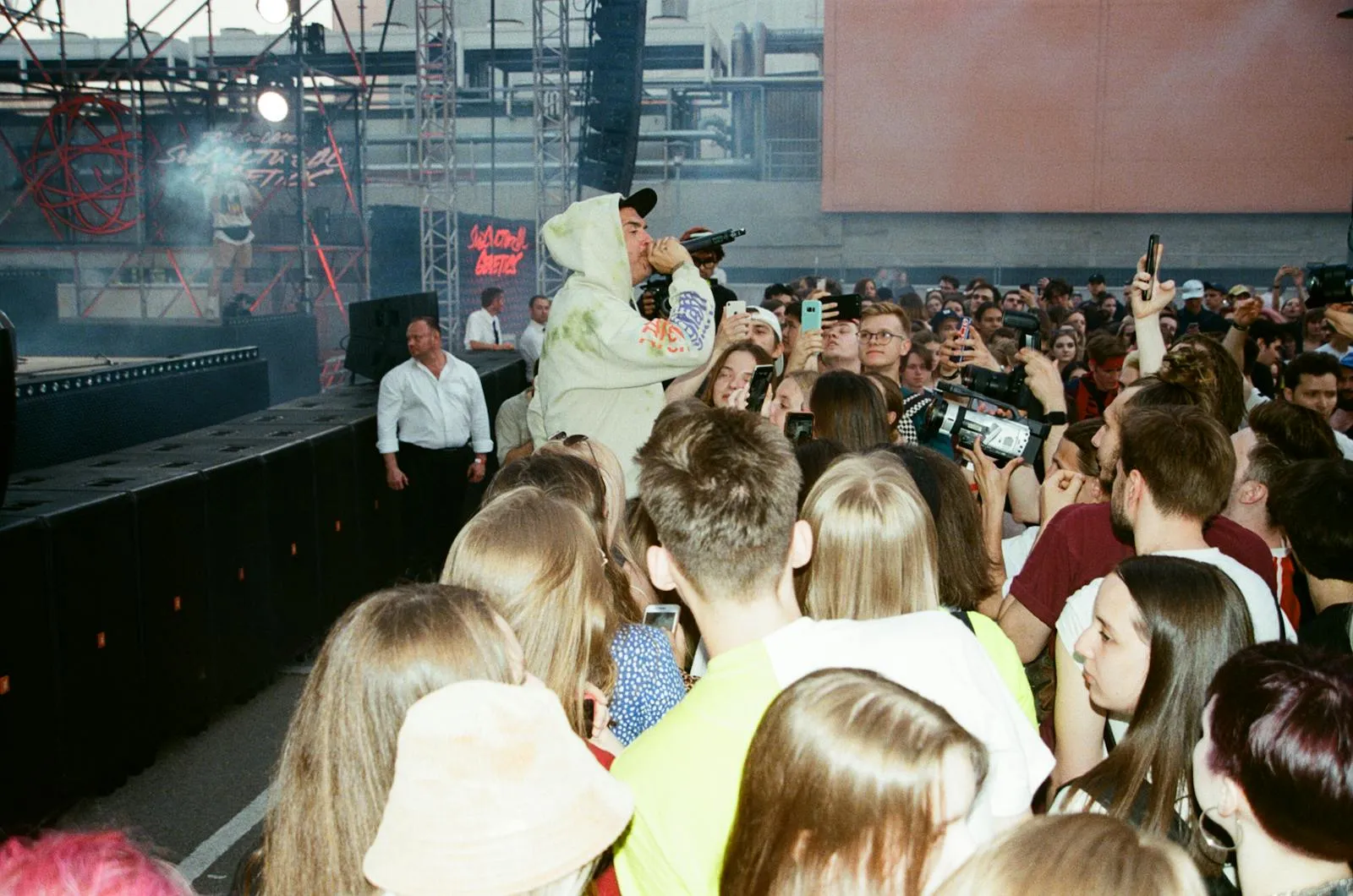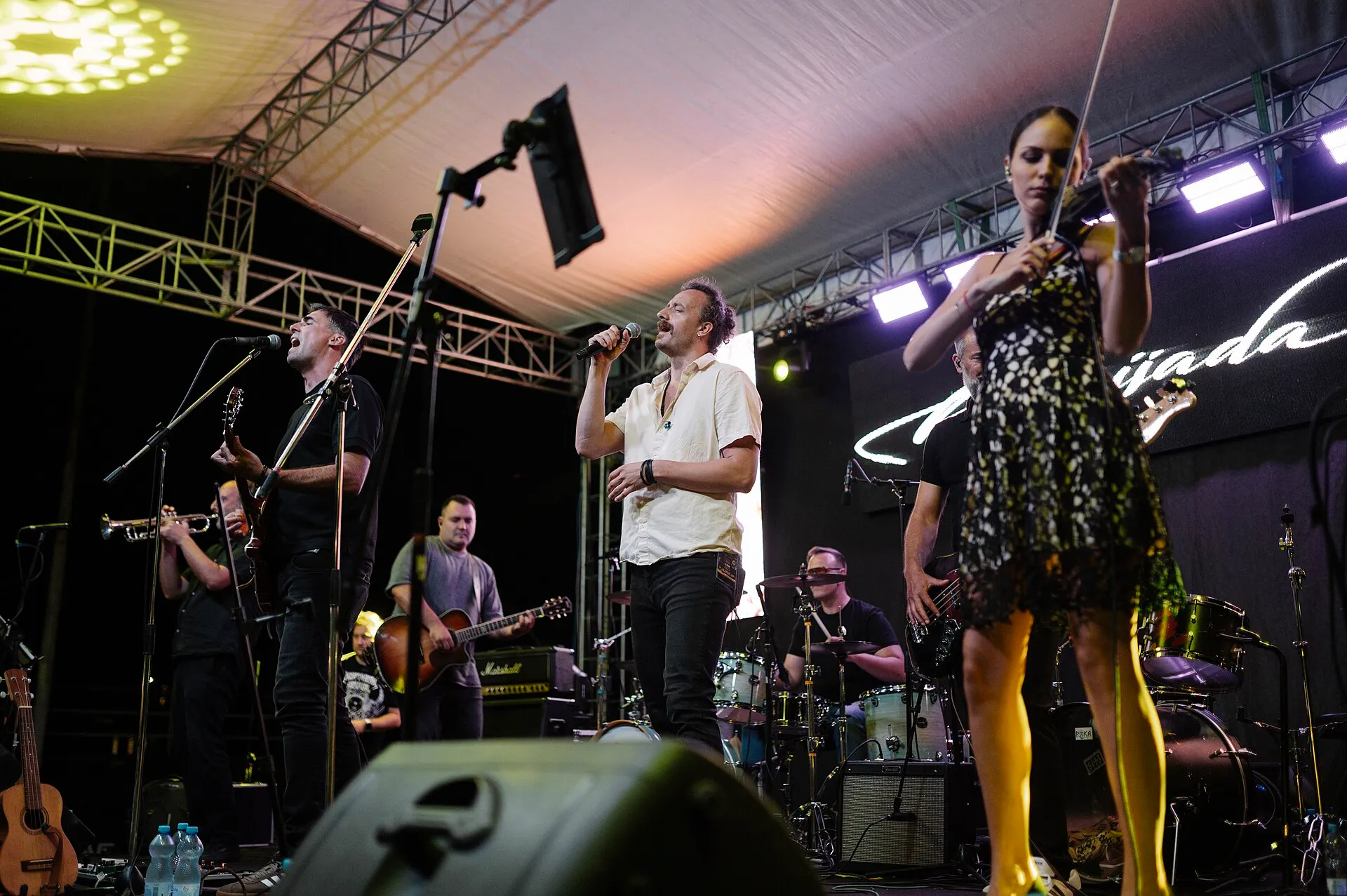
Bulgaria won the Eurovision Song Contest for the first time on Saturday night, with 27-year-old Dara taking home 516 points for her dance-pop anthem “Bangaranga” in front of more than 16,000 people at the Wiener Stadthalle in Vienna. Israel’s Noam Bettan finished second on 343, performing his ballad “Michelle” in French, Hebrew, and English. Outside the arena, several thousand demonstrators marched under the slogan “No Stage for Genocide,” and five European broadcasters had already declined to send anyone at all.
For a contest that markets itself as Europe’s biggest unifying party, the 70th edition produced two unmistakable storylines, and neither was about the music. The first was a genuine outsider triumph: Bulgaria has competed only intermittently since joining in 2005, sat out the previous three years, and had never finished better than fifth. The second was the contest’s continued inability to escape the war in Gaza.
That second story is now defining the European Broadcasting Union’s flagship event year after year. Spain, Ireland, Iceland, Slovenia, and the Netherlands withdrew this year over Israel’s continued participation. It was the largest boycott in Eurovision’s seven-decade history. The EBU has refused to suspend Israel, even after suspending Russia following its 2022 invasion of Ukraine, and that asymmetry now functions as the contest’s organizing political problem.
A Win Few Predicted
Dara, born Darina Nikolaeva Yotova in the Black Sea city of Varna in 1998, was a long-shot pick when Bulgaria selected her entry in March. She came up through Bulgaria’s X Factor in 2015 and has spent the last decade scoring Bulgarian-language hits and serving as a coach on The Voice of Bulgaria. She has not been a name outside the country.
“Bangaranga” takes its title from a Jamaican Patois word meaning riot or commotion. The song is a high-tempo dance track about, in Dara’s framing, “the discovery of the inner strength each of us possesses. Acting with love, not fear.” The studio version runs three minutes; the Eurovision stage version added pyrotechnics, a six-person dance routine, and the kind of choreography that has become the contest’s house style.
The voting math made the win less of a surprise than the outcome suggests. Bulgaria finished first with both the national juries (204 points) and the public televote (312 points). Dara was the first artist since Salvador Sobral in 2017 to top both columns. That detail matters because the EBU spent the last 12 months rewriting its voting rules specifically to prevent a repeat of 2025, when Israel’s runner-up finish was driven almost entirely by a public-vote landslide that critics blamed on coordinated promotional campaigns.
For 2026, the maximum televotes per payment method were halved from 20 to 10. Juries were reinstated for the semifinals. Restrictions on government-backed promotional campaigns were tightened, and Israel’s public broadcaster Kan received a formal warning before the final over its promotional videos for Bettan. The rules changed the math; they did not change the outcome of the public vote, which once again gave Israel a top-three finish.
The Boycott That Almost Wasn’t
The five-country walkout did not happen quickly. Spain’s RTVE and Ireland’s RTÉ moved first, citing the death toll in Gaza and what RTÉ called the “unconscionable” prospect of competing alongside Israel’s state broadcaster. Iceland followed. Slovenia and the Netherlands joined later. RTÉ said in its statement that Ireland’s continued participation “remains unconscionable given the appalling loss of lives in Gaza and the humanitarian crisis there which continues to put the lives of so many civilians at risk.”
The withdrawals are unusual in Eurovision’s history because the contest typically absorbs political disputes without losing entrants. Russia’s expulsion in 2022 was an EBU decision, not a participating country’s. The 2026 boycott reverses that dynamic: five member broadcasters chose to exit a contest the EBU refused to reshape.
The protest outside the Stadthalle on Saturday night was organized by Austrian and Palestinian solidarity groups, who put the crowd above 5,000; Vienna police gave a lower figure. Marchers gathered at Christian-Broda-Platz and moved through the city in heavy rain in the hours before the broadcast started. More than 1,000 artists had signed an earlier open letter, “No Music for Genocide,” calling on performers and production crews to withhold their participation.
Inside the arena, host Austria did what hosts always do. It kept the broadcast moving, treated the contest as a music event, and declined to acknowledge the demonstrations beyond a brief reference. The juxtaposition is now Eurovision’s defining annual problem, and the EBU’s silence on Israel’s status is the choice that produces it every spring.
Israel’s Second Place, Again
Bettan’s second-place finish, on his ballad “Michelle,” mirrors Israel’s 2025 placement, when Yuval Raphael also came second. The pattern has become the contest’s most contested data point. Israeli officials and pro-Israel commentators read the result as evidence of broad European public sympathy. European critics read it as evidence that organized voting campaigns continue to distort the result despite the rule changes.
The 2026 voting breakdown gives both readings something to work with. Israel received 123 points from the juries, placing eighth in their tally, and 220 points from the public, placing second. The public-vote gap remains the contest’s central anomaly: the juries, composed of music industry professionals in each country, and the public diverge sharply when Israel competes, and they have done so for three consecutive contests.
The EBU’s stricter 2026 rules narrowed but did not close that gap. Whether stricter still rules would close it, or whether the gap reflects real public sentiment that organized campaigns simply make visible, is a question the contest has not been willing to answer directly.
What Happens Now
Bulgaria’s win means Sofia, or another Bulgarian city, will host the 2027 Eurovision Song Contest. Hosting is a roughly €50 million commitment for the broadcaster of record, Bulgarian National Television, which has not staged an event of that scale before. The country also faces the same political question Austria did this year: whether to host Israel, how to manage protests, how to keep five boycotting broadcasters from making it six.
The United Kingdom, which has now received nul points in the public vote for three consecutive years, finished last with just one point. Sam Battle, performing as Look Mum No Computer, said in a post-contest statement that the act “tried our hardest.” The UK’s persistent struggle has begun to look structural rather than accidental. The country’s contest entries no longer appear to translate to a continental audience that votes on different criteria than the British music industry uses to pick them.
For the broader entertainment industry, the contest now sits alongside other recent flashpoints (Cannes, the Oscars, the Olympics) as a venue where political pressure on cultural institutions has become routine. Hollywood’s largely deliberate retreat from Cannes this year was driven by a different fear, namely uncontrolled social-media reaction. But it shared a basic premise: large public cultural events now carry costs that institutions are increasingly choosing not to absorb. Eurovision is choosing differently, and a growing number of its participating broadcasters are choosing to walk away.
The Win and the Argument
Whatever the long-term consequences of the boycott, the immediate fact of Saturday night is that a Bulgarian dance song with a title borrowed from Jamaican slang beat 24 other entries and topped both the juries and the public. Dara’s victory is the kind of result Eurovision has historically existed to produce: a small country, a strong song, a national broadcaster getting one of its best 24 hours in years.
Earlier in the week, K-pop’s four largest Korean agencies filed antitrust paperwork for a joint Coachella-scale festival, an indication that the global pop economy is consolidating around a handful of large-scale live events. Drake’s three-album drop on May 15 broke 2026 Spotify records in three categories on its first day, demonstrating the streaming era’s appetite for spectacle. Eurovision is older than any of them. It is also more politically exposed than any of them. Both can be true; both were true on Saturday.
The contest now heads to Bulgaria. The argument it carries with it is unlikely to be settled there.
Sources 6 cited · 3 primary
- Bulgaria wins its 1st 2026 Eurovision Song Contest
- Bulgaria's bombastic 'Bangaranga' pulls off shock Eurovision win amid camp and controversy
- Thousands protest at Eurovision final as five countries boycott over Israel
- Five countries boycott Eurovision Song Contest over Israel's participation
- Eurovision finalists to take the stage amid boycott from Spain, Ireland and others over Israel's presence
- Bulgaria Wins Eurovision 2026 With Dara's 'Bangaranga'
American Courant cites its sources and links to primary documents where they exist. How we report →